
As for myself, I also used to be confused about whether the groom or the bride wore the corsage. To clear up any confusion from the start, as a person who loves wedding receptions and notices deatils.
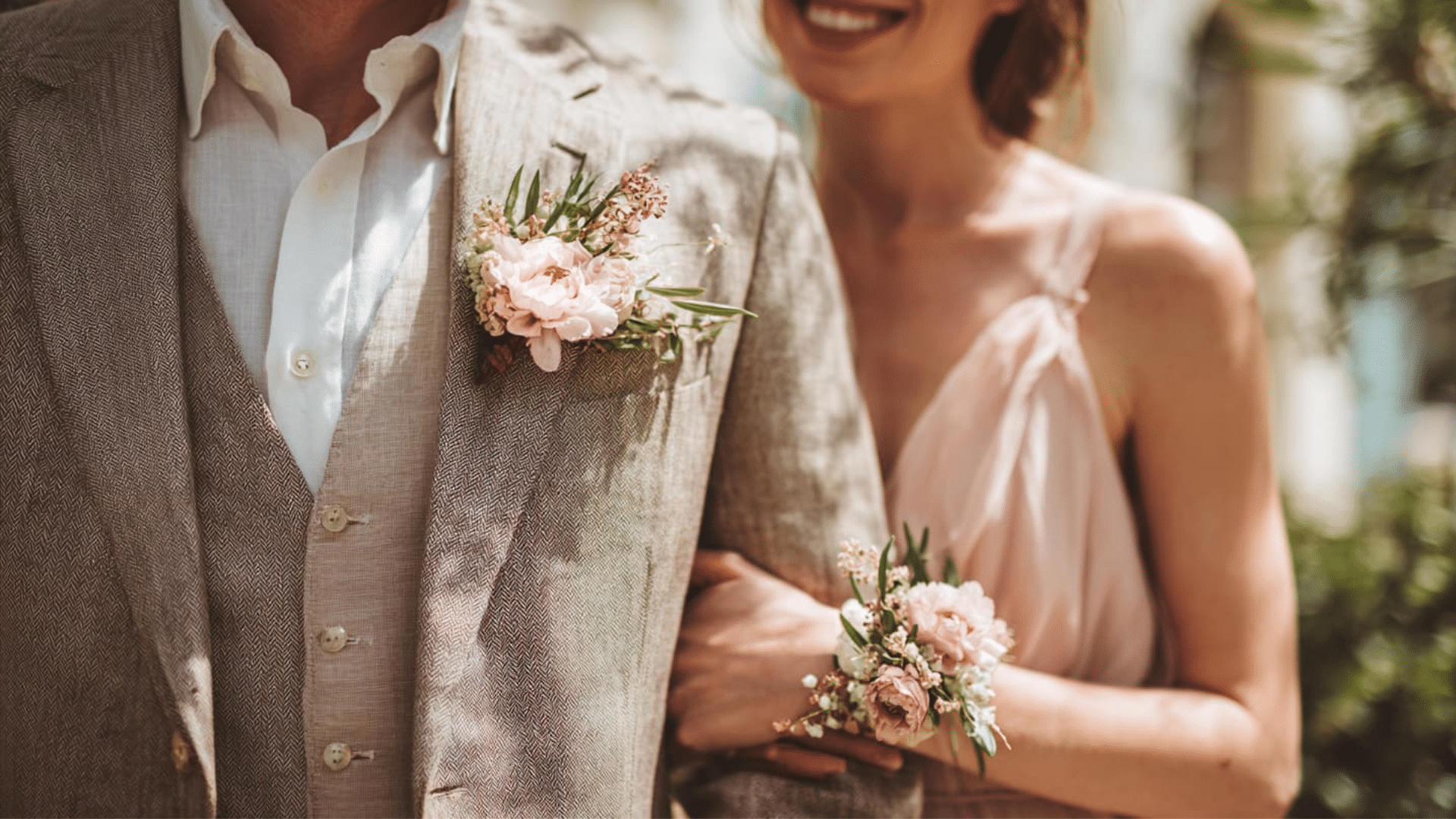
A corsage is a small floral arrangement worn by women, usually mothers, grandmothers, or honored guests; on the other hand, a boutonniere is worn by the groom. Anyone can wear them, but they are meant to give a sense of importance to the person on the day of the wedding.
Most couples spend months picking centerpieces and debating the shades of their bouquets. Then, a week before the wedding, someone remembers the corsages and boutonnieres.
For something that takes two minutes to pin on, almost no thought is given to it beforehand.
Corsage vs Boutonniere: Here’s the Difference
Both serve the same purpose but differ in who wears them, how they look, and what they cost. Here is a quick breakdown.
This table makes it simple for you to make better decisions
| Feature | Corsage | Boutonniere |
|---|---|---|
| Worn by | Traditionally worn by Women | Traditionally worn by Men |
| Placement | Wrist or dress | Left lapel |
| Size | Slightly larger, fuller | Compact and flat |
| Occasions | Wedding, prom, formal events | Wedding, prom, formal events |
| Price Range (varies by flower, season) | $25–$45 | $15–$35 |
| Style | Layered blooms, ribbon accents | Single stem or small cluster |
| Attachment | Band, elastic, or pin | Lapel pin |
| Common Flowers | Rose, orchid, ranunculus, carnation | Rose, carnation, anemone, thistle |
On the same occasion, two different accessories. Your florist will help you match both to your outfit and theme well.
What is a Corsage?
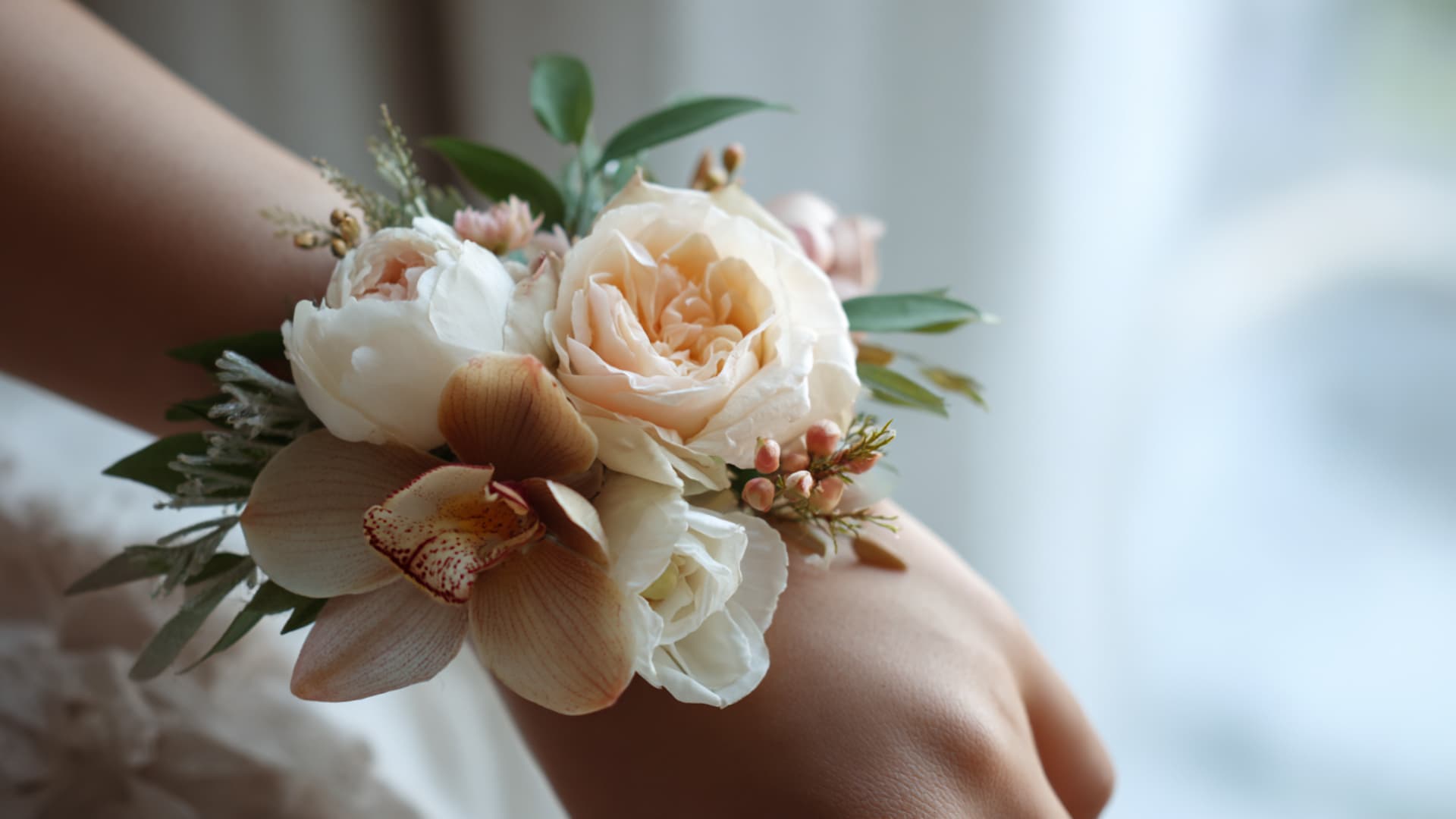
A corsage is a small floral arrangement worn by women, either on the wrist or pinned to a dress or blouse.
The word comes from the French word for “bodice,” the upper part of a woman’s dress. According to Britannica, floral accessories became popular in Europe during the 18th and 19th centuries and became a common way to convey unspoken messages in social settings.
Today, corsages are most commonly worn at weddings, proms, graduations, and other formal events. They’re used to honor special guests and key members of a celebration.
Types of Corsages
There are several types of corsages to choose from. Knowing the different styles helps you pick the right wedding centerpiece that suits your outfit and hairstyle.
- Wrist Corsage: Worn on the left wrist like a bracelet. Comfortable, secure, and it works well for weddings /proms, and you don’t need to pin it.
- Pin-On / Bodice Corsage: Pinned on the left chest for a clean, polished floral accent that complements any formal outfit.
- Shoulder Corsage: Pinned near the shoulder strap for a bold, noticeable floral look that stands out.
Choosing the right style comes down to comfort, your outfit, and how you want the flowers to sit throughout the event.
What is a Boutonniere?
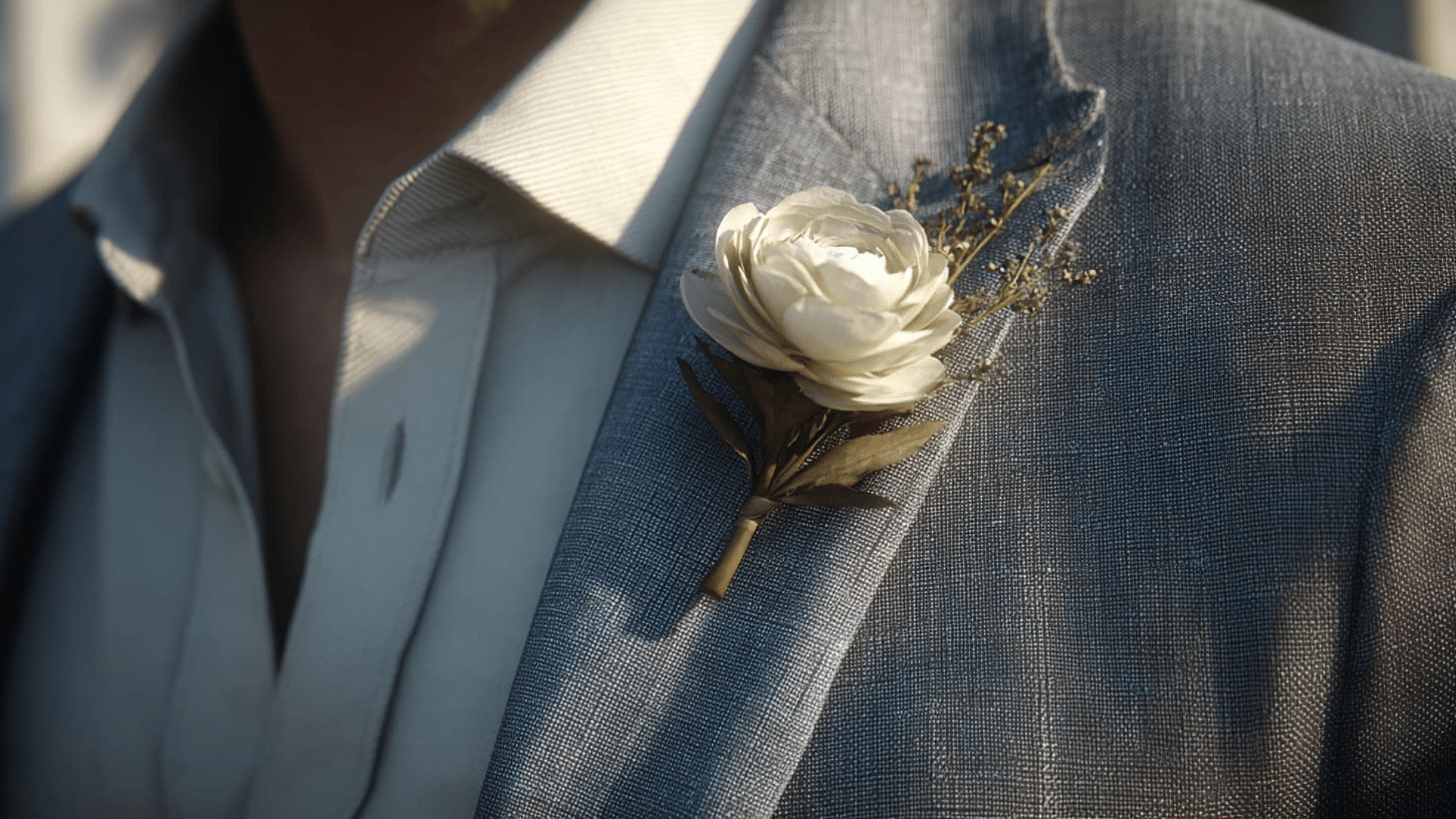
A boutonniere is a small floral arrangement worn by men, pinned to the left lapel of a suit. The word comes from the French “buttonhole,” rooted in Victorian-era Europe, when men tucked a single flower into their coat as a sign of refinement.
Types of Boutonnieres
These are the boutonnieres that look good on men and give them a classic look. I suggest you wear them once, and there is a style to match every groom, every suit, and every wedding theme.
- Single Stem: One focal flower with a small greenery accent. Classic, clean, and suitable for any formal occasion or wedding setting.
- Cluster / Multi-Bloom: Two or more flowers grouped with filler and greenery. Great for grooms who want a fuller, more textured lapel.
- Modern Minimalist: A greenery-forward style with clean, architectural lines, no bold blooms, just sleek and contemporary foliage.
The right choice is the one that feels comfortable, matches the suit, and stays secure through the event.
Who Wears a Corsage at a Wedding?
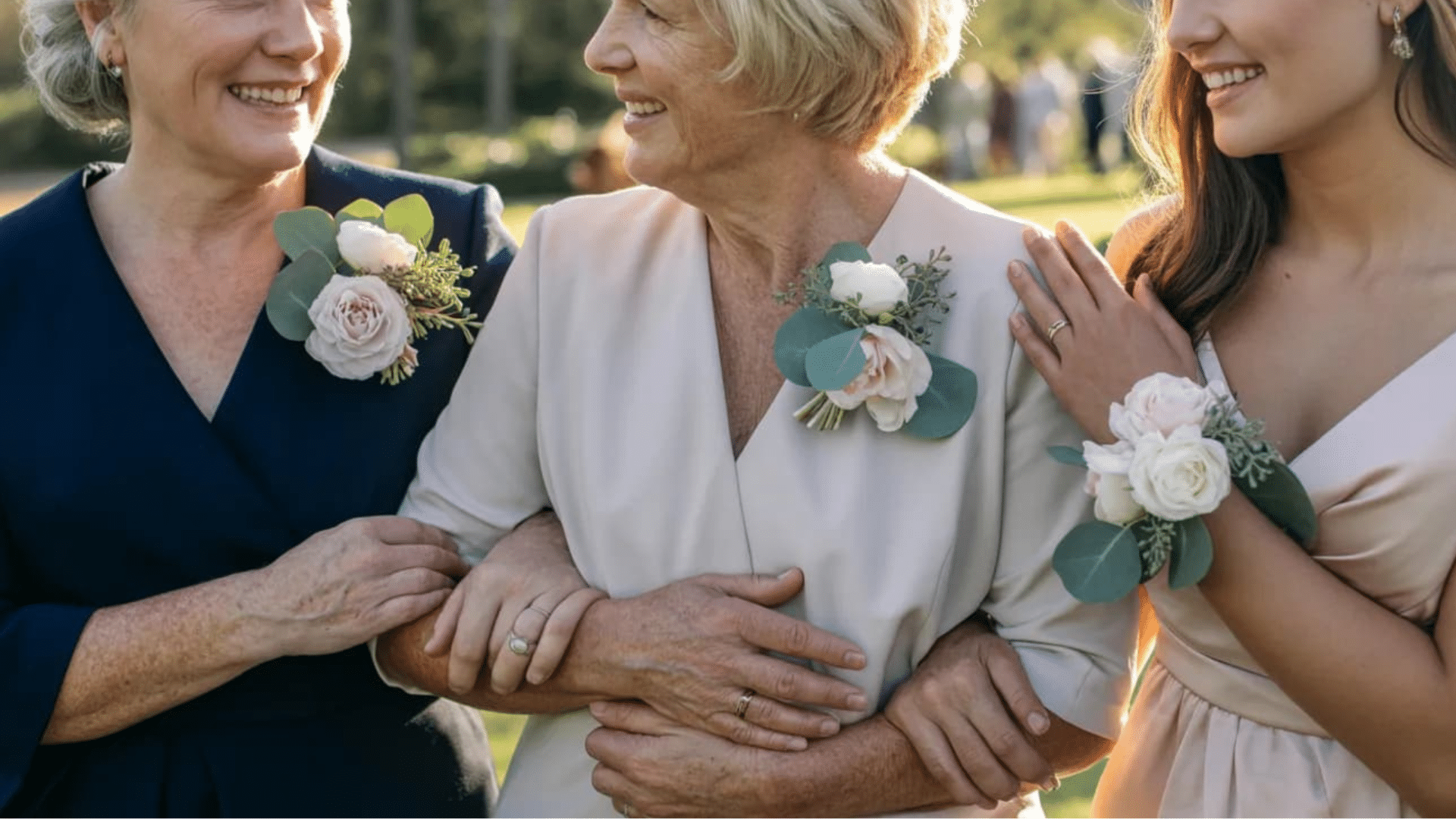
This style is a top pick for modern venues, rooftop ceremonies, and couples who prefer a sleek wrist style / clean, understated look.
Weddings are full of meaningful details, and corsages are one of the most personal. They are a beautiful way to honor and recognize the most important women in a couple’s life.
Mothers and close family members often wear corsages, as do others who play important roles on the day, such as the maid of honor duties and other key responsibilities.
- Grandmothers on both sides
- Bridesmaids, some modern couples opt for corsages instead of bouquets, especially sleek wrist styles.
- Female officiant, readers, or VIP guests
It’s worn by a woman who plays a special role in your wedding day; a corsage is the meaningful way to make her feel seen and celebrated.
Who Wears a Boutonniere at a Wedding?
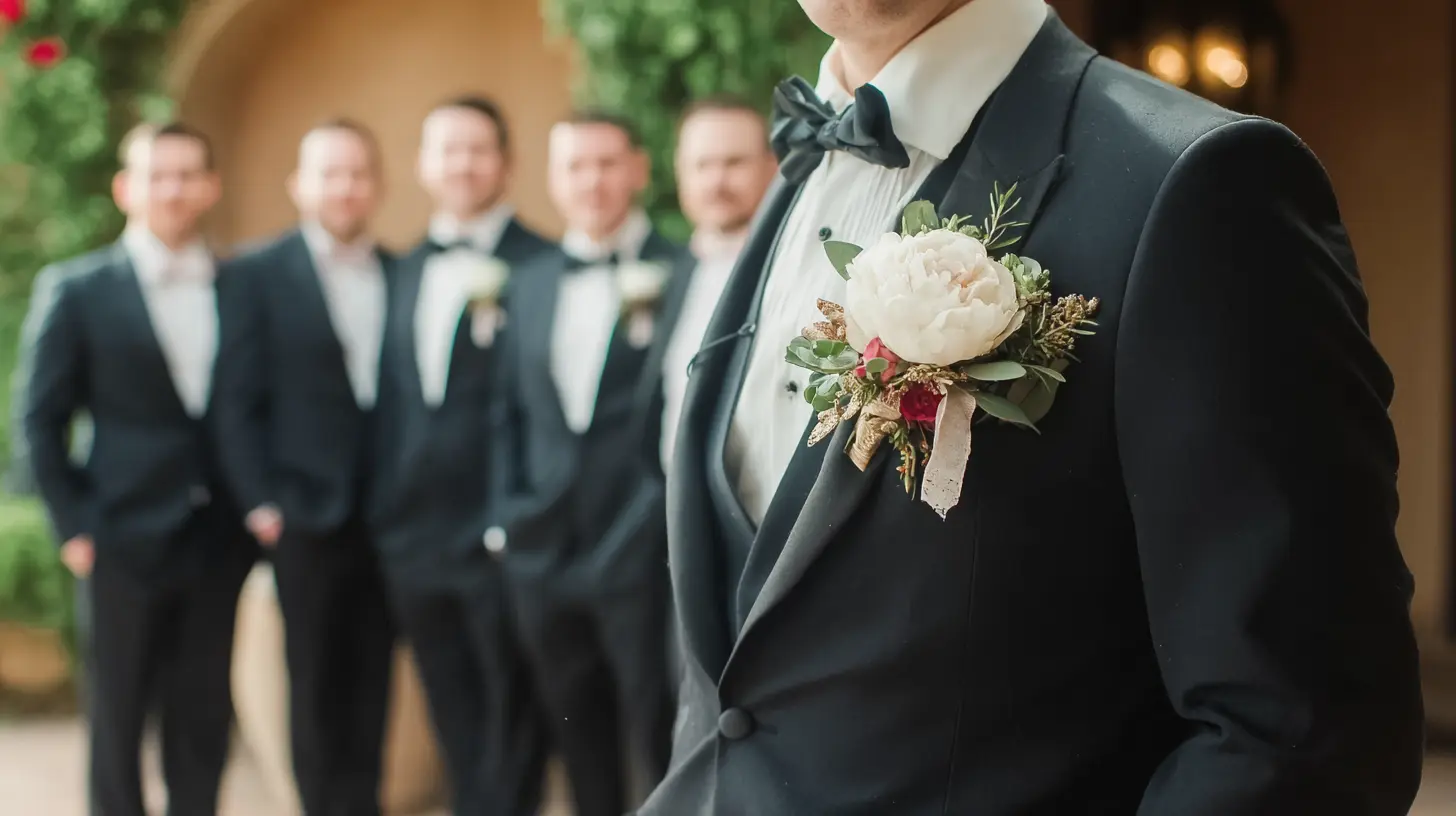
Not every man at the wedding wears a Boutonniere, but the ones who do are the ones who matter most.
- The groom ( his boutonniere should stand out the most)
- Groomsmen
- Fathers of the bride and groom
- Grandfathers
- Ushers and ring bearers
- Officiant
A boutonniere does not have to be fancy to be meaningful. Even a single stem pinned to a lapel tells the room, This person matters today.
The groom’s boutonniere should always stand out from the rest of the groomsmen’s. A popular styling technique is to take one standout “hero bloom” from the bridal bouquet and feature it on the groom’s lapel.
Choosing a Corsage or Boutonniere for Prom
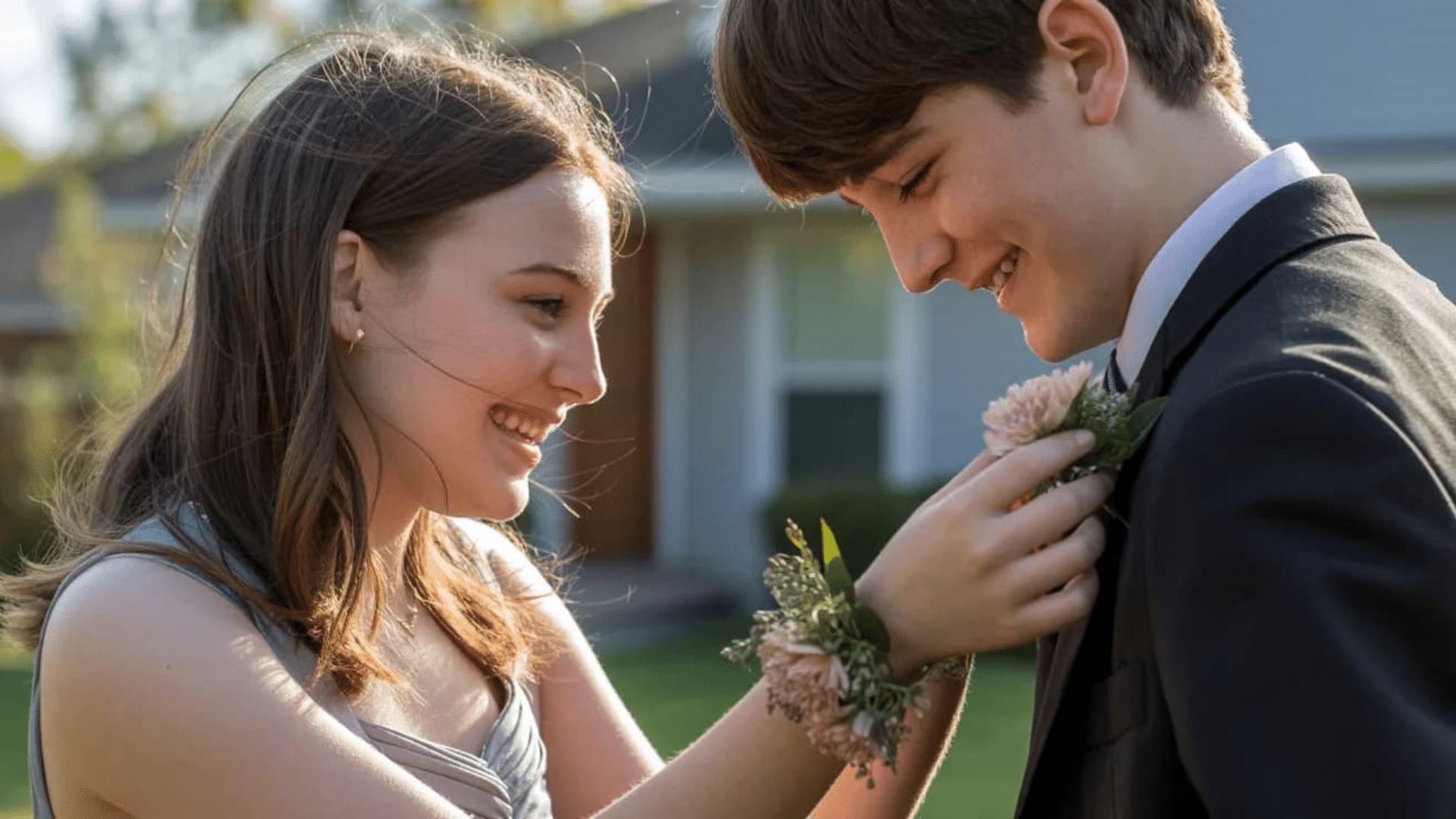
Prom is one of the biggest nights of the year, and the flowers should match that energy. The same attention to detail matters as they work together to create great wedding ceremony ideas that make the day more memorable.
Traditionally, the guy buys the corsage, and the girl buys the boutonniere, but today many couples choose or purchase them together.
Matching sets are increasingly popular, with couples coordinating the dress or suit color for a polished, put-together look.
When it comes to style, a wrist corsage works best with strapless or simple-neckline dresses, as it sits comfortably on the wrist without interfering with the outfit.
How to Wear a Corsage and Boutonniere
Wearing a corsage or boutonniere correctly is just as important as choosing the right one. Here is a quick guide to make sure everything looks polished and stays in place all day.
1. Corsage
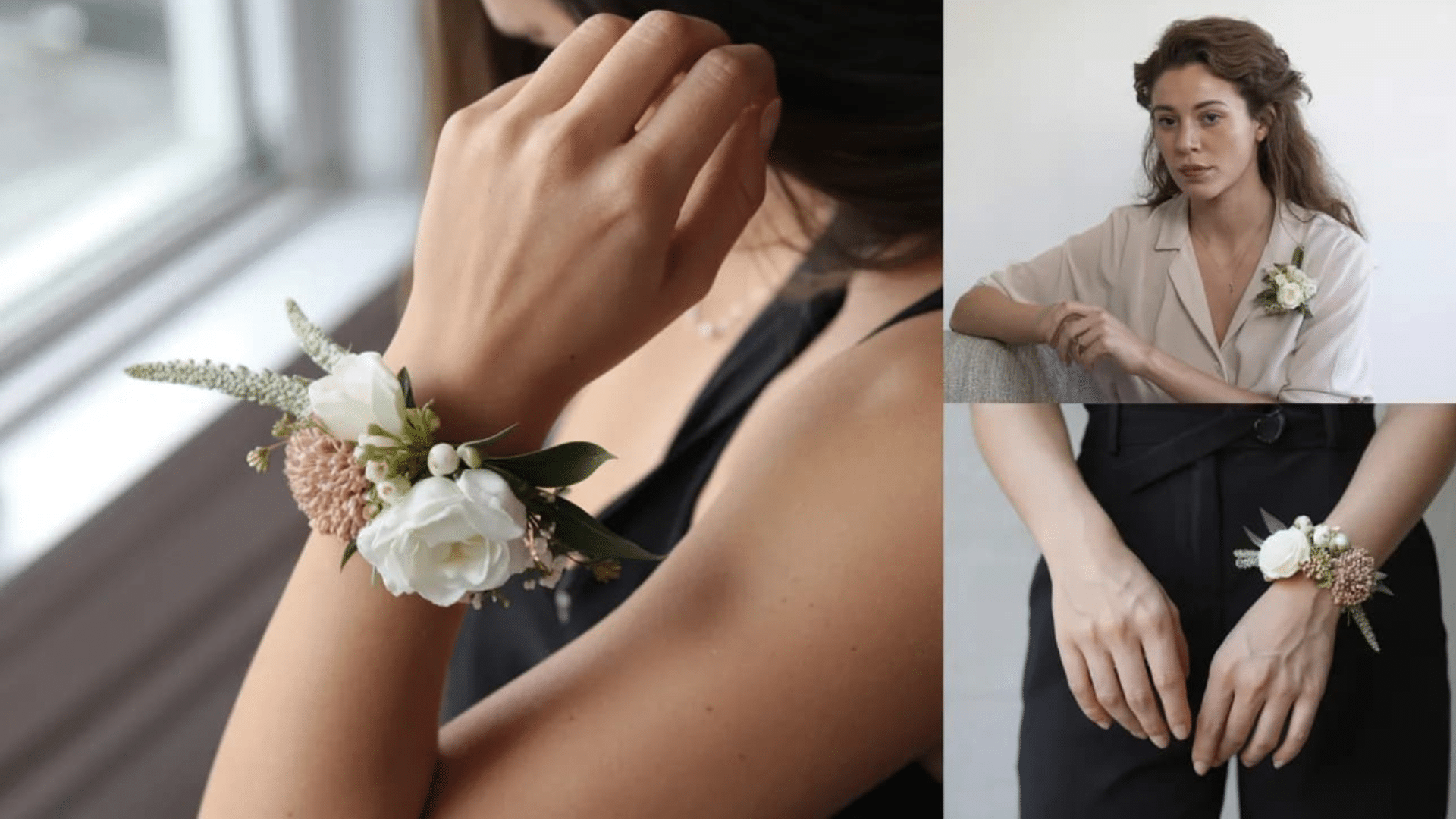
Whether you go for a wrist or pin-on style, placement and comfort are everything. Here is how to wear each one right.
A wrist corsage is worn on the left wrist just like a bracelet, making it the most comfortable and effortless option.
A pin-on corsage, pinned on the upper chest area, typically on the left side, depending on the outfit, or it is secured to the left side of the dress or blouse with a small pin.
Whichever style you choose, make sure it sits flat against the fabric and does not restrict movement so you can wear it comfortably throughout the event.
2. Boutonniere
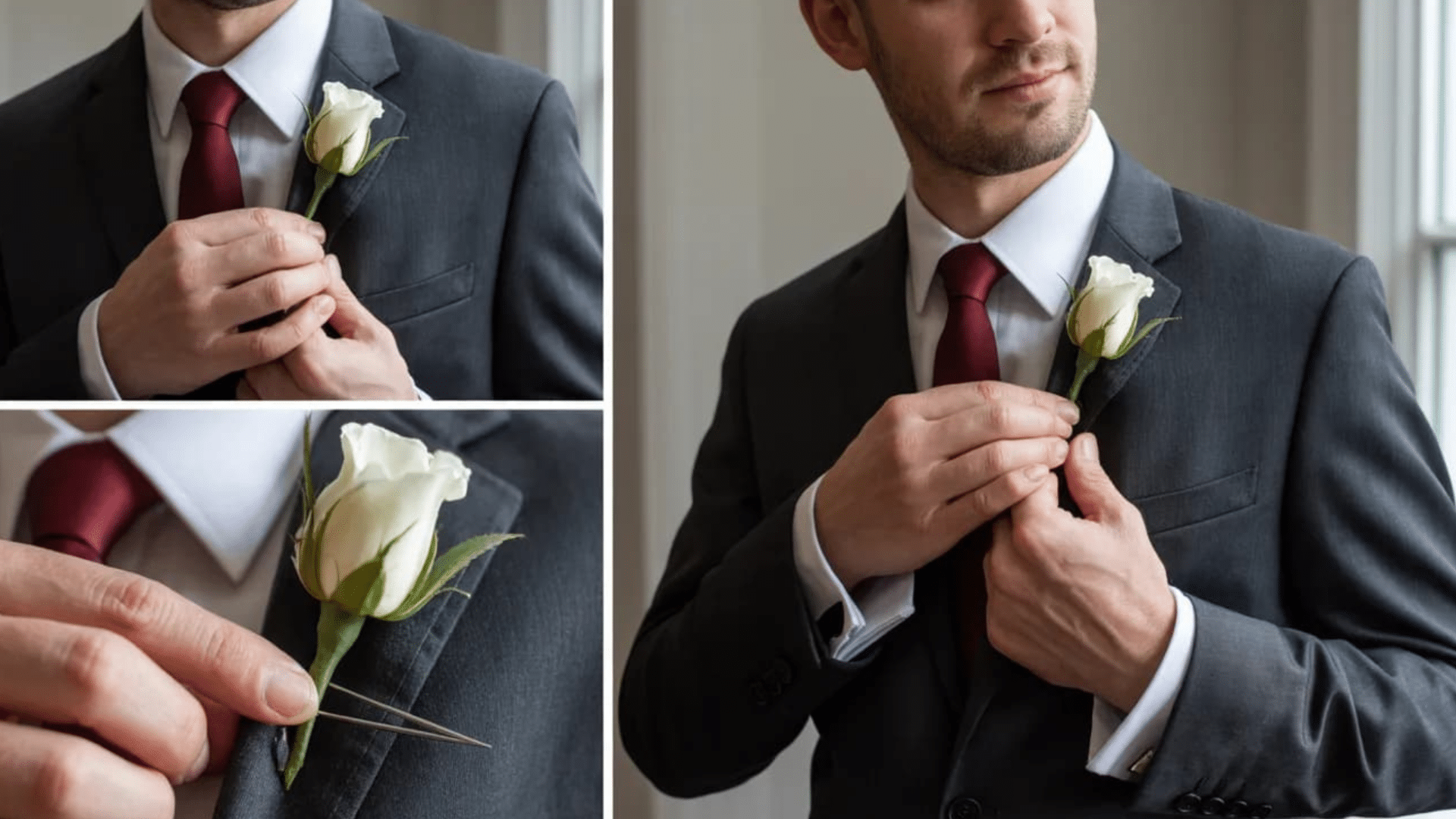
A boutonniere only looks sharp when it is pinned in the right spot. Follow these steps for a clean, secure finish.
Pin the boutonniere to the left lapel, above the heart; this is the traditional and most recognized position.
To secure it properly, pass the pin through the back of the lapel first, then through the stem, and back through the fabric at an angle to keep it firmly in place.
If there is no lapel pin, pin it to the left chest area of the shirt, and it will look just as sharp.
Here’s a Wrap-Up
When choosing the right floral accessory, think about comfort and the overall theme of the event. For a more personal touch, consider working with a florist to get the best fit for your outfit.
If you are planning a wedding, heading to prom, or attending any formal event, the right floral accessory can bring everything together in the most personal way possible.
Need help finding the right corsage or boutonniere?
Talk to a local florist today. They will help you choose the right flowers. Browse our guides on seasonal wedding flowers and prom flower ideas for more ideas.
Frequently Asked Questions
How Long Do Corsages and Boutonnieres Last?
Most stay fresh for eight to twelve hours when stored in a cool place before the event. Keep them in the refrigerator until you’re ready to wear them.
Can You Wear a Corsage with A Pantsuit?
Yes, pin it to the left lapel just like a boutonniere. A smaller, flat-style corsage works better here than a full wrist style.
What Do You Do with A Corsage or Boutonniere After the Event?
Press them flat between heavy books to dry, or drop them in resin for a keepsake that actually lasts. Both are easy ways to hold onto the memory without letting the flowers go to waste.