


Marriage can be hard. Life gets busy, small problems pile up, and couples can start to feel distant.
If you are searching for how to save your marriage when it seems impossible, you are not alone, and you are not too late. Feeling disconnected does not mean it is over.
Learning how to save your marriage is about understanding each other, breaking harmful habits, and building trust step by step. It’s not about being perfect or avoiding disagreements.
Even small actions, like listening carefully or showing appreciation, can make a big difference. Every couple faces challenges, but acting early and intentionally can prevent issues from growing.
The right approach helps couples reconnect, feel valued, and strengthen their bond.
Why Do Marriages Start to Fall Apart?
Before you fix anything, you need to know what broke it. Most couples fight about the wrong things. Here is what is really going on beneath the surface.
- Lack of Communication: You talk about schedules, kids, and bills. But you stopped talking about feelings, fears, and what you actually need from each other.
- Unresolved Resentment: Old fights never fully closed. Small hurts piled up over time. Now, even a small argument carries the weight of years.
- Emotional Distance: You live together but feel alone. No deep conversations. No real connection. Just two people sharing a space.
- No Quality Time: Life got busy, and your marriage got pushed to the bottom of the list. Slowly, you became strangers.
- Broken Trust: A lie, a betrayal, or repeated let-downs. Once trust cracks, everything else starts to feel uncertain and unsafe.
You cannot fix what you have not named. Look at this list honestly. Pick what applies. That is your real starting point.
How to Save a Failing Marriage: First, Know the Warning Signs
Before you can fix a failing marriage, you have to recognize one.
Most couples ignore the early signals for years. According to research by Dr. John Gottman, founder of the Gottman Institute, couples in the United States wait an average of six years after problems begin before seeking help. By that point, patterns of resentment and disconnection are already deeply entrenched.
Do not let that be your story. Here are the five warning signs your marriage is failing right now.
Warning Sign #1: The Four Horsemen Are Present
This is the most important sign to know. Dr. John Gottman, who spent over four decades studying what makes marriages succeed or fail, identified four specific communication patterns that destroy relationships. He called them the Four Horsemen, and they are criticism, contempt, defensiveness, and stonewalling.
Here is what each one looks like:
- Criticism: Attacking your partner’s character, not their behavior. “You never think about anyone but yourself,” instead of “I felt hurt when you forgot our plans.”
- Contempt: Sarcasm, eye-rolling, mockery, or sneering. This is the single greatest predictor of divorce and must be eliminated completely.
- Defensiveness: Refusing to take responsibility and instead turning things back on your partner.
- Stonewalling: Shutting down, going silent, and completely withdrawing from the conversation.
According to Gottman’s research, by observing couples discuss conflict for just 15 minutes, his team could predict divorce with 93.6% accuracy based on the presence of these four patterns. If you recognize two or more of these happening regularly in your marriage, your relationship needs urgent attention.
The good news: every horseman has an antidote. Criticism is replaced with a gentle complaint using “I feel.” Contempt is replaced with appreciation and respect. Defensiveness is replaced with taking ownership. Stonewalling is replaced with a calm timeout and returning to the conversation.
Warning Sign #2: Communication Has Completely Broken Down
You talk about schedules, kids, and bills, but real conversations have stopped. According to the American Academy of Matrimonial Lawyers, communication failure is cited in nearly two-thirds of all divorce filings. In failing marriages, constructive dialogue disappears. What is left is either silence or the same argument on a loop.
Warning Sign #3: Emotional Disconnection Has Set In
You live together but feel completely alone. Dr. Sue Johnson, founder of Emotionally Focused Therapy (EFT), identifies emotional disconnection as one of the biggest predictors of marital dissatisfaction. Couples in this state often function like co-managers running a household, rather than as partners in a relationship.
Warning Sign #4: You Have Stopped Imagining a Future Together
When you stop planning ahead, setting shared goals, or picturing the years ahead as a couple, that is one of the quietest and most dangerous signs of all. A marriage without a shared future slowly starves to death.
Warning Sign #5: Money Has Become a Source of Secrecy or Conflict
Research confirms that financial disagreements are among the most common causes of marital conflict, cited by 20% of divorcing couples according to the World Metrics.
Hiding purchases, lying about debt, or repeatedly fighting over spending corrodes trust faster than most couples realize, and it rarely stays confined to money alone.
Recognizing these signs is not the end. It is the beginning.
Every pattern above is reversible, but only if you act now. The 11 rules below will show you exactly how to stop a failing marriage from ending.
How to Save Your Marriage: 11 Rules That Work
Couple sharing a tender moment on a sofa in a warm, cozy living room setting.
Maintaining a healthy marriage requires conscious effort and consistent habits.
By understanding each other, breaking harmful patterns, and nurturing connection, couples can rebuild trust, improve communication, and strengthen their bond over time.
1. Stop Trying to Win Arguments
Focus on understanding, not being right. Replace blame with feelings, like saying “I feel unheard when…” instead of “You never listen.”
This shifts conversations from conflict to collaboration, reducing defensiveness and opening space for productive dialogue.
2. Listen to Really Hear, Not Just to Reply
Truly listen by letting your partner finish and reflecting back what they said. Active listening shows understanding, fosters empathy, and makes both partners feel valued.
Avoid planning your response while they speak to ensure clear communication and respect for emotions.
3. Find What’s Really Broken (Not Just the Surface Fight)
Most fights hide deeper unmet needs. Instead of reacting to the surface issue, ask what your partner truly needs.
Addressing the root problem, such as feeling unsupported or unheard, strengthens trust and reduces recurring arguments over similar issues.
4. Break the Patterns That Are Hurting You Both
Identify recurring conflict cycles, like trigger → reaction → shutdown. Choose one behavior to change this week, such as pausing before responding.
Small, consistent adjustments gradually disrupt negative patterns, making discussions more constructive and reducing stress in the relationship.
5. Make Time for Each Other
Schedule 20–30 minutes daily for no-phone, no-kids connection. Even simple routines like walks or coffee time strengthen intimacy, rebuild closeness, and prevent emotional drift.
Consistent shared moments help couples reconnect and feel valued despite busy schedules.
6. Speak Kindly: Even When You’re Angry
Harsh words can cause lasting damage. Pause before responding if emotions are high, and avoid saying things you wouldn’t say to a friend.
Speaking with kindness maintains respect, reduces defensiveness, and keeps conflict constructive, protecting the emotional safety of your relationship.
7. Show Appreciation, Out Loud
Don’t assume gratitude is understood; say it. Simple statements like “I noticed you handled that, thank you” reinforce connection, acknowledge effort, and foster warmth.
Regular appreciation encourages positive behavior and strengthens the emotional bond between partners.
8. Rebuild Trust with Small, Consistent Actions
Trust grows through daily reliability, not big gestures. Keep promises, even minor ones like returning a call on time.
Consistent follow-through shows dependability, reassures your partner, and rebuilds confidence, creating a strong foundation for a resilient relationship.
9. Get Professional Help Early: Not as a Last Resort
Couples therapy works best before issues escalate. Early guidance provides neutral insight, improves communication, and addresses underlying problems.
Think of it as preventive care for your relationship, helping resolve conflicts constructively and strengthening the connection.
10. Stop Bringing Up the Past in New Fights
Focus each conflict on the current issue. Avoid rehashing old arguments, as they prevent resolution and fuel resentment.
Addressing one problem at a time allows productive dialogue, reduces emotional overload, and keeps the relationship fair and focused on solutions.
11. Choose Your Marriage Every Single Day
Commitment is an active, daily choice. Decide how you will nurture your relationship through small actions, gestures, or time together.
Couples who consistently invest in their marriage grow closer, handle challenges better, and maintain a strong, lasting partnership.
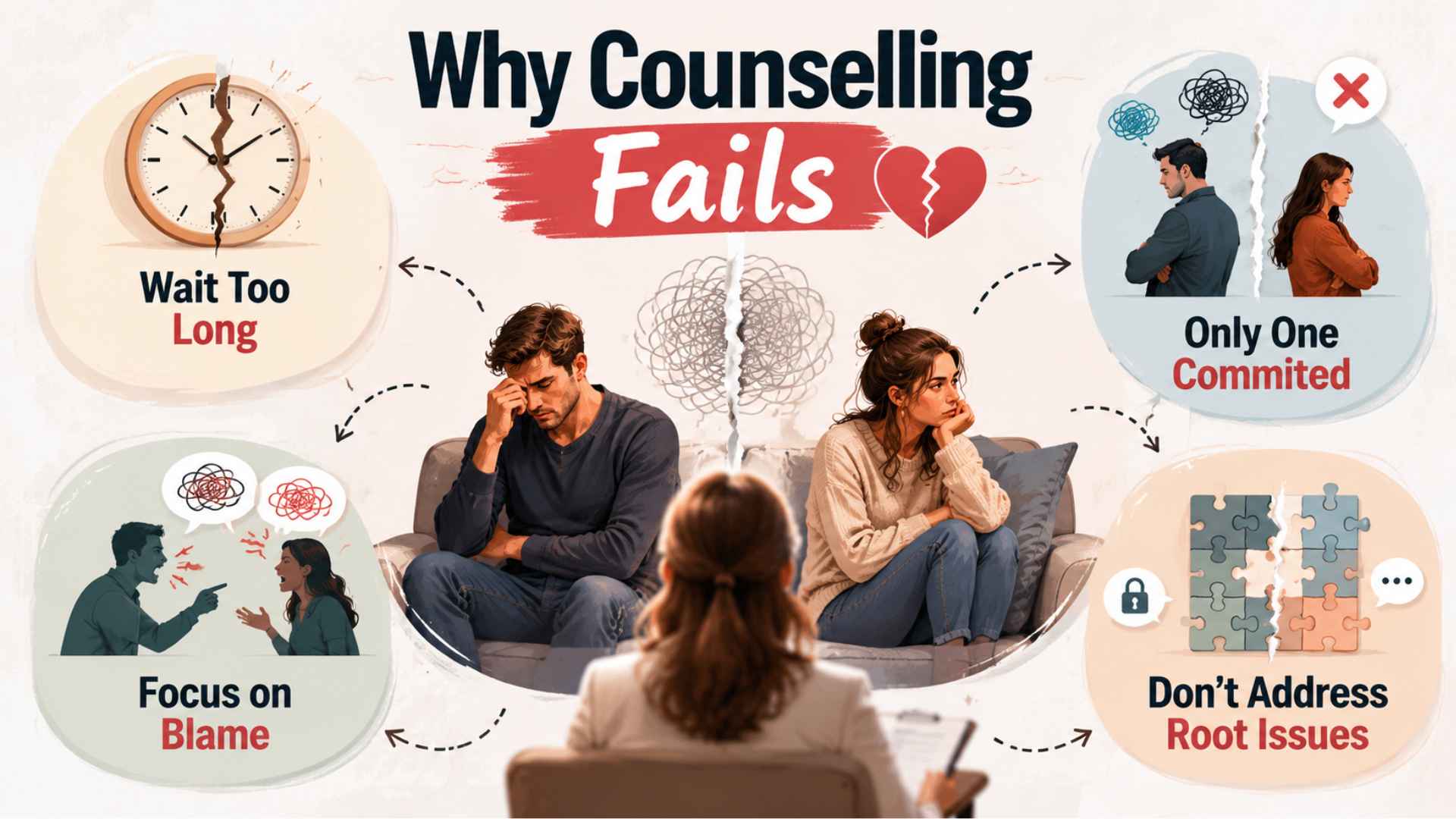
What NOT to Do When Trying to Save Your Marriage
Some actions feel natural when you’re hurting, but they make things worse. Avoid these five mistakes at all costs.
- Don’t involve friends or family to take sides. Pulling others into your fight creates more tension. It embarrasses your partner and makes rebuilding trust harder.
- Don’t make threats you won’t follow through on. Saying “I’ll leave” just to win an argument destroys your credibility. Empty threats build fear, not respect.
- Don’t ignore the problem and hope it fixes itself. Distance grows when problems go unaddressed. Small issues become big ones fast. Silence is not a solution.
- Don’t use past mistakes as weapons in new fights. Bringing up old wounds keeps you both stuck. Every argument needs to stay focused on the present issue only.
- Don’t expect change to happen overnight. Healing a marriage takes time. Expecting instant results leads to frustration and giving up too soon.
Saving a marriage takes honest effort from both sides. Avoiding these mistakes won’t fix everything, but it will stop you from making things harder than they already are.
Is It Too Late to Save Your Marriage?If you still care and both partners are willing, the marriage is likely saveable. Even if only one partner tries, improvement is possible, though it may take more effort and patience to rebuild the connection. |
Wrap Up
Saving a marriage requires intention, consistent effort, and honest communication.
By addressing the root issues, breaking harmful patterns, showing appreciation, and investing in their relationship daily, couples can rebuild trust and deepen their connection.
Professional support can accelerate progress, especially when both partners are committed. Avoid blaming, rehashing the past, or expecting instant change, and focus on practical steps that strengthen your bond.
Every relationship faces challenges, but small, deliberate actions create lasting impact.
Are you ready to take the first step toward a stronger, healthier marriage? Bookmark this page or share it with someone who could benefit from these strategies.
Frequently Asked Questions
How Long Does it Typically Take to See Improvements in a Struggling Marriage?
Progress varies, but consistent daily effort often leads to noticeable changes within weeks, while rebuilding deep trust may take months.
Can Individual Therapy Benefit a Couple if Only One Partner Participates?
Yes, individual therapy helps personal growth, better communication, and conflict management, indirectly improving relationship dynamics.
Are There Non-Verbal Ways to Strengthen a Marriage Alongside Communication?
Physical affection, shared routines, thoughtful gestures, and active listening without words can enhance intimacy and emotional connection.