
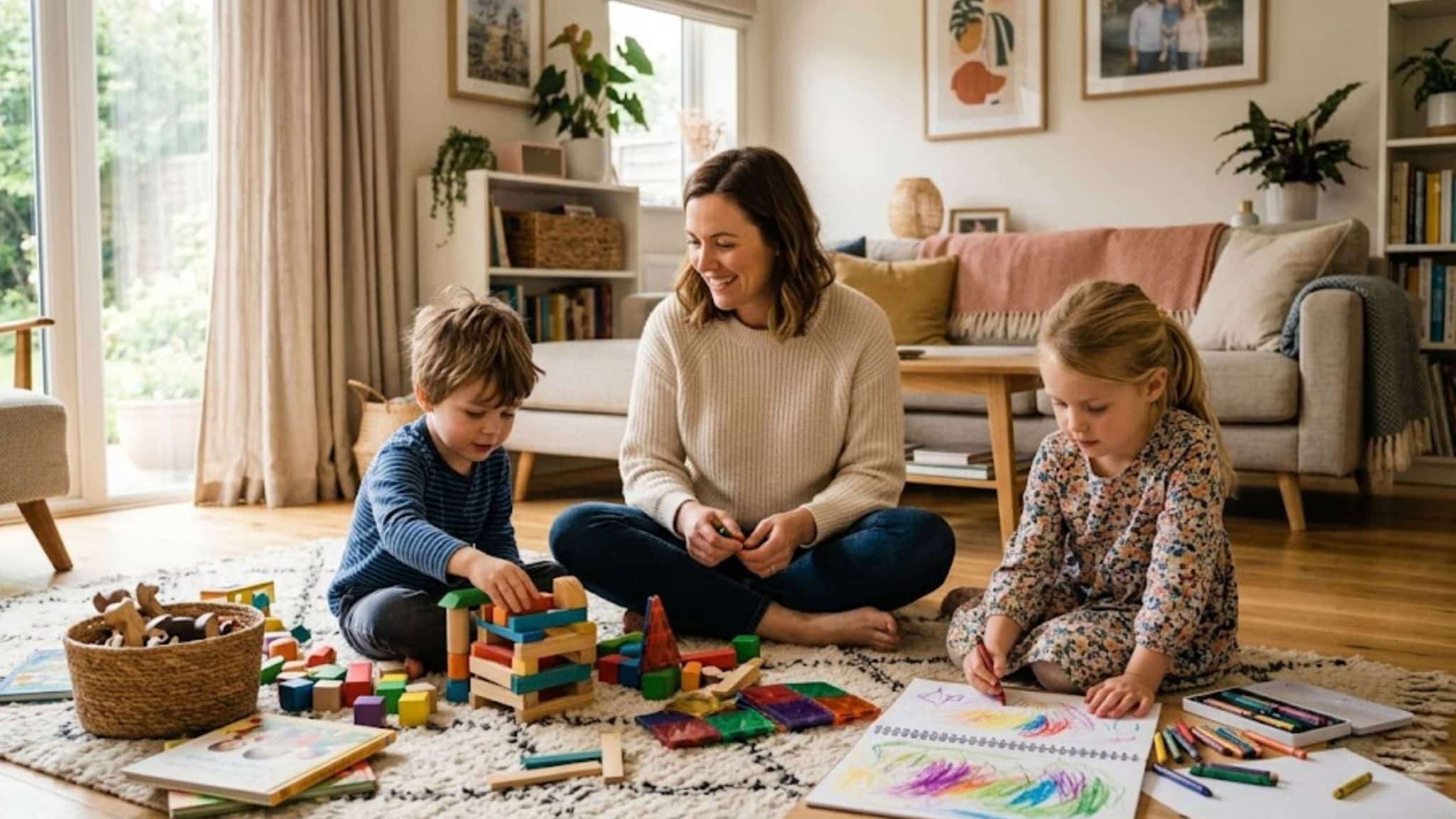
Finding ways to entertain kids without screens can feel difficult, especially when devices are part of everyday life.
Still, simple offline play gives children more chances to move, create, think independently, and spend quality time with family. Screen-free activities for all ages can also help reduce boredom while supporting learning and social skills in a natural way.
Many of the best activities require only basic household items and a little imagination.
From creative crafts and brain games to outdoor play and pretend activities, there are plenty of easy ways to keep kids engaged without relying on phones, tablets, or TVs.
Why Screen-Free Activities Matter for Kids?
Kids today spend more time on phones, tablets, TVs, and gaming devices than ever before. While screens can be useful in moderation, excessive screen time may affect sleep, focus, physical activity, and social skills.
That is why screen-free activities for all ages are important for healthy growth and development.
Simple activities like drawing, building, reading, outdoor play, and pretend games help children use their imagination and stay active.
They also give families more chances to talk, laugh, and spend time together. Even short breaks from screens can help kids feel more focused, creative, and connected to the people and world around them.
Creative Activities for Ages 4–12
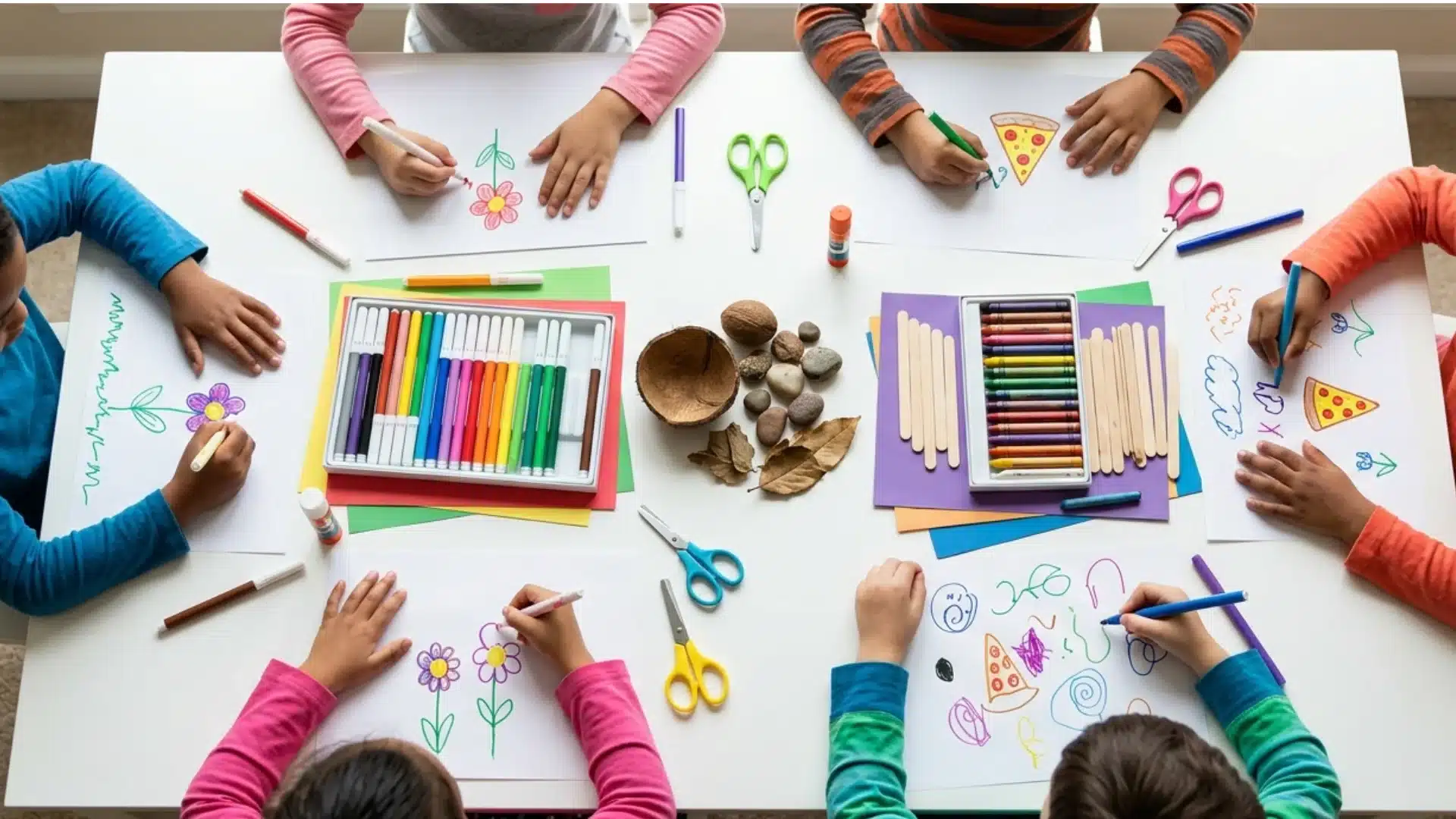
These activities help kids express ideas through art and simple projects, keeping them busy and interested without screens.
1. Draw Your Own Comic Book
Fold a few sheets of blank paper in half and staple them together to make a small booklet.
Help kids divide each page into boxes like a real comic strip. Let them draw characters, write simple dialogue in speech bubbles, and create their own story. There are no rules here, just imagination and a pencil.
2. Paint a Picture Using Watercolors
Set up a small painting station with blank paper, a cup of water, and a basic watercolor set. Show kids how to wet the brush before picking up color, then paint simple shapes or scenes.
Let them experiment with mixing two colors together to discover new shades. Remind them there are no wrong choices, just fun.
3. Make a Collage from Old Magazines
Gather a stack of old magazines, child-safe scissors, glue, and a sheet of cardstock. Ask kids to cut out pictures, words, or colors they like and arrange them on the paper before gluing everything down.
They can make a themed collage, a made-up landscape, or any other simple craft project using pictures and colors that catch their eye.
4. Create a Handmade Birthday Card
Fold a piece of cardstock in half to form the base of the card. Let kids decorate the front with markers, stickers, or small cut-out shapes.
Inside, help younger children write a short message while older kids write on their own. A handmade card always means far more than anything store-bought.
5. Build Something Using Cardboard Boxes
Save cereal boxes, shipping boxes, and paper rolls instead of throwing them away. Lay everything out and challenge kids to build a house, a car, or a castle using only what they have.
Use tape to hold pieces together and markers to add details. This activity can keep children busy for hours.
6. Start a Nature Journal
Give each child a blank notebook and take them outside to a backyard, park, or even a sidewalk. Ask them to look closely at leaves, bugs, or clouds and draw what they see.
Encourage a few written notes about what they noticed. Over time, the journal becomes a real record of their outdoor discoveries.
7. Make Homemade Playdough
Mix 1 cup of flour, 1/2 cup of salt, 1/2 cup of water, and a few drops of food coloring in a bowl. Knead until smooth.
Hand it to kids with cookie cutters or a rolling pin and let them sculpt freely. Store leftovers in a sealed bag to use the next day.
8. Try Simple Origami
Start with one square sheet of paper and a beginner’s guide, which you can find for free on many library websites.
Walk kids through folding a simple shape like a boat, a fish, or a jumping frog one step at a time. Finishing even one small figure builds real patience and focus in children.
9. Set Up a Puppet Show
Help kids make simple puppets using old socks or paper bags decorated with markers and scraps of fabric.
Once the puppets are ready, drape a blanket over a low table to create a stage. Let kids write a short script or just make it up as they go. Put on the show for the family.
10. Design Your Own Bookmark
Cut a strip of cardstock about two inches wide and seven inches long for each child. Let kids decorate it with markers, washi tape, stickers, or small drawings.
Punch a hole at the top and loop a piece of yarn through to finish it off. Pair this craft with picking out a new book to read.
11. Write and Illustrate a Short Story
Ask kids to think of one character and a simple problem that character needs to solve. Have them write one or two sentences per page and draw a matching picture alongside the words.
Staple the pages together when done. Reading their finished book out loud builds confidence and makes them genuinely proud of what they created.
Brain and Learning Activities for Ages 5–14
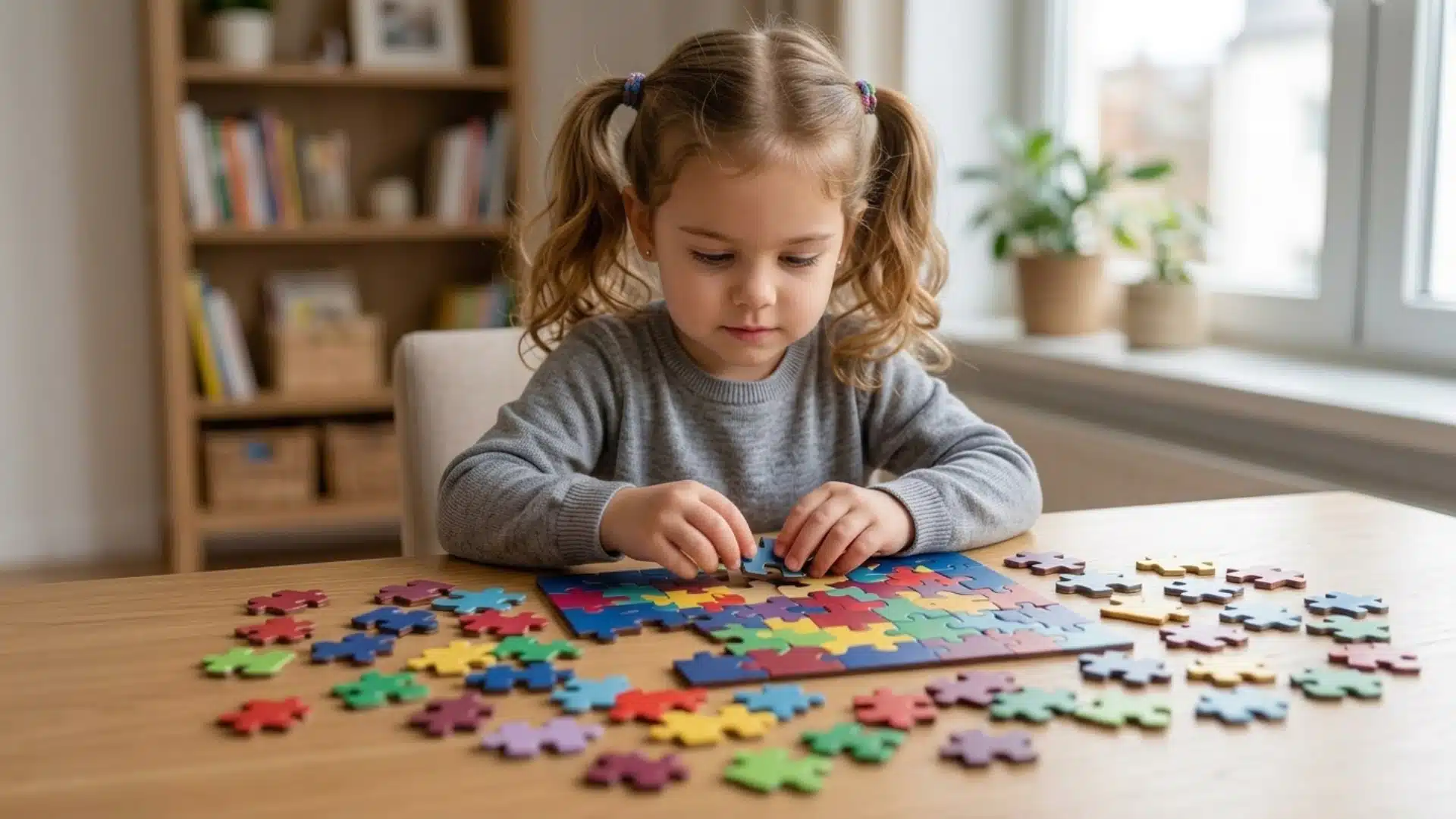
These activities make thinking and learning feel enjoyable by turning everyday skills into fun challenges kids actually want to try without any screen involvement.
12. Solve a Jigsaw Puzzle
Pick a puzzle that matches your child’s age and skill level. Tip the pieces out onto a flat surface and start by sorting the edge pieces first.
Work together to build the border, then fill in the middle section by section. Puzzles build patience, focus, and problem-solving skills in kids of all ages.
13. Read a Storybook or Chapter Book
Head to your local library or pull a book from the shelf at home and set aside 20 to 30 minutes of quiet reading time.
For younger kids, read aloud together and stop to talk about what is happening in the story. Older kids can read independently and share their favorite part afterward.
14. Write a Short Story with Your Own Ending
Give kids a simple story starter like “one morning, a kid woke up and found a door in their backyard.” Ask them to write what happens next using their own ideas.
Encourage at least one main character, one problem, and one ending. There is no wrong answer, just creative thinking on paper.
15. Learn and Practice New Vocabulary Words
Write five new words on index cards along with their definitions and a sentence using each one. Go through the cards together, then challenge kids to use each word in a sentence of their own.
Review the same words the next day to help them stick. Building vocabulary improves reading and writing across every subject.
16. Play a Memory Card Matching Game
Spread a standard deck of cards face down on a flat surface in even rows. Take turns flipping two cards at a time and trying to find a matching pair.
If the cards do not match, flip them back over. The player with the most pairs at the end wins. This simple game sharpens memory and concentration.
17. Solve a Crossword or Word Search
Print a free age-appropriate crossword or word search from a site like education.com or your local library’s website.
Read each clue carefully and work through the easier ones first before tackling the harder ones. Doing word puzzles regularly helps kids strengthen spelling, vocabulary, and the ability to focus on a task from start to finish.
18. Practice Simple Math with Fun Problems
Skip the worksheets and turn math into a real-life activity instead. Ask kids to help measure ingredients while cooking, count change at a store, or calculate how many days are left until a birthday.
Connecting numbers to everyday situations makes math feel useful and far less like a chore for most kids.
19. Try a Basic Science Experiment at Home
A simple baking soda-and-vinegar experiment is a great starting point. Pour a small amount of baking soda into a bowl, add a splash of vinegar, and watch the reaction.
Ask kids to predict what will happen before you start, and talk about why it happens after. Science is more fun when kids ask the questions.
20. Learn to Read a Map or Draw One
Print a simple map of your neighborhood or city from Google Maps and walk kids through how to read the compass, street names, and symbols.
Then challenge them to draw their own map of the house or backyard from memory. Learning to read and create maps builds spatial thinking and real-world awareness in children.
21. Practice Telling Time Using a Clock
Use an analog clock or draw a simple clock face on paper with a pencil and two hands. Start by showing hours only, then move to half hours and quarter hours once those feel easy.
Call out a time and ask kids to set the hands, or point to the clock and ask them to read it aloud.
22. Write a Daily Journal About Your Day
Give kids a dedicated notebook and set aside five to ten minutes each evening to write about their day. Encourage them to describe one thing that happened, one thing they felt, and one thing they are looking forward to.
Regular journaling builds writing habits, emotional awareness, and vocabulary without feeling like schoolwork.
Indoor Fun Activities for Ages 3–12
On days when going outside isn’t an option, these easy indoor activities keep kids moving, laughing, and fully entertained without a single screen.
23. Build a Blanket Fort
Gather blankets, bedsheets, pillows, and a few chairs from around the house.
Drape the sheets over the chairs to form walls and a roof, then secure the edges with books or clips. Add pillows inside for comfort and bring in a flashlight for extra fun. Let kids decide the layout and make it their own space.
24. Create an Indoor Obstacle Course
Use couch cushions, rolled towels, hula hoops, and tape lines on the floor to build a course through a room or hallway. Set a starting point and a finish line.
Challenge kids to crawl under, jump over, and step through each section as fast as they can. Time each round and let them try to beat their own score.
25. Play Hide and Seek
Pick one person to be the seeker and have them close their eyes and count to 20 while everyone else hides somewhere in the house.
Once the count is done, the seeker calls out and starts looking. The last person found becomes the next seeker. This classic game works well with kids as young as three years old.
26. Have a Dance Party with Music
Push the furniture to the sides of the room to clear a small dance floor. Play a mix of upbeat songs and let kids freestyle, follow along to a simple routine, or take turns showing off their best moves.
Add freeze dance to the mix by pausing the music at random and having everyone freeze in place until it starts again.
27. Play Charades with Family
Write the names of animals, movies, or everyday actions on small slips of paper and fold them up in a bowl.
One person picks a slip and acts it out without speaking, while everyone else guesses. Set a one-minute timer per turn to keep things moving. Younger kids can stick to animals and simple actions to start.
28. Try Simon Says
Pick one person to be Simon and have everyone else stand in an open space facing them. Simon calls out actions like “Simon says touch your nose” or “Simon says hop on one foot.”
Players only follow the action when it starts with “Simon says.” Anyone who moves on a command without those words sits out. The last one standing wins.
29. Toss Soft Balls into a Basket Target
Place a laundry basket or large bowl on the floor and mark a throwing line a few feet away using a strip of tape.
Give kids a few soft balls, rolled-up socks, or small stuffed animals to toss. Move the line farther back each round to increase the challenge. Keep score and take turns trying to beat each other.
30. Balance Objects and Walk Across the Room
Place a small beanbag, a paperback book, or a folded towel on a child’s head, then challenge them to walk from one side of the room to the other without letting it fall.
Set up simple obstacles along the path to make it harder. This activity improves body awareness, posture, and coordination in a surprisingly fun way.
31. Act Out Your Favorite Story
Pick a book or a familiar story that the kids already know well. Assign each person a character, including a narrator if there are enough people.
Read the story aloud together while each child acts out their part using voices, gestures, and expressions. No costumes are needed, though a few scarves or hats can make it feel like a real performance.
32. Play the Floor is Lava Game
Call out “the floor is lava” without warning, and watch kids scramble to get off the ground by jumping onto a couch, a cushion, a rug, or any nearby safe raised surface.
Anyone who touches the floor is out for that round. Keep the rounds short and rotate who calls it out so everyone gets a turn.
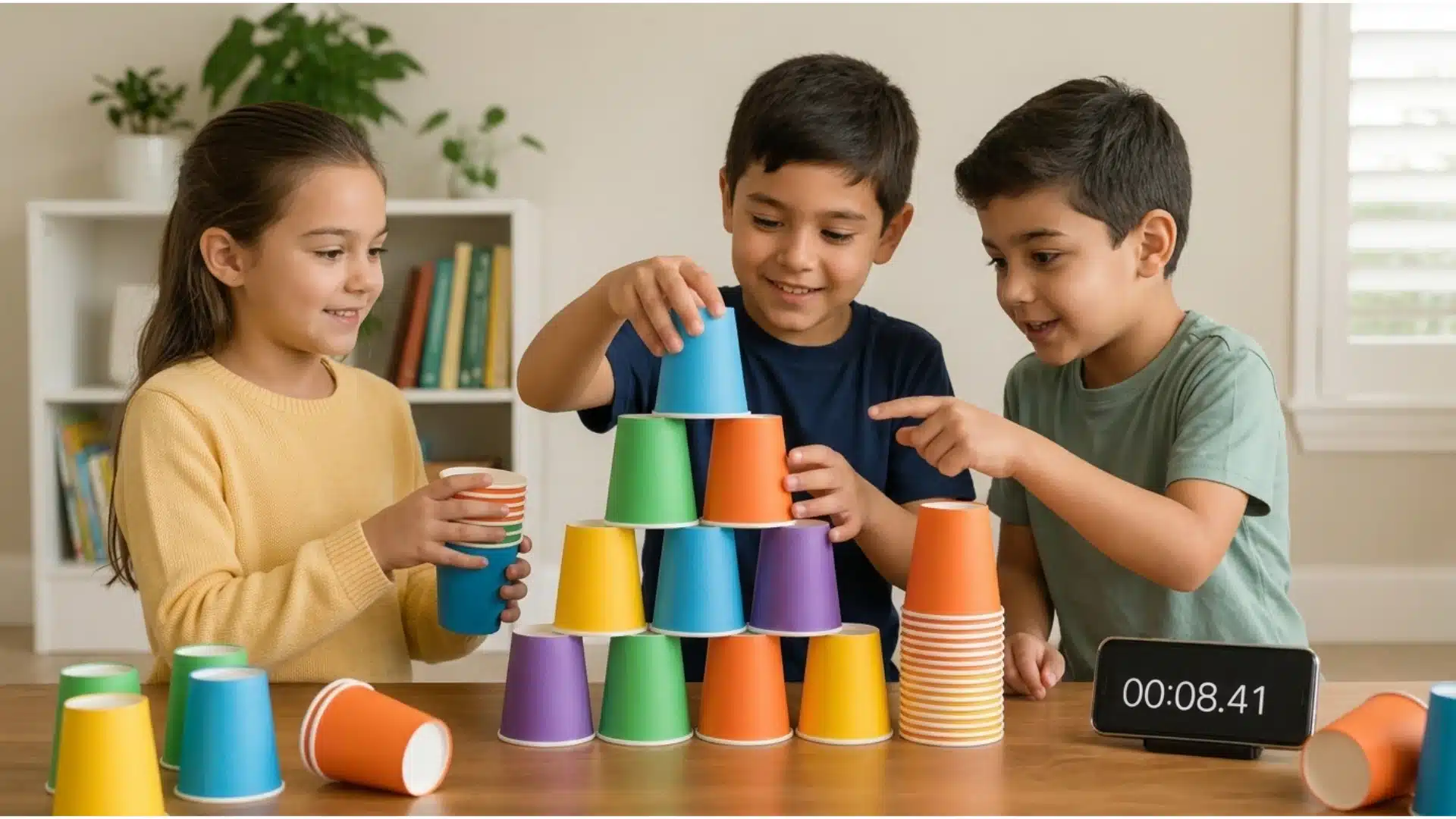
33. Stack Cups and Try to Beat Your Time
Gather 10 to 15 plastic or paper cups and place them on a flat surface, such as a table or a hard floor.
Challenge kids to stack them into a pyramid and then break the stack back down into a single pile as fast as possible. Use a phone timer to record each attempt.
Cup stacking builds hand speed, hand-eye coordination, and focus in younger children.
Outdoor Activities for Ages 4–15
Stepping outside gives kids the space to run, explore, and play freely. These simple outdoor activities are great for burning energy and building real-world skills.
34. Go on a Nature Walk and Explore
Pick a nearby trail, park, or even your own street and head outside with no particular destination in mind.
Encourage kids to slow down and notice small things like ant trails, bird sounds, or unusual rocks along the path. Bring a small bag to collect interesting finds and talk about what you discover together along the way.
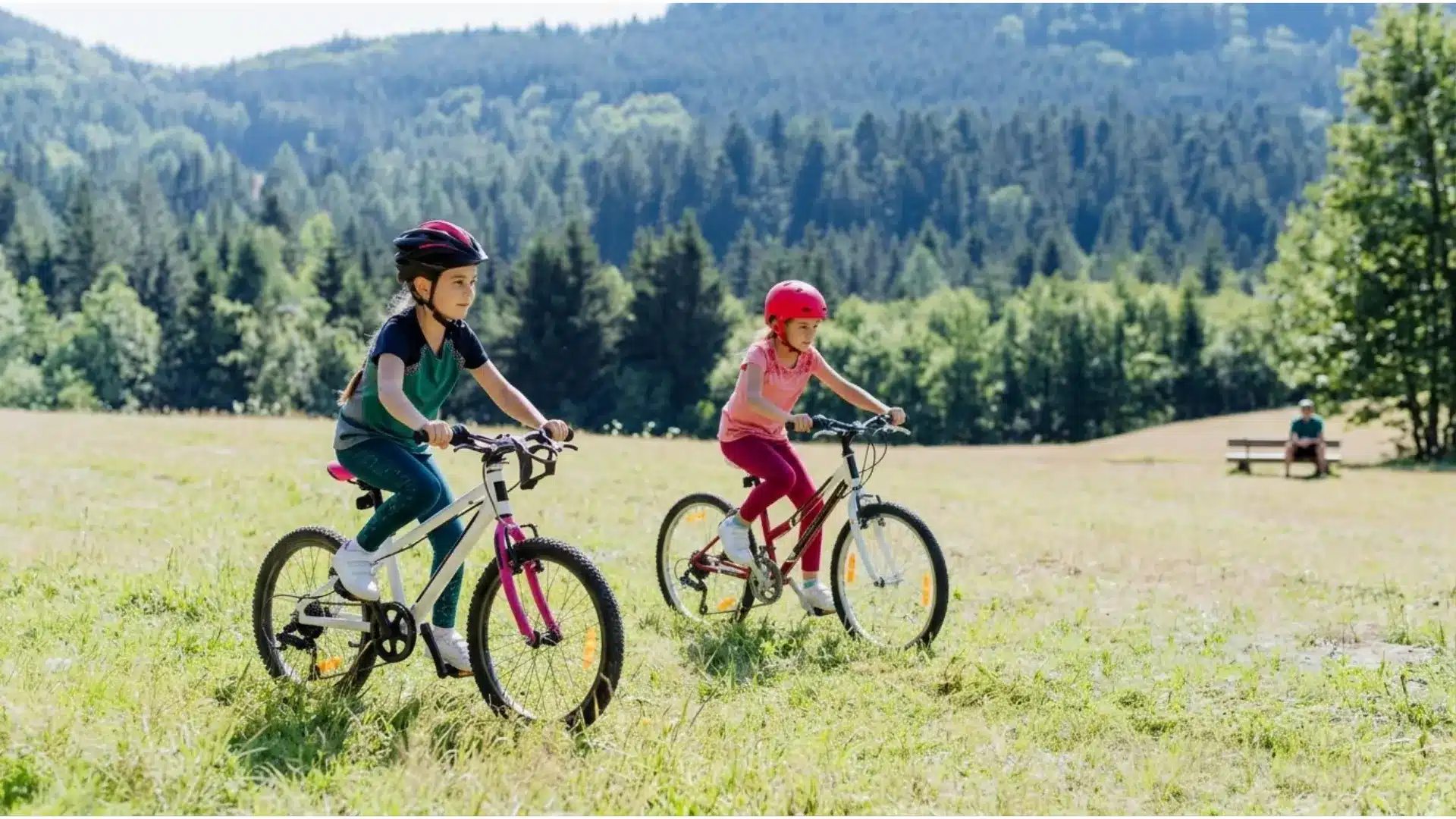
35. Ride a Bicycle
Check that helmets fit properly before heading out, with the front sitting two finger-widths above the eyebrows. Start on a flat, quiet surface, such as a driveway or an empty parking lot.
For younger beginners, remove the pedals temporarily to help them practice balance first. Once they feel steady, add the pedals back and let them gradually build speed.
36. Play Catch with a Ball
Stand facing each other a short distance apart and toss a ball back and forth using an underhand throw to start. As kids get more comfortable, increase the distance and switch to an overhand throw.
Focus on watching the ball all the way into the hands before throwing back. Even ten minutes of catch improves hand-eye coordination noticeably.
37. Draw with Sidewalk Chalk
Grab a pack of sidewalk chalk and head to a driveway or paved path outside.
Challenge kids to draw a hopscotch grid, trace each other’s full body outlines, or create an entire neighborhood scene on the pavement. Encourage them to work big since the space allows it.
Everything washes away with rain, so there is no pressure at all.
38. Fly a Kite
Choose an open area away from trees and power lines, like a large park or sports field. Unroll about 30 feet of string before launching and stand with your back to the wind.
Hold the kite up, let the wind catch it, then slowly release more string as it climbs. Kids as young as four can hold the spool once the kite is stable.
39. Play Tag with Friends or Family
Pick one person to be “it” and have everyone spread out across an open outdoor space.
The person who is “it” runs after the others and tries to tap someone, who then becomes the new “it.” Set clear boundaries so no one runs too far.
Simple variations like freeze tag keep the game fresh for players of different ages.
40. Jump Rope
Start with a single rope on the ground and practice jumping over it while it stays still before moving to a swinging rope.
For solo jumping, hold one handle in each hand and swing the rope up over the head in a smooth arc. Count jumps aloud to track progress and set small goals each session.
Jumping rope builds cardio endurance and coordination quickly.
41. Look for Shapes in the Clouds
Lie down on a patch of grass in an open area with a clear view of the sky above. Look up and take turns pointing out shapes, animals, or objects you see in the passing clouds.
Encourage kids to describe what they see in full sentences and ask others if they can spot it too. This quiet activity sparks creativity and careful observation.
42. Collect Leaves, Rocks, or Flowers
Bring a small paper bag or container and head to a park, yard, or nature trail to gather interesting natural items.
Challenge kids to find five different leaf shapes, three different rock textures, or flowers in two different colors. Once home, sort and label the collection together.
Pressing leaves between heavy books is a simple way to preserve them. Collected flowers can also be used later for simple flower arranging at home using jars or small containers.
43. Set Up a Backyard Picnic
Spread a blanket on the grass and let kids help pack a simple lunch or snack from the kitchen. Include easy items like sandwiches, fruit, crackers, and water.
Encourage kids to carry out the food themselves and arrange everything on the blanket. Eating outside in the fresh air makes an ordinary meal feel like a small adventure worth looking forward to.
44. Run Simple Races Like Sprint or Relay
Mark a start line and a finish line in your yard or driveway using chalk or two sticks placed on the ground.
Start with a basic sprint where each person runs from one line to the other as fast as possible. For a relay, split into two teams and pass a stick or rolled sock between runners. Time each race and let kids set new personal records.
Imaginative and Social Play for Ages 3–12
These activities go beyond entertainment. They help kids grow their confidence, develop social skills, and think more creatively without a screen in sight.
45. Pretend to Run a Restaurant or Shop
Set up a play area with a small table, some plastic food or empty food boxes, and a notepad for taking orders.
One child plays the server while others sit as customers and place their orders. Switch roles after every few rounds so everyone gets a turn running the restaurant. Pretend money made from paper adds a fun extra layer.
46. Play House or Family Role-Play
Assign family roles to each child and set up different areas of the house as separate rooms in their pretend home.
One child can be the parent cooking dinner while another pretends to be a kid doing homework. Let the story develop on its own, with minimal direction from adults.
Open-ended role-play naturally builds communication and emotional understanding.
47. Create a Treasure Hunt with Clues
Write a series of short clues on separate slips of paper, with each clue pointing to the next hiding spot.
Hide a small prize or treat at the final location. Read the first clue aloud to get things started and let kids work through the rest on their own. Keep clues simple enough for the youngest player in the group.
48. Build a Pretend Campsite Indoors or Outdoors
Arrange chairs and blankets to form a tent shape or use a real pop-up tent if you have one. Add sleeping bags, a flashlight, and a few stuffed animals as campsite companions.
Pretend to cook over a fake fire using sticks or building blocks as logs. Take turns telling made-up campfire stories once everyone is settled inside.
49. Dress Up and Role-Play Different Jobs
Pull out old clothes, hats, scarves, and accessories from around the house and set them in a pile for kids to sort through.
Call out a job like firefighter, chef, astronaut, or doctor, and let each child put together an outfit using only what is available. Once dressed, ask them to act out what that person does during a typical workday.
50. Put On a Small Talent Show
Give each child five to ten minutes to prepare something to perform for the rest of the group. It can be a song, a dance, a magic trick, a joke, or even a gymnastics move.
Set up a small performance space with a clear stage area and seating for the audience. Cheer loudly after every single act.
51. Create Your Own Game and Teach Others
Ask kids to invent a brand-new game using whatever materials they have nearby, such as cards, dice, paper, or small objects from around the house.
The game needs a name, at least two rules, and a way to win. Once the rules are set, have them explain the game to the rest of the family and play a full round together.
52. Act as a Teacher and Give a Lesson
Ask each child to pick a subject they know well or something they recently learned at school. Set up a small classroom area with a chair for the teacher and seats for the students.
Give the child teacher a few minutes to prepare and then let them run the lesson. Encourage the audience to ask real questions at the end.
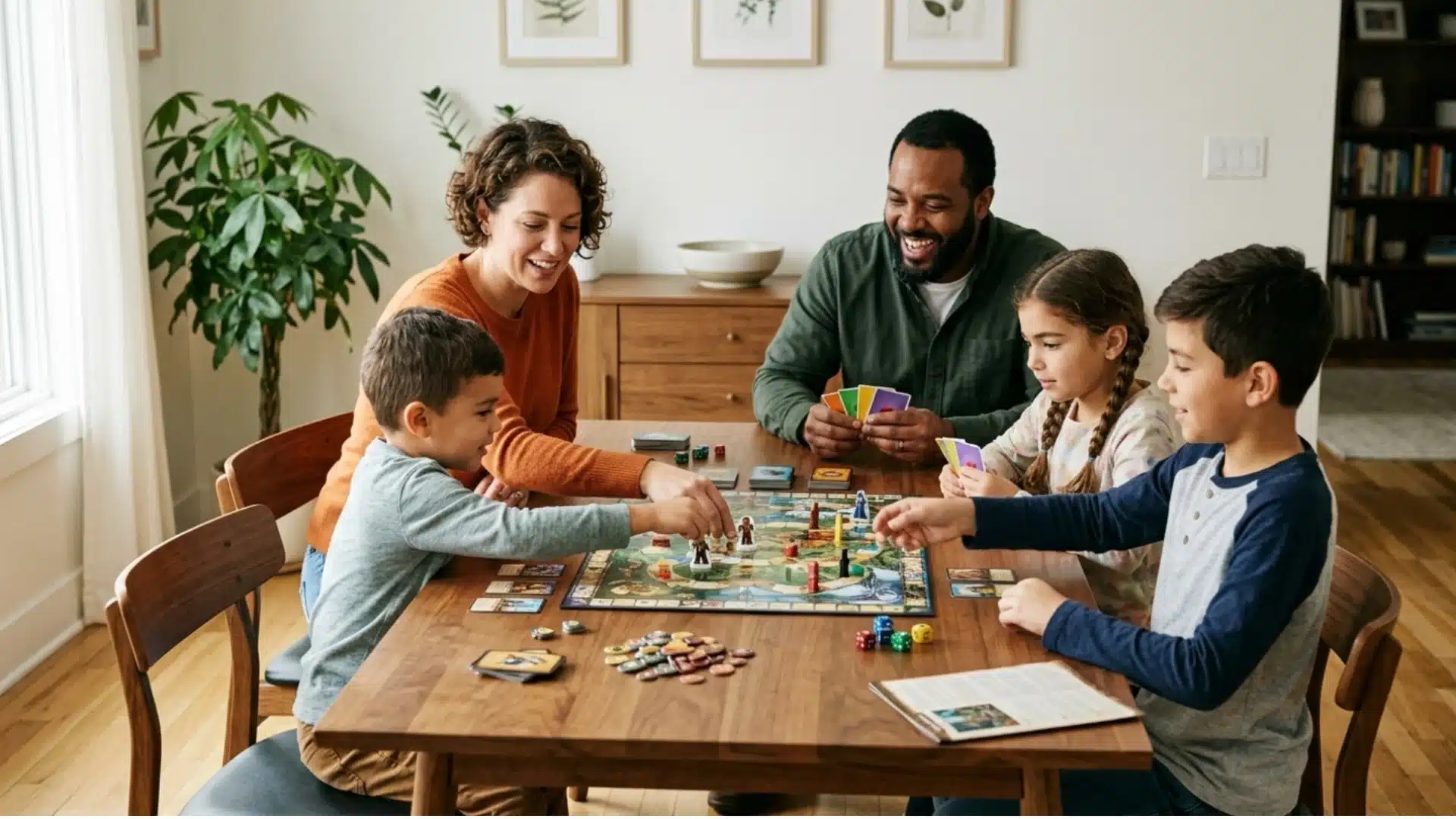
53. Play Board Games with Family
Choose an age-appropriate board game from your collection and clear a table large enough for everyone to sit comfortably around.
Read the rules aloud before starting so every player understands how the game works. Keep the atmosphere light and focus on having fun rather than winning. Short games like Uno or Trouble work well for mixed age groups.
54. Tell Stories in a Storytelling Circle
Have everyone sit in a circle facing each other. One person starts a story with a single opening sentence, and the next person adds one more sentence to continue it.
Keep going around the circle until the story reaches a natural ending or gets wonderfully silly. Encourage kids to really listen to each line before adding their own part.
55. Play with Building Blocks to Create a City
Pour out a full set of building blocks onto a large, flat surface, such as the floor or a low table. Challenge kids to plan and build an entire city layout with roads, buildings, parks, and bridges.
Assign each child a different section of the city to build and then connect everything together at the end. No two cities ever look the same.
Tips for Parents Starting Screen-Free Time at Home
Getting started is usually the hardest part. These simple tips help make screen-free time at home feel manageable and less like a daily struggle.
- Start with One Hour at a Time: Do not try to eliminate all screen time at once. Begin with a one-hour screen-free window each day and build from there as kids adjust.
- Put Devices Out of Sight: Store tablets, remotes, and phones in a drawer or another room during screen-free time to reduce the temptation to ask for them.
- Set a Consistent Time Each Day: Pick the same time slot every day, such as after school or before dinner. Consistency helps children know what to expect and reduces resistance over time.
- Prepare the Activity Before You Start: Lay out supplies or set up the activity space ahead of time so kids can enter the activity more quickly and stay engaged longer.
- Keep a Short Activity List on the Fridge: Write down five to six go-to options and post the list somewhere visible. When kids say they are bored, point to the list and let them choose.
- Acknowledge the Effort, Not Just the Result: When a child finishes an activity, recognize the effort they put in. Positive reinforcement builds the habit of choosing screen-free time without being reminded.
Small, consistent changes at home make a much bigger difference than trying to overhaul everything at once. Pick one tip and start there.
Conclusion
Getting kids away from screens does not have to feel like a constant struggle. The best approach is to introduce screen-free activities for all ages in small, manageable ways and focus on making them enjoyable instead of restrictive.
Some activities will become instant favorites, while others may take time, and that is completely normal.
Every child has different interests, so a little experimentation helps. You do not need expensive supplies or a packed schedule to make unplugged time meaningful.
With consistency and encouragement, simple screen-free activities can help kids stay creative, active, curious, and more connected with family and the world around them.
Frequently Asked Questions
How Much Screen-Free Time Do Kids Need Daily?
The American Academy of Pediatrics recommends avoiding screen media for children under 18 to 24 months, except for video chatting. For children ages 2 to 5, they recommend limiting screen use to about 1 hour per day of high-quality programming.
How Do I Get My Child Interested in Screen-Free Activities?
Join in yourself. Kids engage more when parents participate. Introduce one activity at a time and let children choose between options.
Are Screen-Free Activities Beneficial for Teenagers, Too?
Teens benefit equally. The American Psychological Association links less screen time to better sleep, lower anxiety, and stronger real-life relationships.