

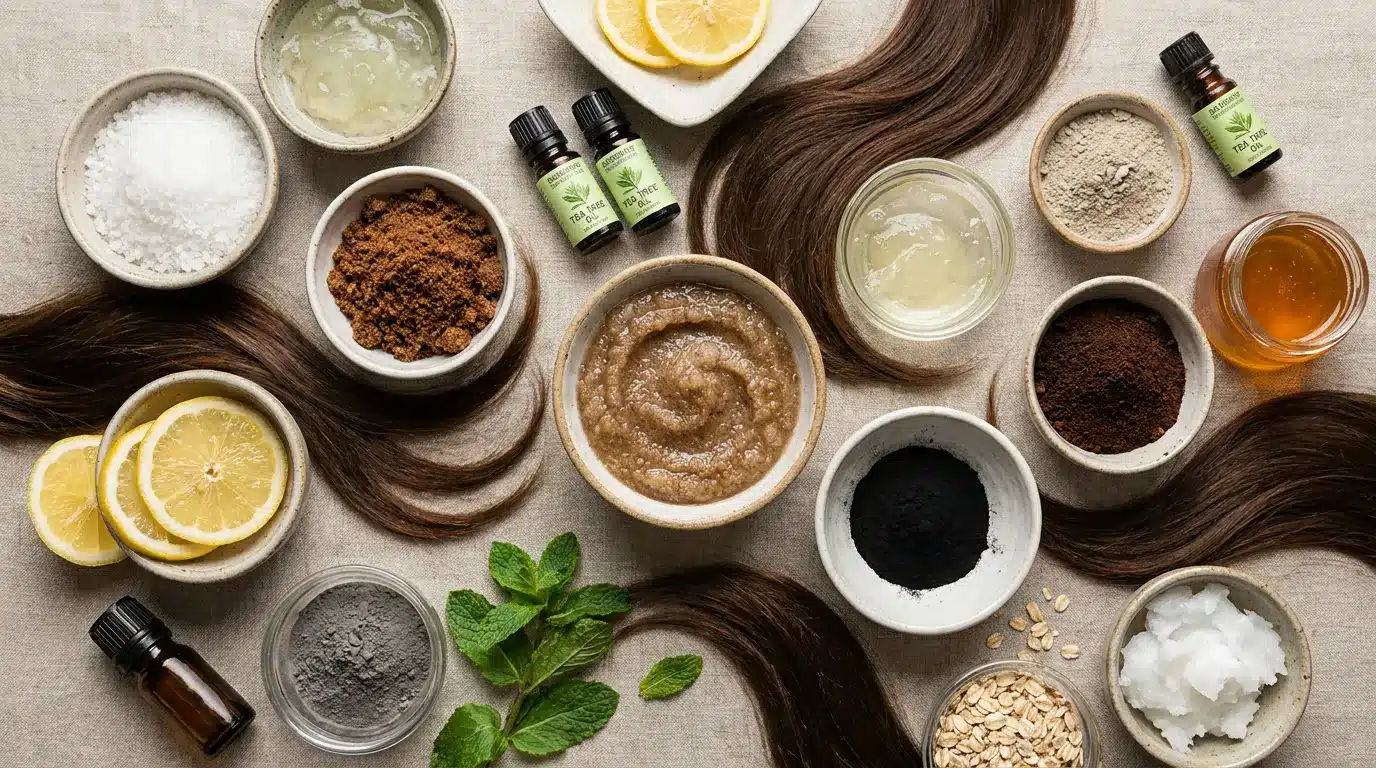
Your scalp needs just as much attention as your hair, but most people skip it completely.
Dry shampoo, sweat, oils, and styling products build up on the scalp over time, causing itching, greasiness, and dull hair.
A simple DIY scalp scrub made at home can fix that. You do not need expensive salon treatments or fancy products. Just a few kitchen ingredients and a few minutes are all it takes.
Below you will find recipes for every scalp type: oily, dry, flaky, sensitive, and congested, so you can find what works best for you.
What is a DIY Scalp Scrub?
A DIY scalp scrub is a homemade treatment that exfoliates your scalp using simple ingredients like sugar, salt, coffee grounds, or oatmeal, mixed with oils, aloe vera, or honey.
It works similarly to a face scrub by helping remove dead skin cells, excess oil, sweat, and leftover product buildup sitting on the scalp.
Over time, products like dry shampoo, hairspray, oils, and sweat can accumulate around the hair follicles, making the scalp feel greasy, flaky, itchy, or heavy.
A scalp scrub helps loosen and lift that buildup so your scalp feels cleaner and fresher after washing.
The exfoliating ingredient does the deep-cleaning work, while the base ingredient helps the scrub spread easily without tugging at your hair.
When used correctly, a homemade scalp scrub can improve scalp cleanliness and help your regular shampoo work more effectively.
Benefits of Using a Homemade Scalp Scrub
A homemade scalp scrub for buildup can help refresh the scalp and temporarily improve how your hair feels between washes.
- Removes dead skin, flakes, and product residue from the scalp
- Helps control greasy roots and excess oil buildup
- Makes the scalp feel cleaner, lighter, and less itchy
- Helps shampoos, serums, and hair products work better afterward
Identify Your Scalp Type and Needs
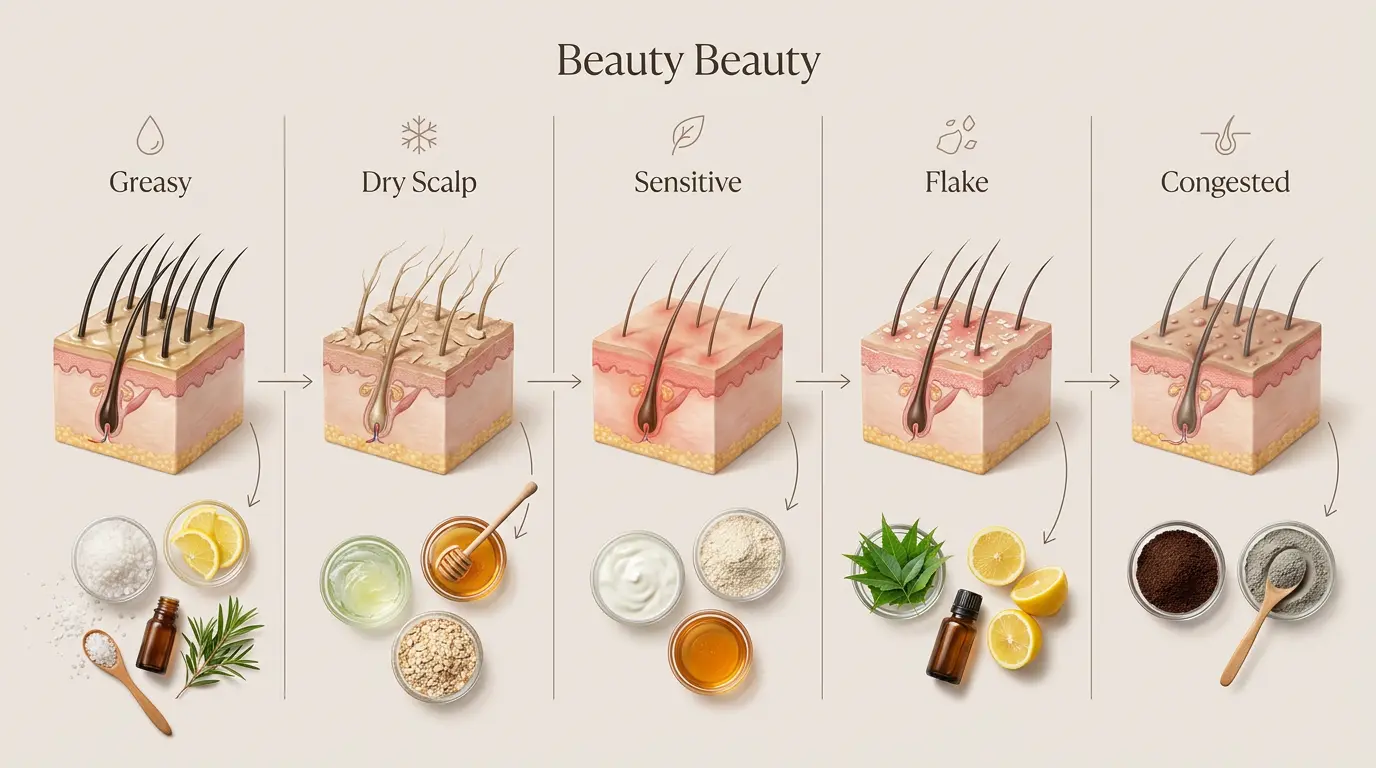
Before picking a recipe, it helps to know what your scalp actually needs. Using the wrong scrub for your scalp type can irritate it or make things worse.
Oily Scalp: Your roots get greasy quickly and may feel sticky between washes. Go for ingredients like sea salt, apple cider vinegar, tea tree oil, or lemon juice to help cut through excess oil.
Dry Scalp: Your scalp feels tight, itchy, or flaky, but doesn’t look oily. Gentle, moisturizing ingredients like brown sugar, coconut oil, honey, and aloe vera work best.
Sensitive Scalp: Your scalp gets irritated easily or reacts to strong products. Use mild exfoliants and soothing ingredients like oatmeal, yogurt, aloe vera, or honey.
Dandruff-Prone Scalp: You deal with recurring flakes that return quickly after washing. Ingredients like tea tree oil, neem powder, and apple cider vinegar may help reduce buildup and irritation.
Congested or Product-Heavy Scalp: Your scalp feels coated or weighed down from styling products and oils. Deep-cleansing ingredients like coffee grounds, activated charcoal, or bentonite clay work best for detoxifying.
Once you know your scalp type, finding the right recipe from the list below becomes much easier.
DIY Scalp Scrubs for Oily Scalp
If your roots get greasy fast or your scalp feels heavy between washes, these recipes are made for you.
Each one uses ingredients that help cut through oil and buildup without completely drying out your scalp. Pick the one that works best for what you have at home.
1. Sea Salt and Tea Tree Oil Scalp Scrub
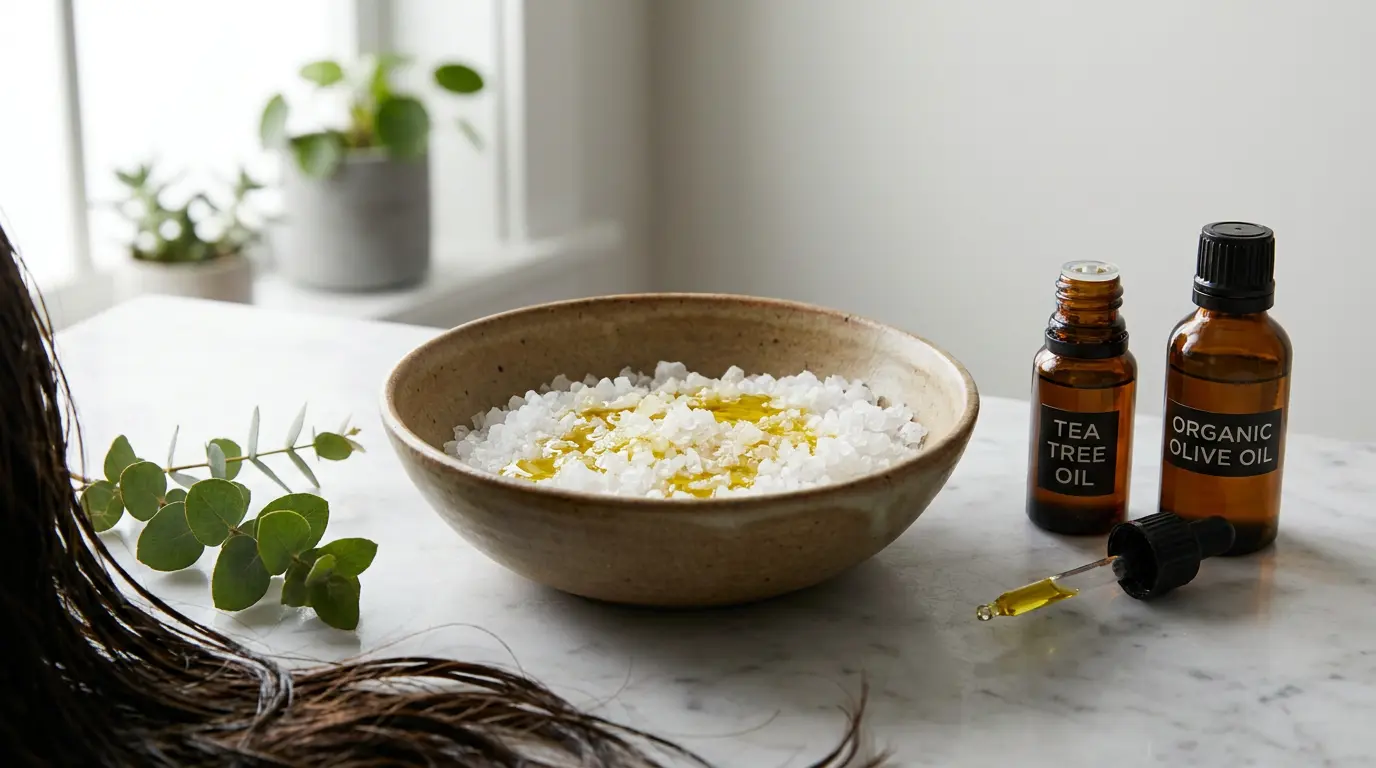
This scrub is a solid go-to for anyone who deals with persistently greasy roots.
Sea salt scrubs away excess oil and dead skin while tea tree oil helps keep bacteria in check. Together, they leave the scalp feeling clean and refreshed without stripping it too harshly.
- Best for: Greasy roots, excess oil buildup
- Ingredients: 2 tablespoons sea salt, 1 tablespoon olive oil, 3 drops tea tree oil
How to Make It:
- Mix sea salt and olive oil together in a small bowl
- Add 3 drops of tea tree oil and stir until combined
- The texture will be loose and grainy, not a thick paste
How to Use It:
- Wet your scalp with warm water before starting
- Apply to the scalp in sections using your fingertips
- Massage in gentle circular motions for 2 minutes
- Avoid using on any cuts or irritated spots, as salt will sting
- Rinse well and follow with a light shampoo
2. Lemon and Sugar Scalp Scrub
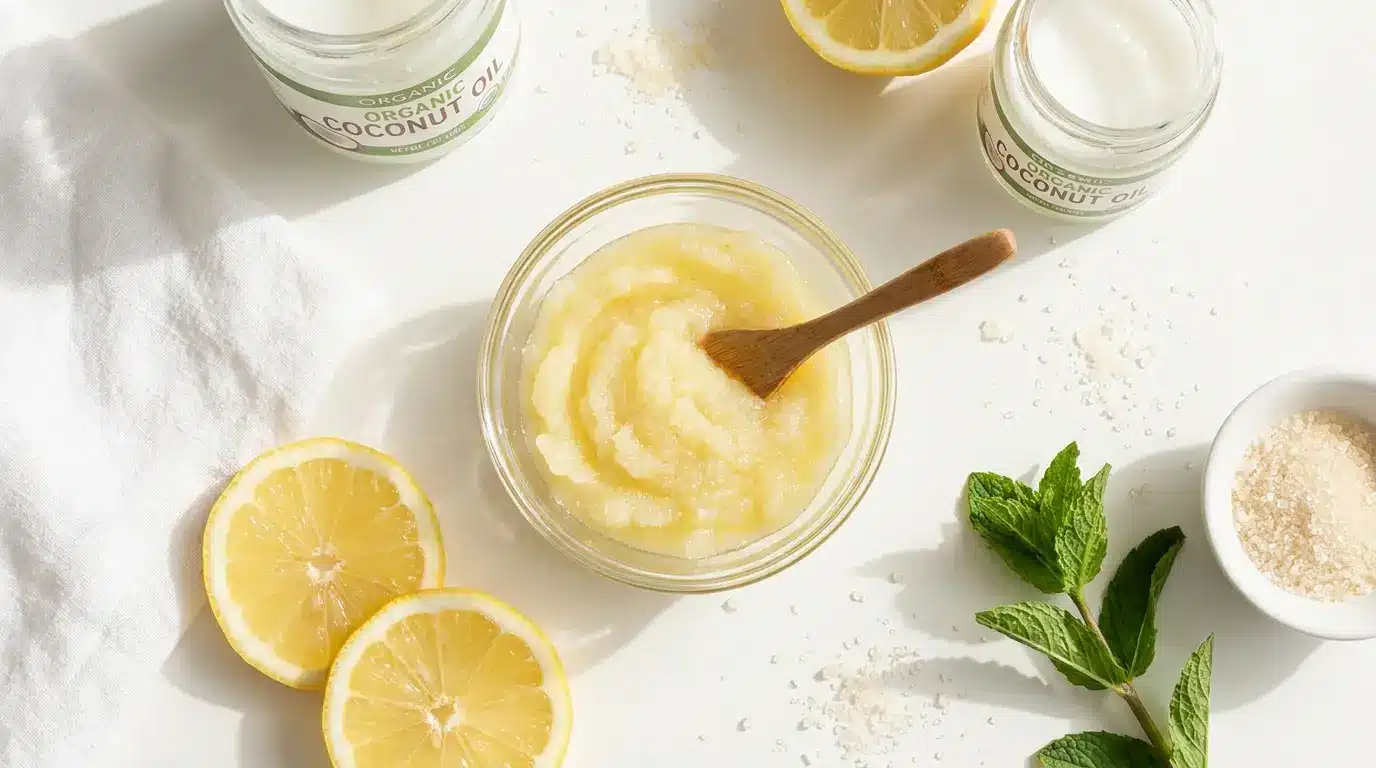
This scrub is great when your scalp feels weighed down and you want something that smells clean and works fast.
Lemon juice is mildly acidic and helps break down surface oil and light product residue.
- Best for: Oily scalp, heaviness from product use
- Ingredients: 2 tablespoons white sugar, 1 teaspoon fresh lemon juice, 1 tablespoon coconut oil
How to Make It:
- Mix all three ingredients together in a small bowl
- Stir until the sugar is fully coated with the oil and lemon juice
- Use fresh lemon juice for best results, not bottled
How to Use It:
- Apply to a damp scalp and massage gently for 2 minutes
- Avoid contact with any cuts or irritated patches, as lemon will sting
- Rinse with warm water and shampoo after
- Lemon juice contains compounds called furocoumarins that can cause a skin reaction called phytophotodermatitis when exposed to sunlight. This can result in burns, blistering, or dark patches that may last for weeks. Rinse thoroughly to remove all lemon residue before stepping outdoors. Even small amounts of lemon juice left on the scalp can react with UV light, causing redness, blistering, or dark patches. Avoid sun exposure on the same day you use this scrub.
- Use once a week at most
3. Apple Cider Vinegar Scalp Scrub
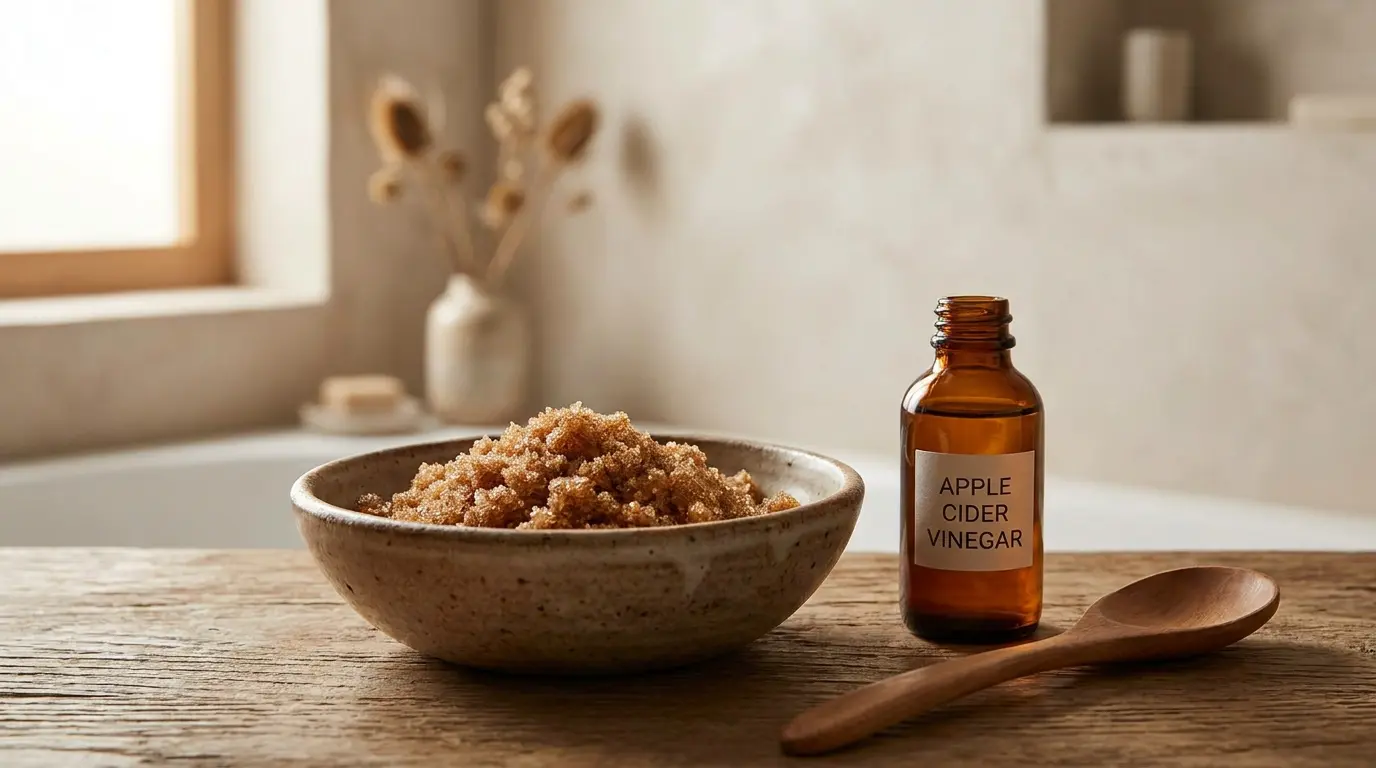
Apple cider vinegar is one of the best natural ingredients for a congested, oily scalp. It helps restore the scalp’s natural pH balance and break down product residue left by regular shampoo.
When combined with brown sugar, it provides both chemical and physical exfoliation in one step.
- Best for: Product buildup, clarifying an oily scalp
- Ingredients: 2 tablespoons brown sugar, 1 tablespoon apple cider vinegar, 1 teaspoon water
How to Make It:
- Mix brown sugar and apple cider vinegar in a small bowl
- Add a teaspoon of water to thin it slightly
- Stir until the sugar is evenly coated
How to Use It:
- Apply to a damp scalp and section your hair for even coverage
- Massage gently for 2 minutes using your fingertips
- Leave on for an extra minute if the buildup is heavy
- Rinse thoroughly with warm water
- Use once a week at most for oily scalps
4. Peppermint and Sea Salt Scalp Scrub
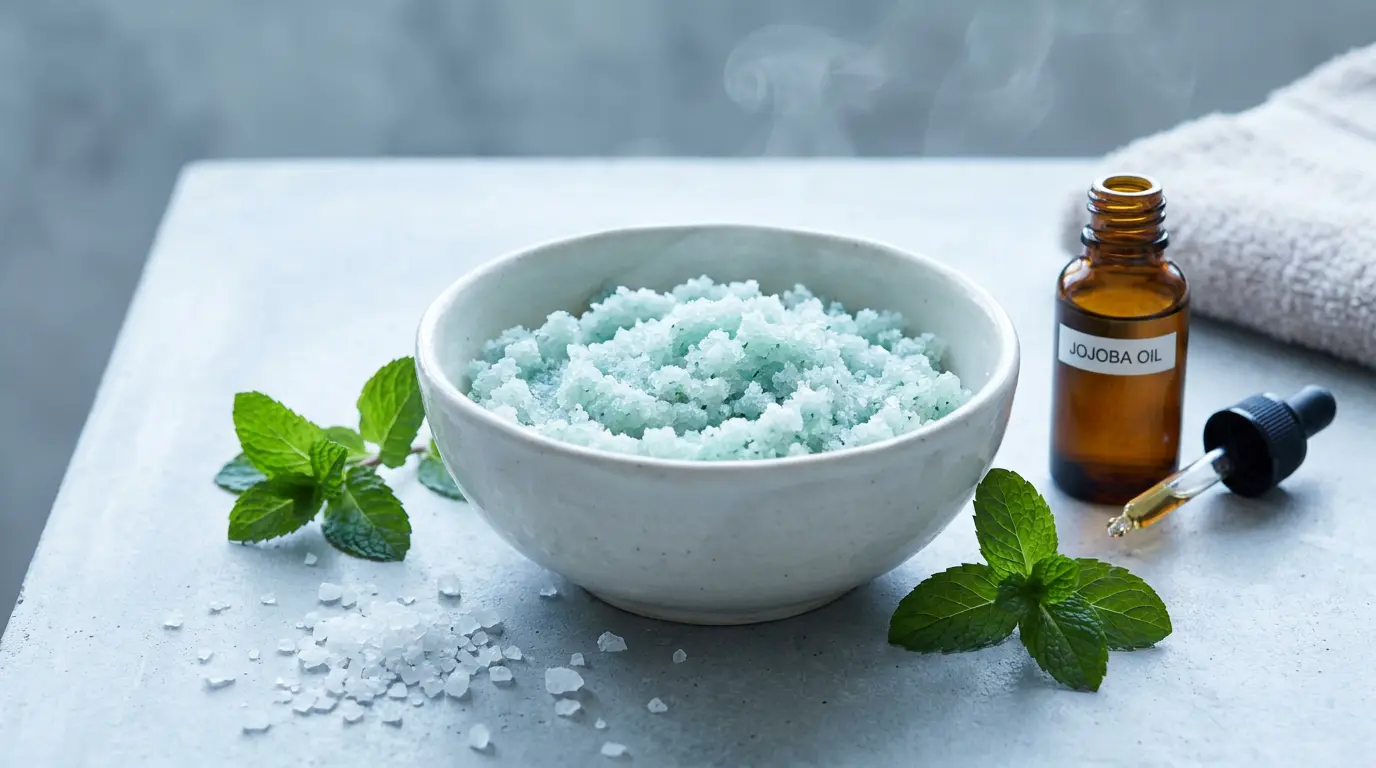
This one is for when your scalp feels oily, itchy, and just plain uncomfortable.
Peppermint oil gives an immediate cooling sensation that soothes irritation while sea salt scrubs away oil and residue. It is one of the most refreshing scalp scrubs you can make at home.
- Best for: Oily scalp, itchiness, excess residue
- Ingredients: 2 tablespoons sea salt, 1 tablespoon jojoba oil, 3 drops peppermint essential oil
How to Make It:
- Mix sea salt and jojoba oil together until combined
- Add 3 drops of peppermint oil and stir well
- Do not add more than 3 drops, as peppermint can irritate skin in large amounts
How to Use It:
- Apply to a wet scalp and work through in sections
- Massage in slow circular motions for 2 minutes
- You will feel a cooling tingling sensation, which is normal
- Rinse fully with warm water and follow with shampoo
- Use once a week for oily scalps
DIY Scalp Scrubs for Dry Scalp
A dry scalp needs a different approach than an oily one. The goal here is to remove flakes and dead skin without stripping what little moisture the scalp already has.
These recipes combine gentle exfoliants with nourishing ingredients that leave the scalp soft and calm rather than tight and irritated.
5. Brown Sugar and Coconut Oil Scalp Scrub
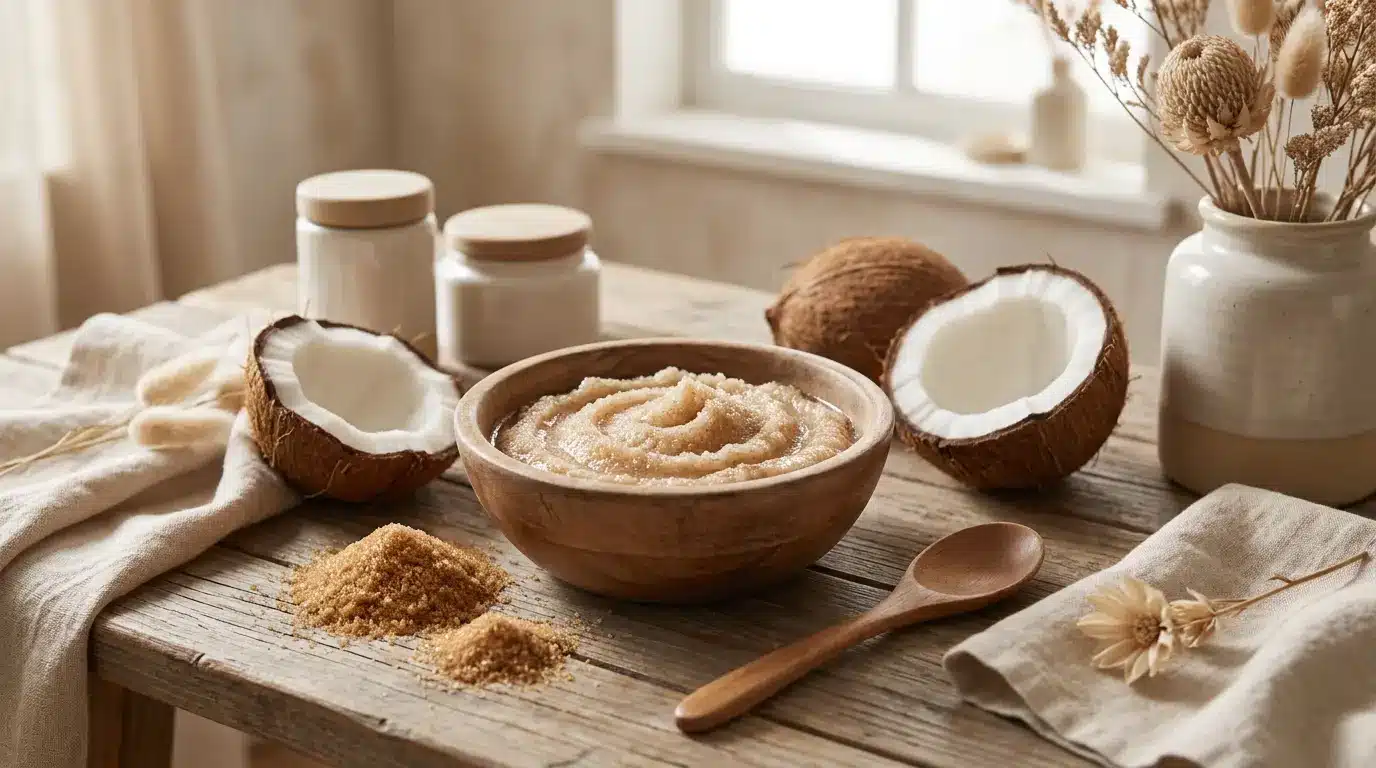
This is one of the most classic and beginner-friendly scalp scrubs out there. Brown sugar is softer than sea salt and dissolves slowly as you massage, which lowers the risk of scrubbing too hard.
Coconut oil adds moisture back into the scalp at the same time, making this a two-in-one treatment.
- Best for: Dry scalp, mild flaking, normal scalp types
- Ingredients: 2 tablespoons brown sugar, 1 tablespoon coconut oil
How to Make It:
- Mix both ingredients together in a small bowl
- Stir until it forms a thick, gritty paste
- Store leftovers in a sealed jar for up to one week
How to Use It:
- Wet your scalp with warm water first
- Section your hair so you can reach the scalp easily
- Apply and massage in gentle circular motions for 2 to 3 minutes
- Rinse thoroughly and follow with a light shampoo
- Use every 2 to 3 weeks for dry scalps
6. Honey and Aloe Vera Scalp Scrub
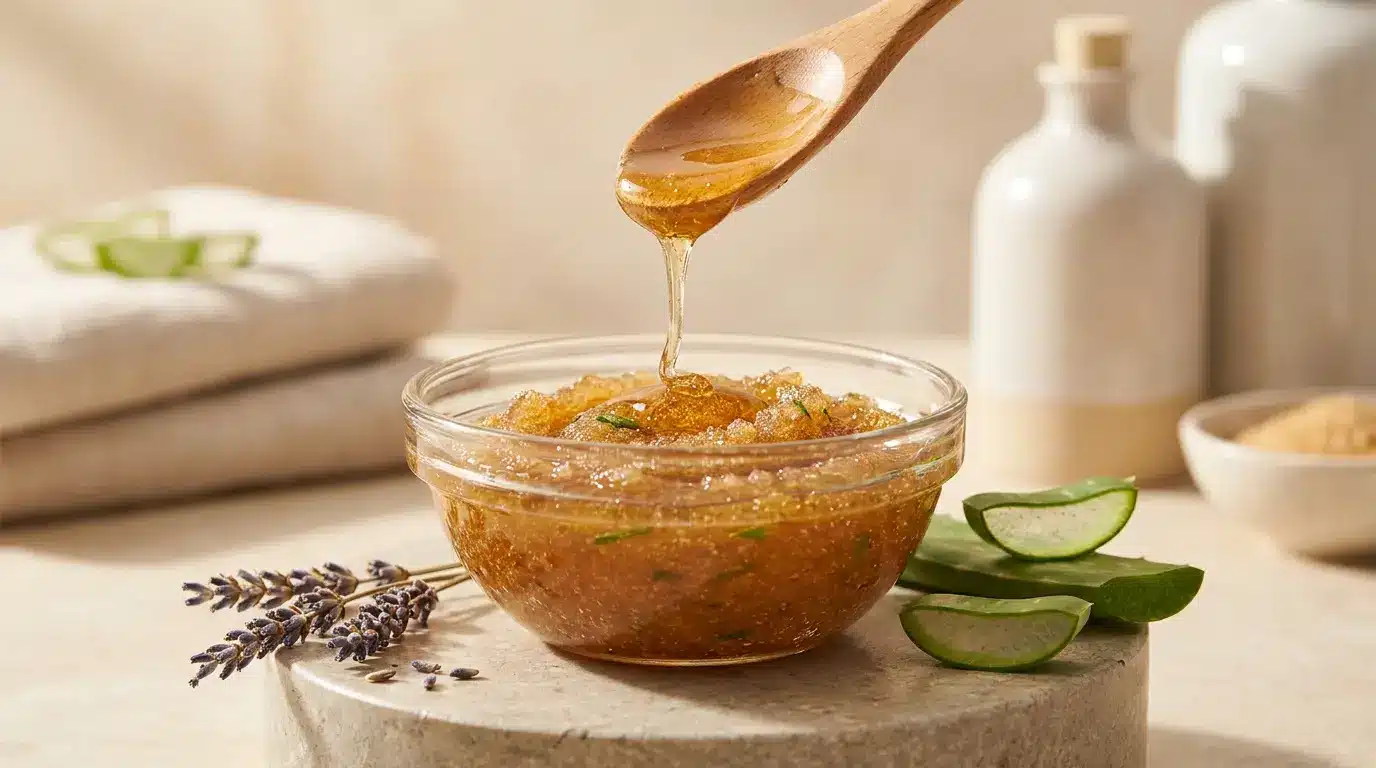
This is a softer, more soothing recipe that works well when your scalp is dry but also a little sensitive.
Honey draws moisture into the skin and has mild antibacterial properties, while aloe vera gel calms irritation and redness.
- Best for: Dry, irritated, or sensitive scalp
- Ingredients: 1 tablespoon raw honey, 2 tablespoons aloe vera gel, 1 tablespoon brown sugar
How to Make It:
- Mix the honey and aloe vera gel together first
- Add brown sugar and stir until evenly combined
- The texture will be soft and slightly sticky
How to Use It:
- Apply to a damp scalp using your fingertips
- Massage gently for 2 minutes without pressing too hard
- Let it sit for an extra minute before rinsing
- Rinse with lukewarm water and follow with a gentle shampoo
- Use every 2 to 3 weeks
7. Oatmeal and Yogurt Scalp Scrub
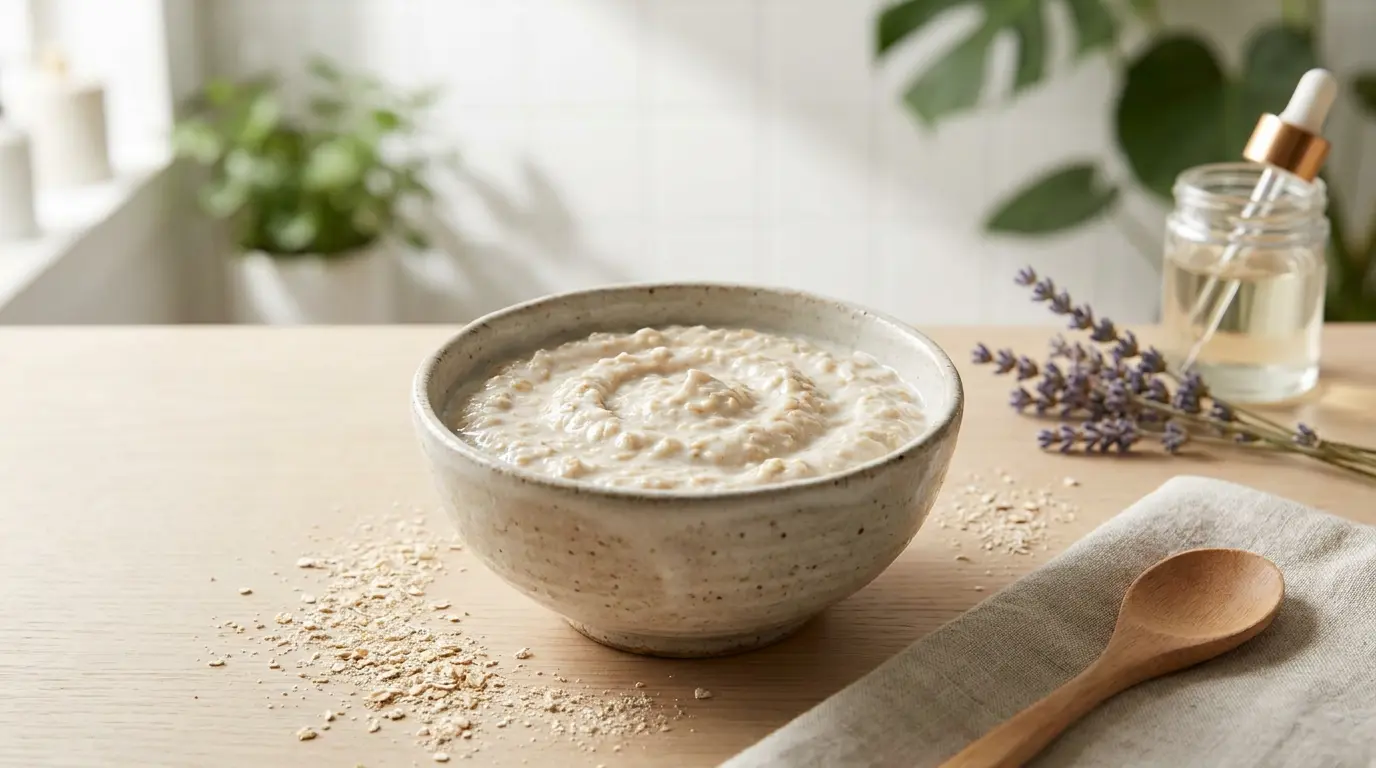
This is the mildest recipe in the dry scalp category and works especially well for people with sensitive or reactive skin.
Ground oats provide very soft exfoliation that lifts flakes without scratching.
- Best for: Flaky scalp, sensitive or reactive skin
- Ingredients: 2 tablespoons plain oats, finely ground, 2 tablespoons plain full-fat yogurt
How to Make It:
- Blend plain oats in a blender or spice grinder until they become a fine powder
- Mix oat powder with plain yogurt until it forms a smooth paste
- Use immediately, as yogurt does not store well once mixed
How to Use It:
- Apply to a damp scalp gently using your fingertips
- Use light pressing motions rather than heavy scrubbing
- Leave on for 2 to 3 minutes before rinsing
- Rinse with cool or lukewarm water
- Use every 2 to 3 weeks and follow with a gentle shampoo if needed
DIY Scalp Scrubs for Dandruff, Dry or Itchy Scalp, and Hair Loss
These recipes are targeted at more specific scalp concerns. Whether you are dealing with persistent flakes, a constantly itchy scalp, or you want to support a healthier scalp environment for hair growth, the recipes below cover all three.
Keep in mind that scrubs help manage symptoms but are not a medical treatment for conditions like severe dandruff or hair loss.
8. Tea Tree and Brown Sugar Scalp Scrub
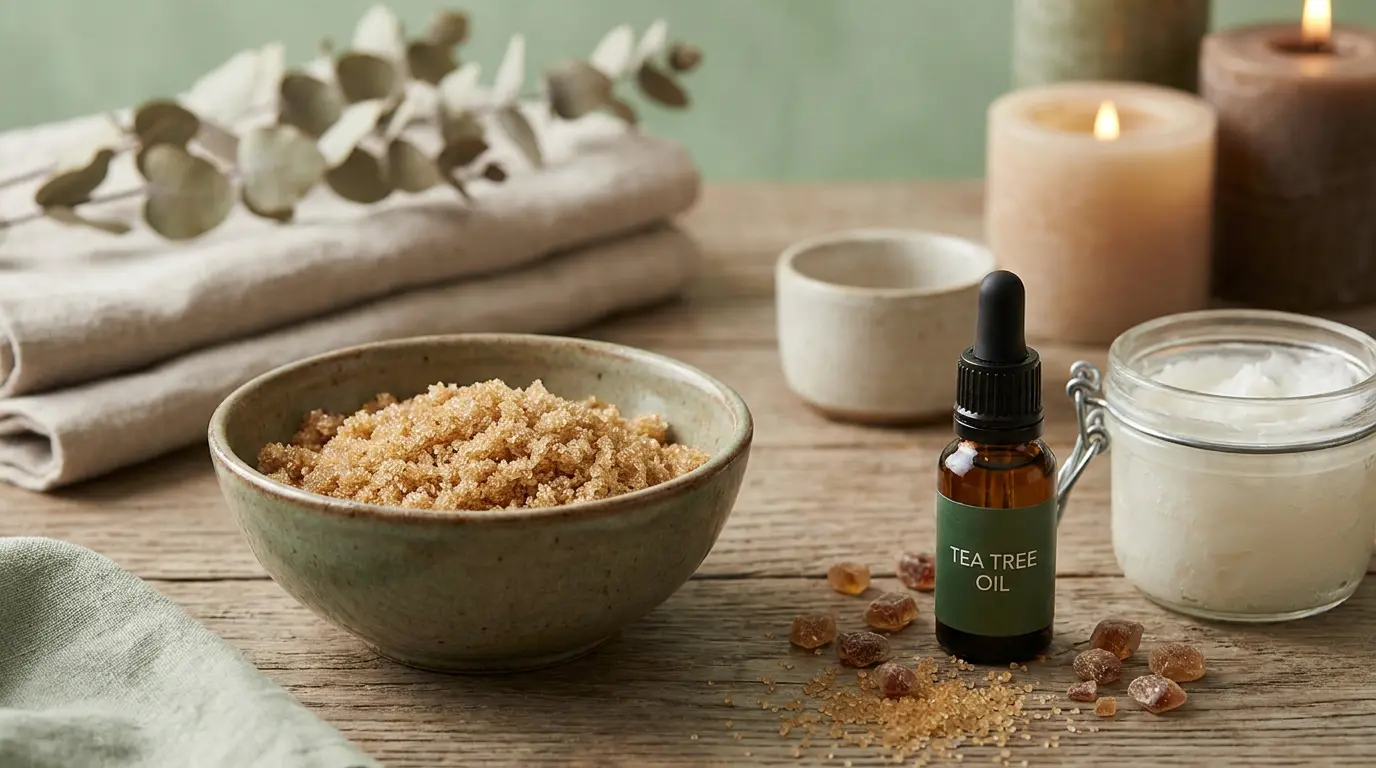
This scrub is designed for scalps that are prone to itching and flakiness. Tea tree oil has well-known antifungal and antibacterial properties that help reduce the conditions that cause flakes.
Brown sugar gently lifts dead skin and product residue without irritating an already uncomfortable scalp.
- Best for: Flaky scalp, itchiness, mild dandruff
- Ingredients: 2 tablespoons brown sugar, 1 tablespoon coconut oil, 3 drops of tea tree oil
Note: If dandruff is your main concern, sea salt works better than brown sugar as the exfoliant, since sugar can feed the yeast that causes flakes.
How to Make It:
- Mix brown sugar and coconut oil together in a small bowl
- Add 3 drops of tea tree oil and stir well
- Do not exceed 3 drops of tea tree oil, as it can cause irritation in higher amounts
How to Use It:
- Apply to a damp scalp in sections
- Massage gently for 2 to 3 minutes using your fingertips
- Focus on the areas where flaking or itching is worst
- Rinse thoroughly and follow with a gentle shampoo
- Use once a week and monitor how your scalp responds
9. Coffee Scalp Scrub for Hair Growth
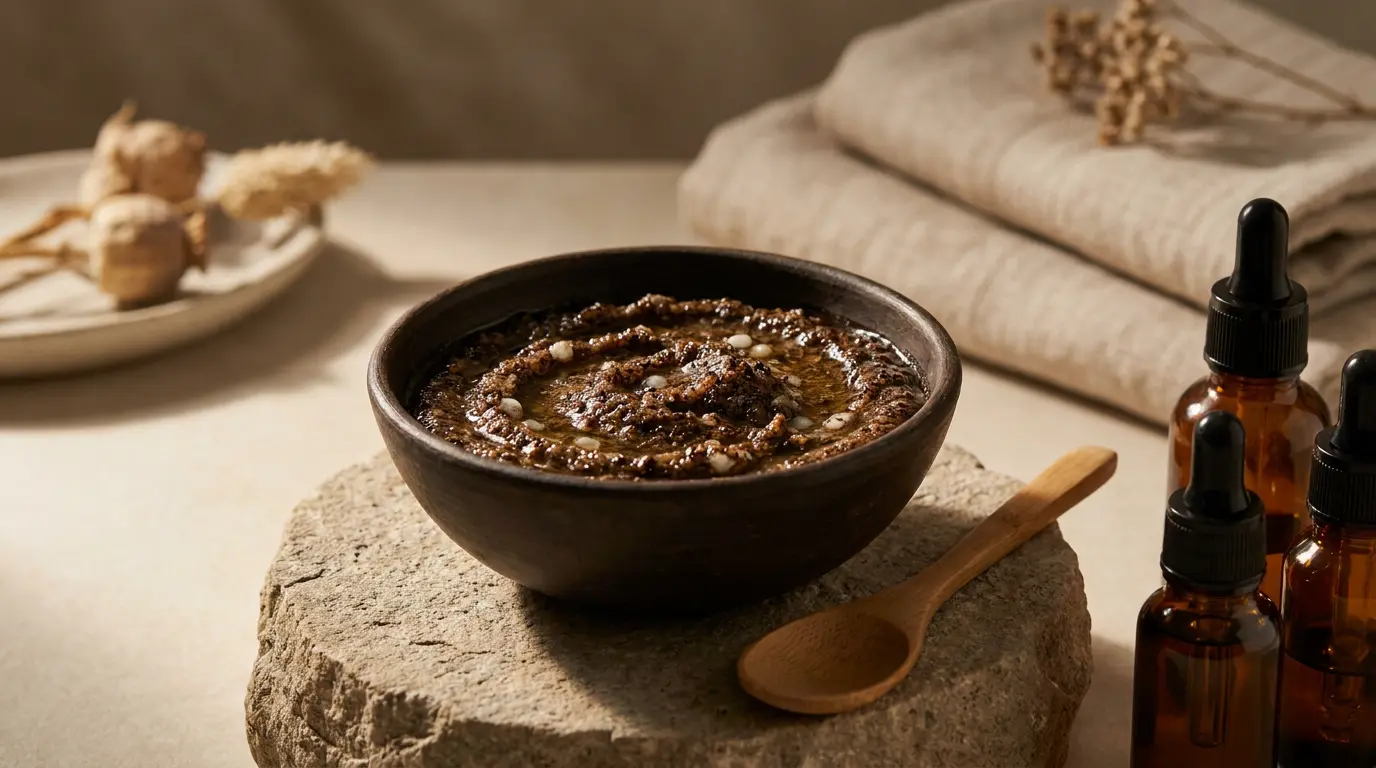
This scrub is popular among people who want to support a healthier environment for hair growth.
Caffeine has been studied for its ability to stimulate cell growth and penetrate the hair follicle.
Some clinical studies suggest that topical caffeine may support hair follicle activity and reduce hair loss, though the overall quality of evidence remains low to medium, and more research is needed before strong conclusions can be drawn. It is not a standalone treatment for hair loss.
- Best for: Scalp circulation, heavy product buildup, supporting hair health
- Ingredients: 2 tablespoons of used or fresh coffee grounds, 1 tablespoon of coconut oil, 1 teaspoon of castor oil
How to Make It:
- Mix coffee grounds, coconut oil, and castor oil together in a small bowl
- Stir until fully combined into a dark, grainy paste
- Use right away for the best texture
How to Use It:
- Apply to a damp scalp and section your hair for even coverage
- Massage in slow circular motions for 3 minutes
- Rinse very thoroughly, as coffee grounds can get trapped in thick or curly hair
- Shampoo to remove the oil residue
- Use once a week consistently for best results
10. Neem and Aloe Vera Scalp Scrub
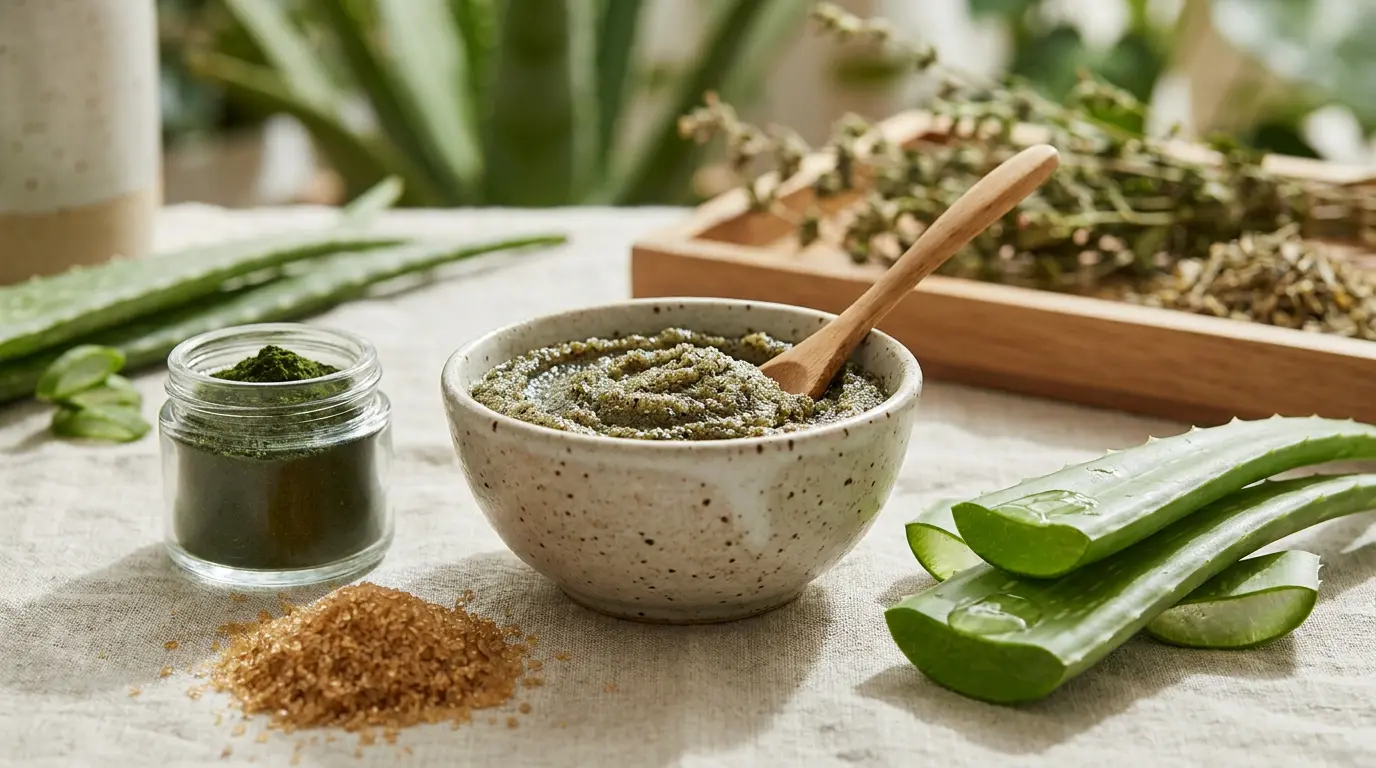
Neem is a well-known ingredient in Ayurvedic hair care with strong antifungal and anti-inflammatory properties.
It works well for irritated, flaky scalps or those prone to itching due to product sensitivity or mild scalp conditions.
- Best for: Irritated scalp, persistent flaking, sensitive skin
- Ingredients: 1 tablespoon neem powder, 2 tablespoons aloe vera gel, 1 tablespoon brown sugar
How to Make It:
- Mix neem powder and aloe vera gel together until smooth
- Add brown sugar and stir until fully combined
- The mix will have a slightly green tint from the neem, which is normal
How to Use It:
- Apply to a damp scalp using your fingertips
- Massage gently for 2 minutes using light circular motions
- Leave on for 2 to 3 minutes before rinsing
- Rinse well with warm water and shampoo after
- Use once every 2 weeks and patch test first, as neem can be strong for some skin types
DIY Scalp Scrubs for Detoxifying
If you use a lot of dry shampoo, hairspray, or heavy styling products, your scalp builds up residue faster than regular shampooing can clear.
These detox scrubs are designed to give your scalp a deeper reset. They use ingredients that absorb, lift, and draw out buildup so your scalp can breathe again.
11. Coffee and Coconut Oil Detox Scalp Scrub
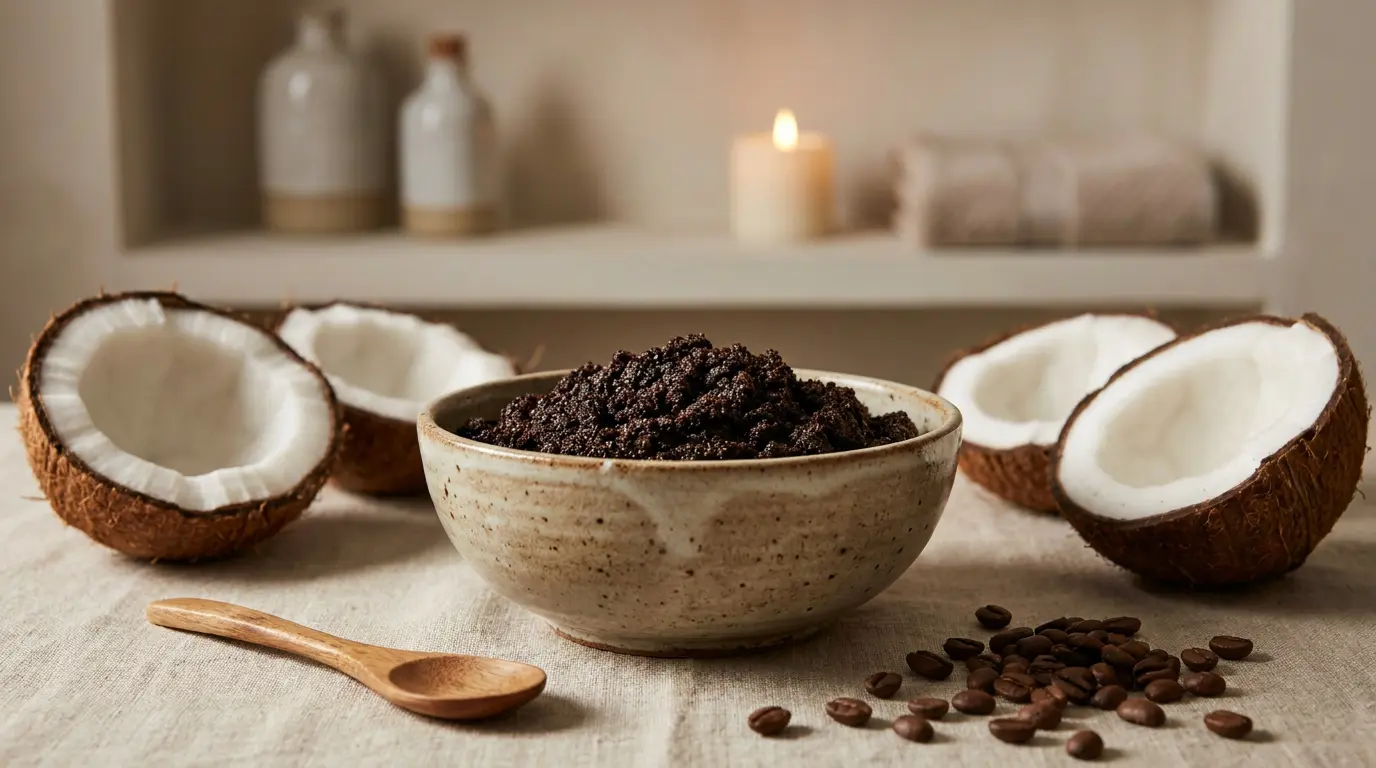
This is one of the most effective scrubs for people with clogged scalps from product residue.
Coffee grounds are coarser than sugar and do a more thorough job of physically scrubbing away buildup.
- Best for: Heavy product buildup, scalp detox
- Ingredients: 2 tablespoons of used or fresh coffee grounds, 1 tablespoon of coconut oil
How to Make It:
- Mix coffee grounds and coconut oil together in a small bowl
- Stir until the grounds are fully coated in oil
- Use right away for best results
How to Use It:
- Apply to a damp scalp and work through in sections
- Massage in slow circular motions for 2 to 3 minutes
- Rinse very thoroughly, as coffee grounds can linger in thick hair
- Shampoo to remove oil and any leftover grounds
- Note that coffee can slightly tint very light or blonde hair
12. Charcoal and Sugar Scalp Scrub
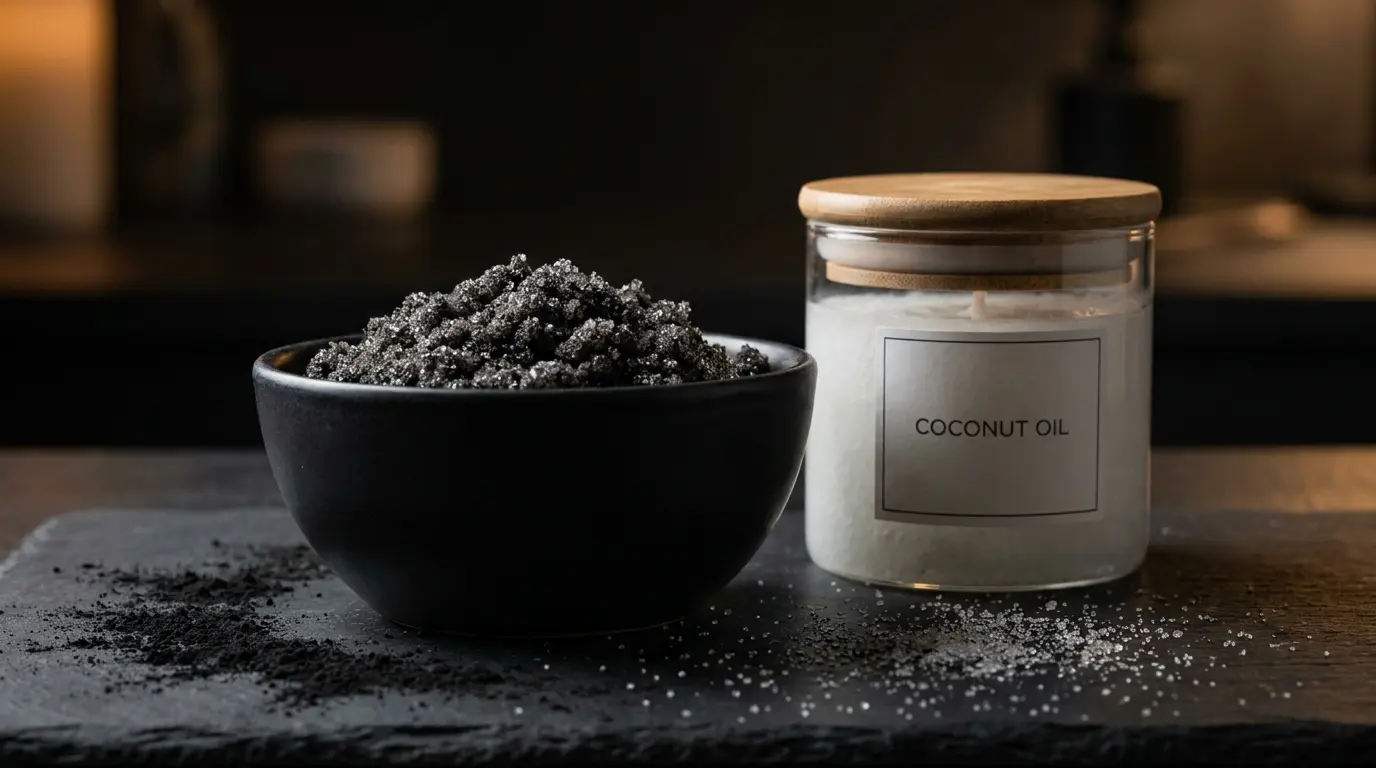
Activated charcoal is known for its ability to draw out impurities and absorb excess oil from the skin.
On the scalp, it works like a magnet for product residue, pollutants, and built-up sebum. Combined with sugar for physical exfoliation, this makes for a thorough, deep-cleanse scrub.
- Best for: Deep scalp cleansing, removing impurities and residue
- Ingredients: 1 teaspoon activated charcoal powder, 2 tablespoons white sugar, 1 tablespoon coconut oil
How to Make It:
- Mix the activated charcoal powder and coconut oil together first
- Add sugar and stir until evenly combined
- The mix will be dark grey or black in color
How to Use It:
- Apply carefully to a damp scalp, as charcoal can stain towels and clothing
- Massage gently for 2 to 3 minutes using your fingertips
- Rinse very well until the water runs clear
- Shampoo after to fully remove the charcoal and oil
- Use once every 2 weeks as part of a scalp detox routine
13. Bentonite Clay and Apple Cider Vinegar Scalp Scrub
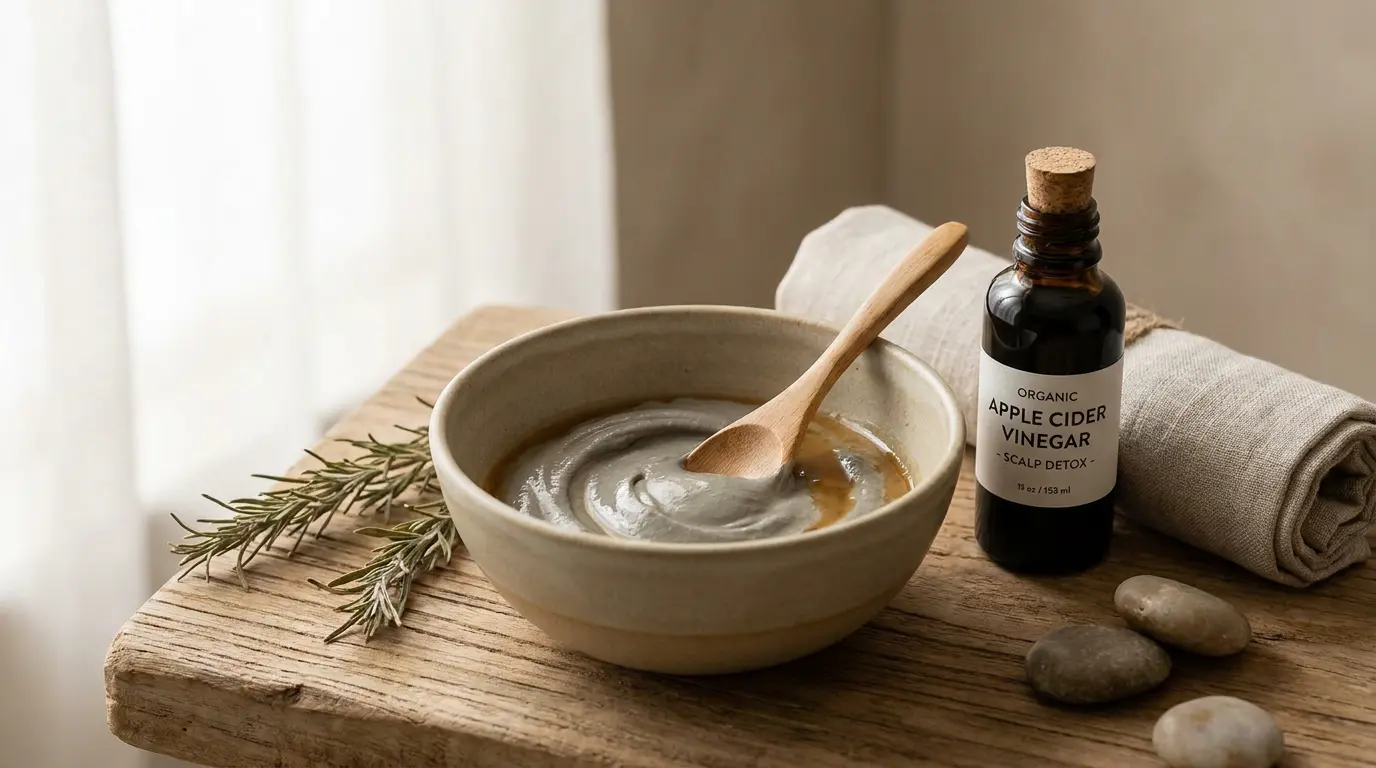
Bentonite clay is one of the most powerful natural ingredients for drawing out oil, toxins, and buildup from the scalp.
When mixed with apple cider vinegar, it activates and becomes even more effective at absorbing congestion.
- Best for: Congested scalp, excess oil, deep detox
- Ingredients: 2 tablespoons bentonite clay, 1 tablespoon apple cider vinegar, 1 to 2 tablespoons water
How to Make It:
- Mix bentonite clay and apple cider vinegar together in a non-metal bowl
- Use a non-metal spoon, as metal utensils can oxidize when wet, potentially contaminating the mix. A wooden, plastic, or ceramic spoon is the safer choice.
- Add water one tablespoon at a time until it reaches a smooth, spreadable consistency
How to Use It:
- Apply to a damp scalp in sections using your fingertips
- Massage gently for 2 minutes and then leave on for an additional 5 minutes
- Rinse thoroughly with warm water, as clay can be stubborn to remove
- Shampoo again to clear any remaining clay and residue
- Use once every 2 to 3 weeks, as this is a strong detox scrub
Best Ingredients for a Homemade Scalp Scrub
The right ingredients depend on your scalp type and how strong you want the scrub to be. Some ingredients exfoliate buildup, while others help moisturize, soothe irritation, or control excess oil.
- Natural Exfoliants: Brown sugar is gentle and beginner-friendly, while sea salt works better for oily or heavy buildup. Coffee grounds help remove stubborn residue, and oatmeal is the mildest option for sensitive scalps.
- Moisturizing Ingredients: Coconut oil and olive oil add moisture, honey soothes the scalp, and aloe vera provides lightweight hydration without a greasy residue.
- Ingredients for Oily Scalps: Tea tree oil, apple cider vinegar, lemon juice, and peppermint oil can help reduce excess oil and refresh the scalp. Essential oils should always be used in small amounts.
- Ingredients for Dry or Sensitive Scalps: Oatmeal, aloe vera, honey, and plain yogurt help calm irritation and moisturize the scalp without over-drying it.
How to Use a DIY Scalp Scrub Correctly
Start by wetting your scalp with warm water. Section your hair into parts so you can reach the scalp easily.
Apply a small amount of the scrub and use your fingertips, not nails, to massage in slow circular motions.
Spend about 2 to 3 minutes total, then rinse fully until no grit remains. Shampoo after if needed.
How Often Should You Exfoliate Your Scalp
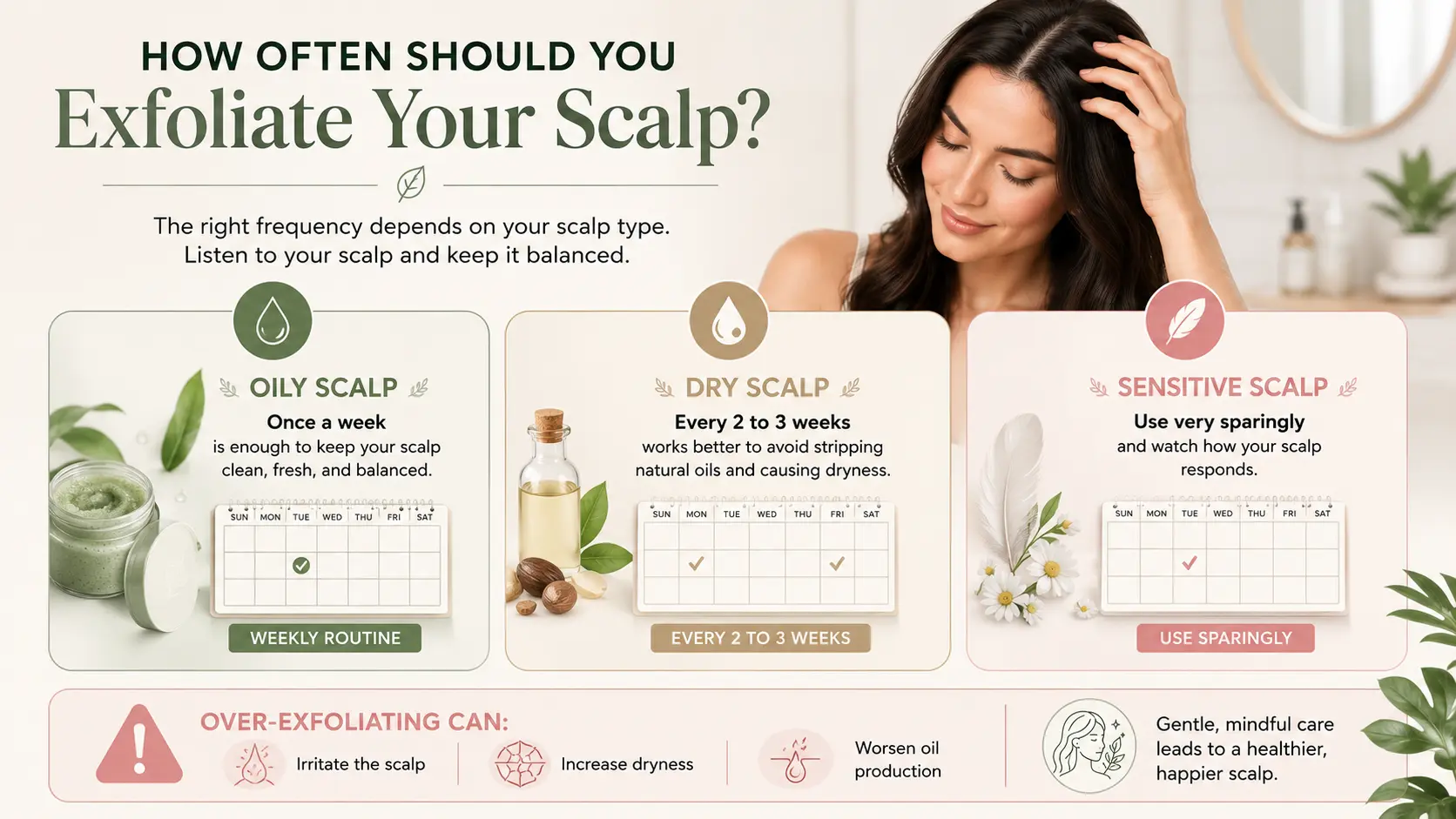
If you have an oily scalp, once a week is enough. For a dry scalp, every 2 to 3 weeks works better. For sensitive scalps, use very sparingly and watch how your scalp responds.
Over-exfoliating can irritate the scalp, increase dryness, and worsen oil production rather than improve it.
Common Mistakes to Avoid
Using a DIY scalp scrub the wrong way can irritate your scalp instead of helping it. Most problems come from overdoing the exfoliation or using harsh ingredients.
- Scrubbing too hard can cause irritation and tiny scratches on the scalp
- Using too much salt can make the scrub overly harsh and drying
- Adding too many essential oils may trigger redness or sensitivity
- Exfoliating too often can increase dryness and make oily scalps worse
A gentle approach works better than aggressive scrubbing. The goal is to clean the scalp, not damage it.
How to Know if You Need a Scalp Scrub
Most people never think about their scalp until something feels off. Here are some clear signs that your scalp is ready for a scrub.
If you notice any of these, a homemade scalp scrub for buildup or oiliness could make a real difference.
- Your scalp feels itchy even after washing your hair
- You can see white or yellowish flakes on your scalp or hair
- Your roots look greasy just one or two days after washing
- You use dry shampoo, hairspray, or styling products regularly, and your scalp feels heavy
- Your hair feels flat and dull even after shampooing
- There is a slight odor coming from your scalp between washes
- You can feel small, rough, or bumpy patches when you run your fingers along your scalp
If two or more of these sound familiar, your scalp likely has some buildup or imbalance that a scrub can help address.
Who Should Avoid Scalp Scrubs?
Scalp scrubs may work well for: People with oily roots, heavy product buildup, mild flakes, or a scalp that feels greasy and clogged between washes
Avoid scalp scrubs if you have open cuts, an irritated scalp, psoriasis or eczema flare-ups, infections, or recently colored or chemically treated hair
DIY Scalp Scrub vs Clarifying Shampoo
Both scalp scrubs and clarifying shampoos help remove buildup, but they work in different ways. One exfoliates physically, while the other cleans chemically.
| DIY Scalp Scrub | Clarifying Shampoo |
|---|---|
| Physically lifts dead skin and flakes | Chemically breaks down oil and residue |
| Works well for stubborn buildup | Better for quick, deep cleansing |
| More customizable with homemade ingredients | Faster and easier to use regularly |
| Can target flakes and rough patches directly | Focuses more on cleansing the hair and scalp |
A scalp scrub makes more sense when regular shampoo doesn’t remove visible flakes or heavy product buildup.
Clarifying shampoo works better when you want a deeper cleanse without the extra scrubbing step.
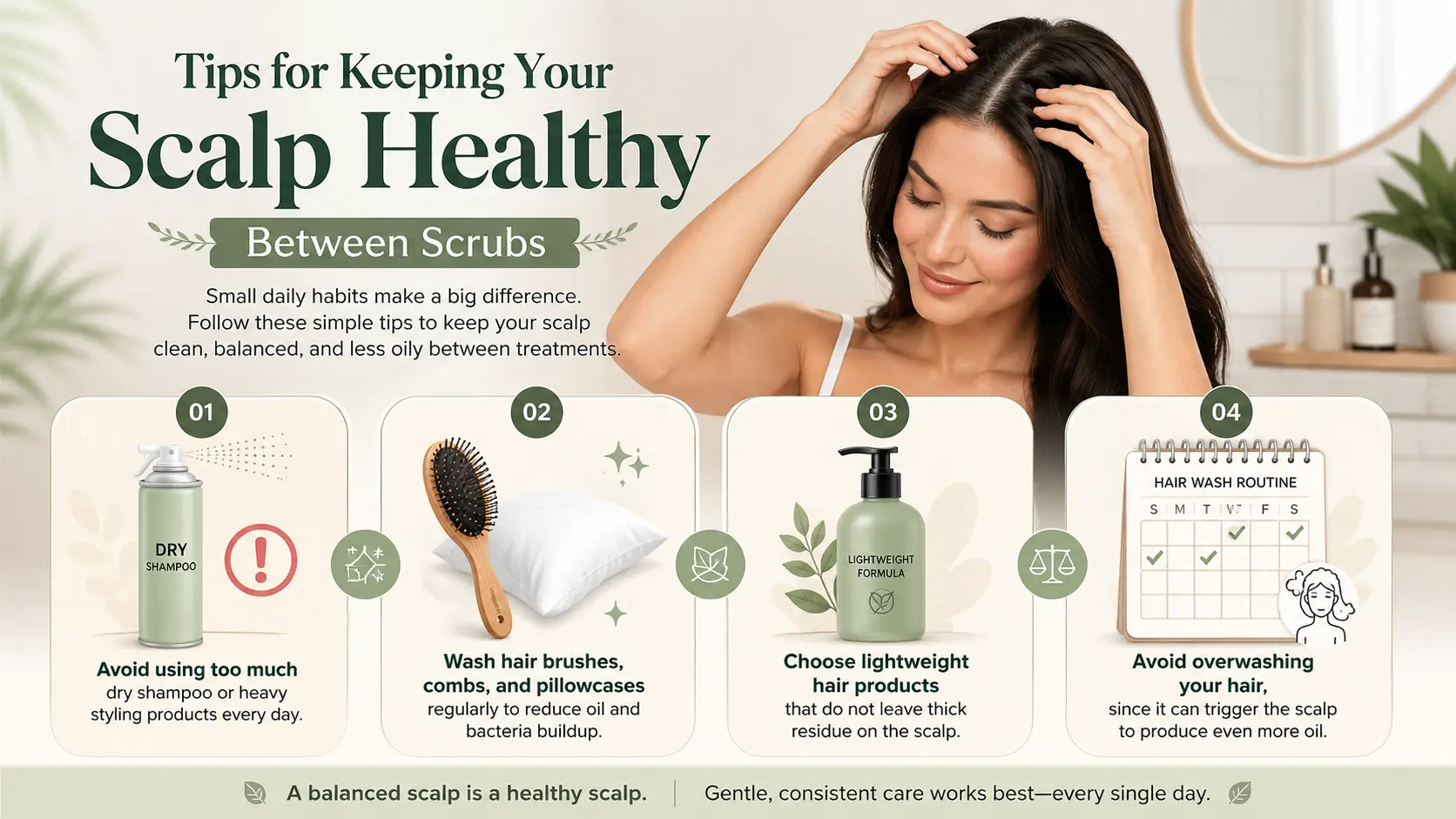
| Can DIY Scalp Scrubs Help Hair Growth
A clean scalp creates a better environment for healthy hair. Removing buildup around the hair follicle means less blockage. But a scalp scrub cannot regrow lost hair, stop hair loss, or change anything related to genetics or hormones. It supports scalp health, nothing more. |
Final Thoughts
Taking care of your scalp does not have to be complicated or expensive. A homemade scalp scrub made with simple ingredients can remove buildup, reduce greasiness, calm itchiness, and leave your scalp feeling clean and fresh.
The right recipe depends on your scalp type, so start with one that matches your concerns and see how your scalp responds.
Be gentle, do not overdo it, and give it time to work. A healthy scalp is the foundation of healthy hair, and a little care goes a long way in keeping both in good shape.
Frequently Asked Questions
Can I Use a Diy Scalp Scrub on Color-Treated Hair?
It is better to wait at least a week or two after coloring your hair before using a scalp scrub. Strong exfoliants or acidic ingredients can fade color faster and irritate the scalp.
Should I Use Conditioner After a Scalp Scrub?
Yes, especially if your hair or scalp tends to feel dry afterward. A lightweight conditioner helps restore moisture without adding heavy buildup.
Can I Store Homemade Scalp Scrubs for Later?
Some simple oil-and-sugar scrubs can be stored for a few days in a sealed container. Recipes with fresh ingredients like yogurt, aloe vera, or lemon juice are best used immediately.