
Church wedding decorations work best when they support the building rather than hide it.
Most churches already carry their own character through stone, wood, arched windows, or stained glass, so a few well-placed pieces usually say more than a room full of them.
This list also folds in low-budget DIY simple church wedding decorations for couples who want affordable projects they can prepare at home, alongside the planning steps that keep everything running on time and inside the rules the church has already set.
From entrance to altar, each idea here fits inside a real setup window, respects what the coordinator allows, and still leaves the ceremony looking like something the couple actually chose.
Choose a Decoration Style That Suits the Church
Before buying decorations, ask the church which areas can be decorated, what is approved for candles, petals, and pew attachments, and when setup and removal must happen.
Historic churches and older buildings often require extra care to protect original materials and finishes.
The building itself often points toward a style, since stone, wood, and stained glass all read differently depending on what sits in front of them.
| Style | Main colors | Suggested materials | Church setting | Cost level |
|---|---|---|---|---|
| Classic | White, ivory, gold | Flowers, greenery, ribbon, urns | Traditional stone or brick churches | Medium to high |
| Garden | Mixed pastels, green | Mixed flowers, branches, potted plants | Churches with natural light or garden views | Medium |
| Rustic | Wood tones, cream | Wood, lanterns, wildflowers, linen | Older stone or wood-beam churches | Low to medium |
| Modern | White, single accent color | Clear stands, plain candles, single color flowers | Contemporary or minimalist churches | Medium |
| Seasonal | Changes by season | Spring flowers, autumn leaves, winter greenery | Any church, matched to wedding date | Low to medium |
| Flower free | Neutral, warm tones | Fabric, lanterns, ribbon, potted foliage | Churches with strict floral rules | Low |
Choosing from different wedding theme ideas can make it easier to select colors, flowers, and materials that match both the church interior and the overall feel of the celebration.
Church Wedding Decorations for the Entrance That Welcome Guests
The entrance is often the first decorated area guests notice, and it doubles as a favorite spot for ceremony photos before the doors open.
1. Matching Wreaths for the Church Doors
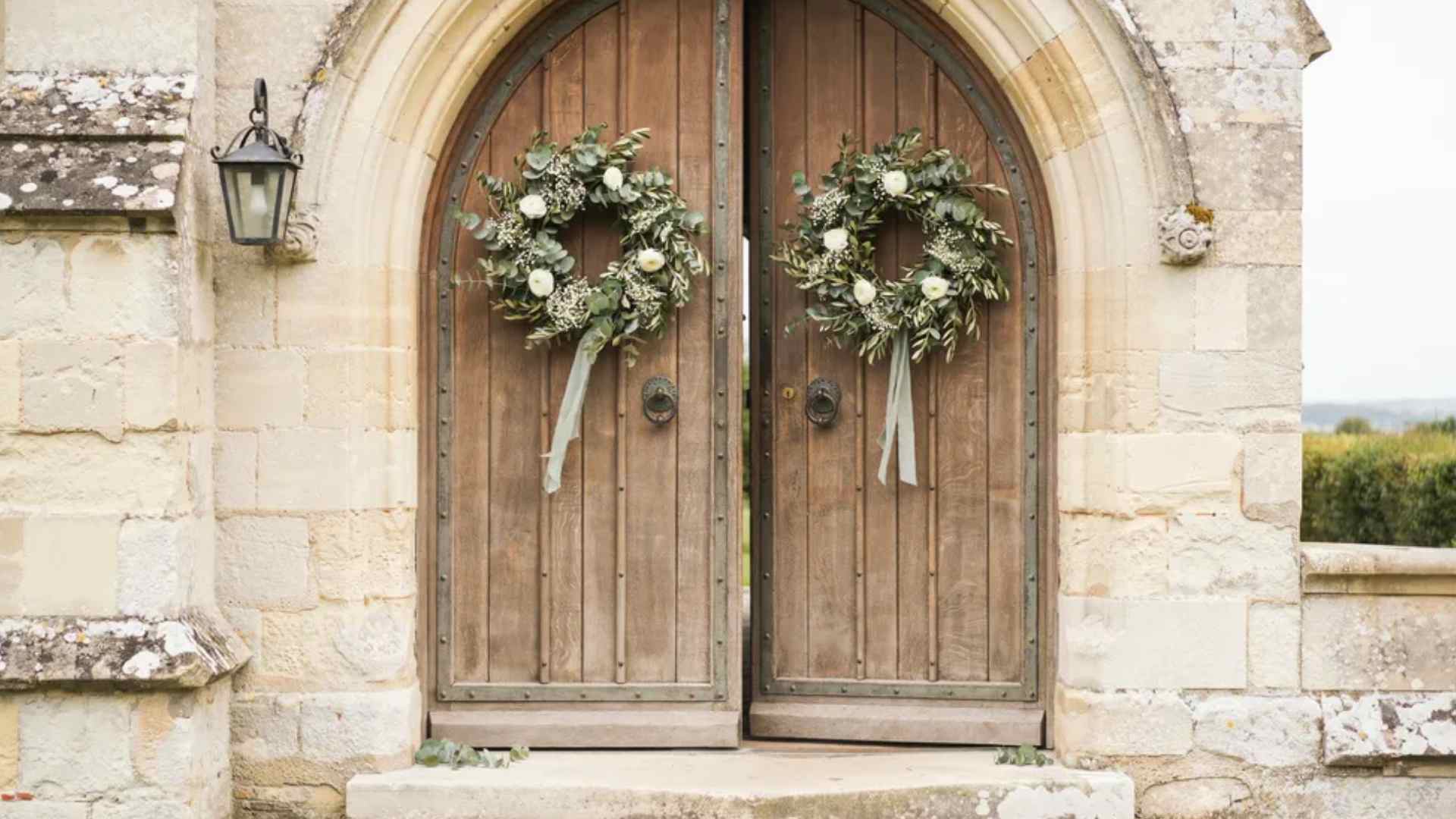
Twin wreaths made mostly of greenery with a few flowers tucked in create an instant sense of arrival without covering the doors themselves.
Removable wreath hangers keep the door surface untouched, and you can move the same wreaths to the reception doors after the ceremony.
- Use removable hangers so the church doors stay undamaged.
- Move wreaths to reception doors for a second use.
2. Greenery Around the Doorframe
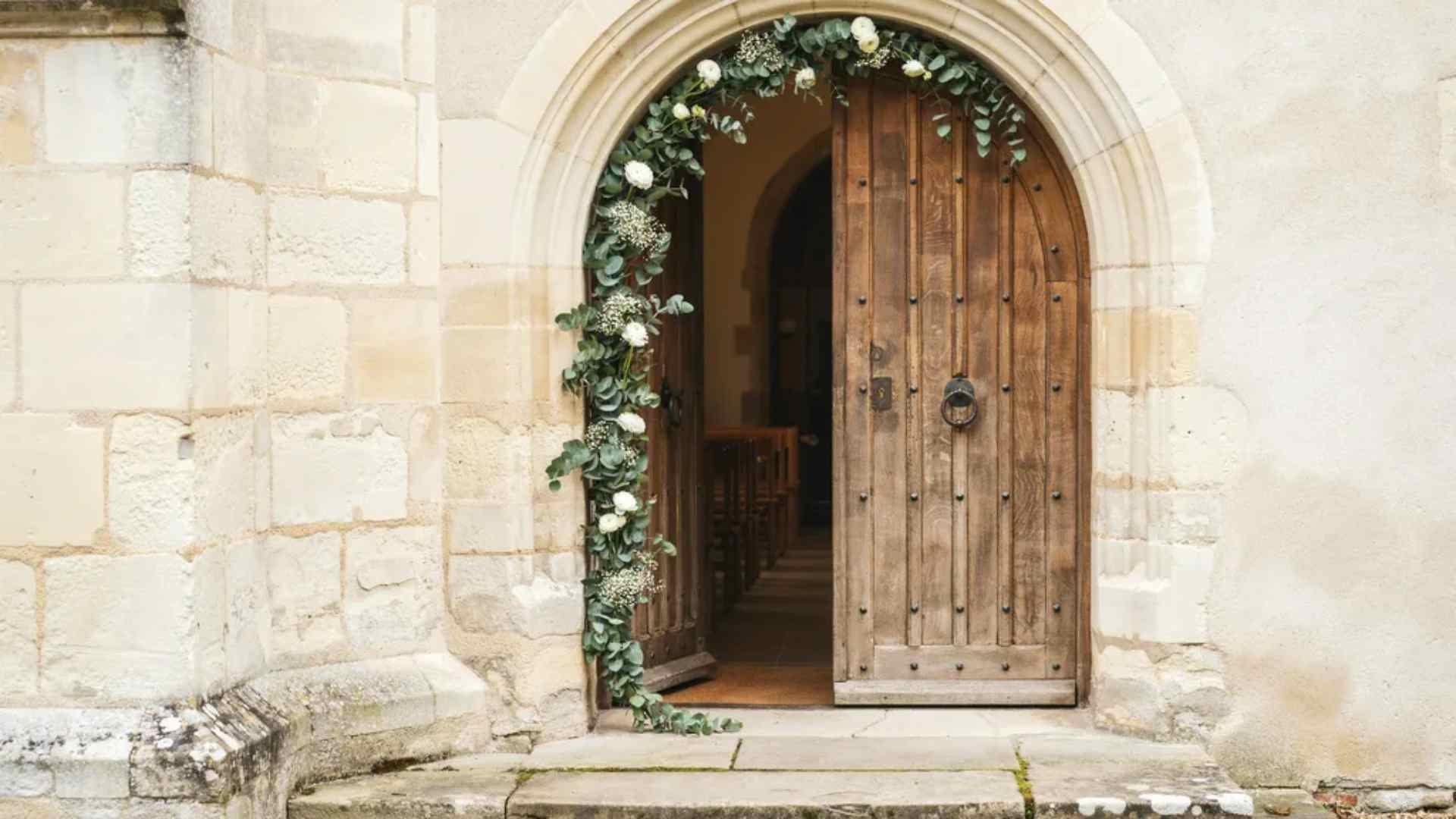
A light garland placed around part of the doorway, rather than the full frame, keeps the look natural instead of overdone.
Attachment rules matter here more than almost anywhere else on this list, since doorframes are often original woodwork that churches want kept in good condition.
- Check attachment rules first for any doorframe garland.
- Keep coverage partial rather than wrapping the full frame.
3. Potted Trees or Ferns Beside the Entrance
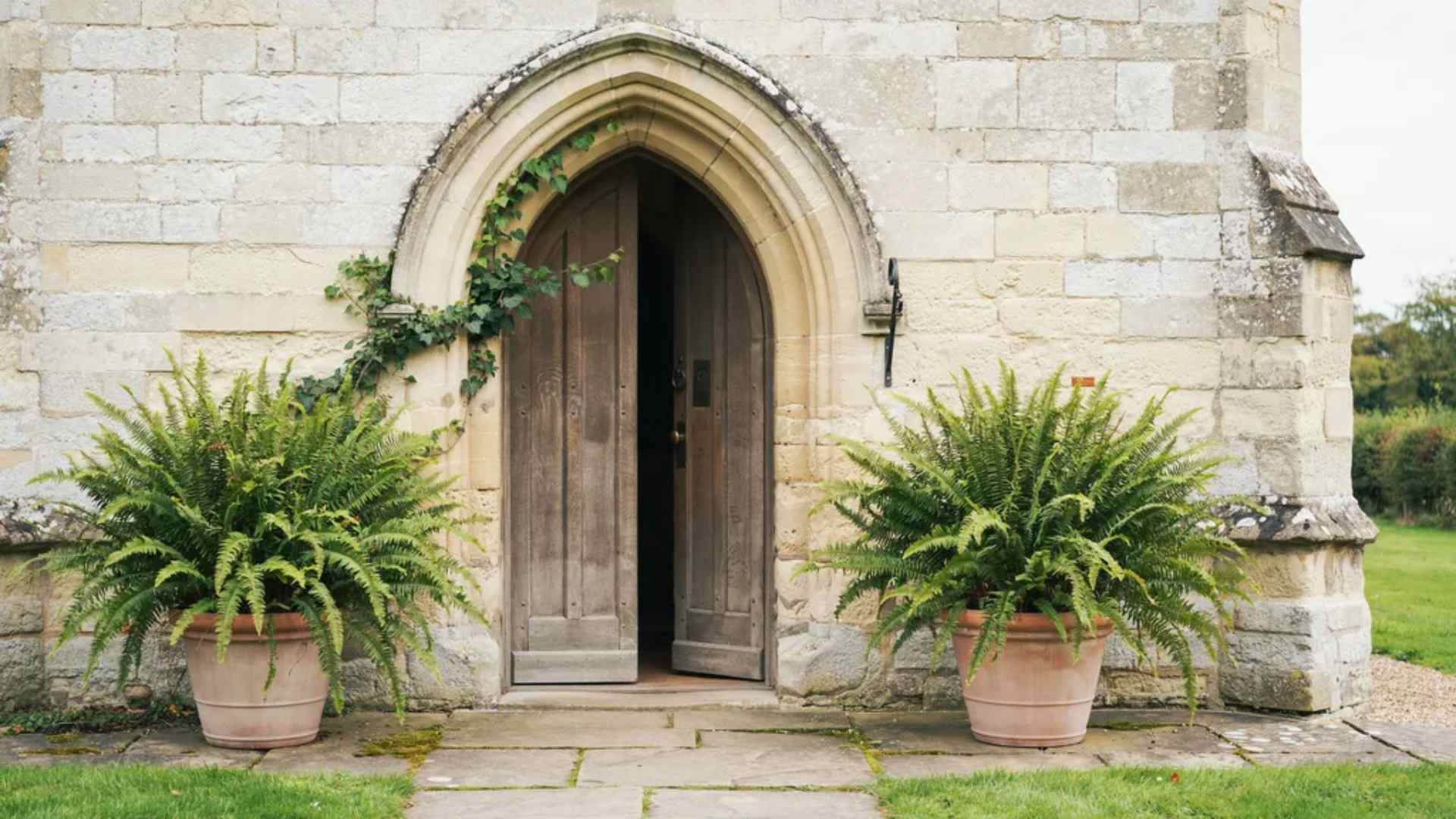
Matching potted plants on either side of a large doorway fill the space without requiring a single cut flower, which helps both the budget and the setup timeline.
Borrowing plants from family, renting them locally, or reusing plants the church already owns are all ways to bring this idea in under budget.
- Borrow or rent pots instead of buying new greenery.
- Match pot size on both sides for a balanced look.
4. Flower-Filled Urns on the Church Steps
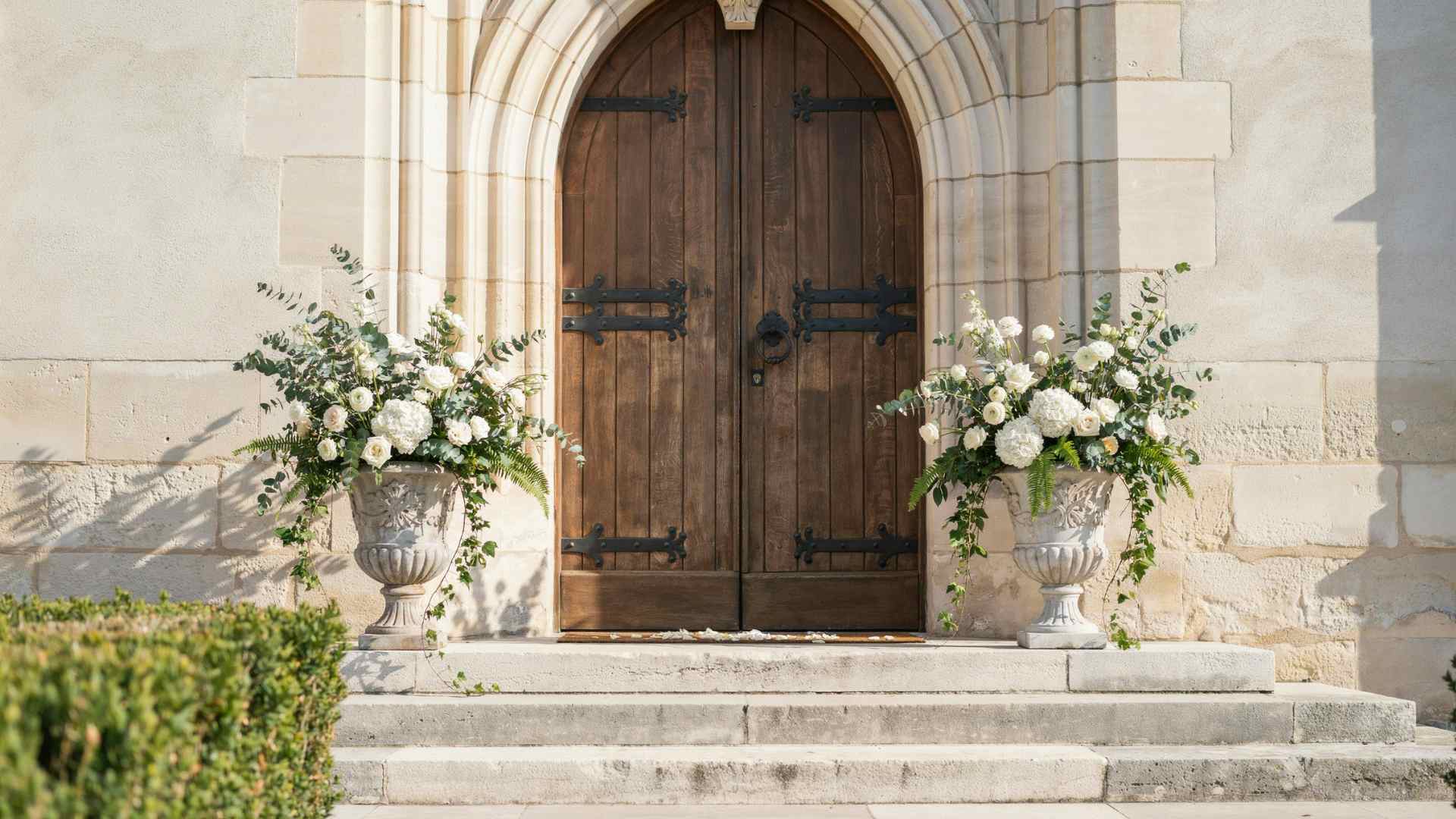
Two matching urns placed on either side of the steps or doorway give the entrance a grounded, finished feel.
Leaning toward greenery with a smaller number of seasonal flowers keeps the cost down while still giving the urns visual weight.
- Choose seasonal flowers to keep urn costs reasonable.
- Weight the urn base so wind or foot traffic won’t tip it.
5. A Welcome Sign With Lanterns
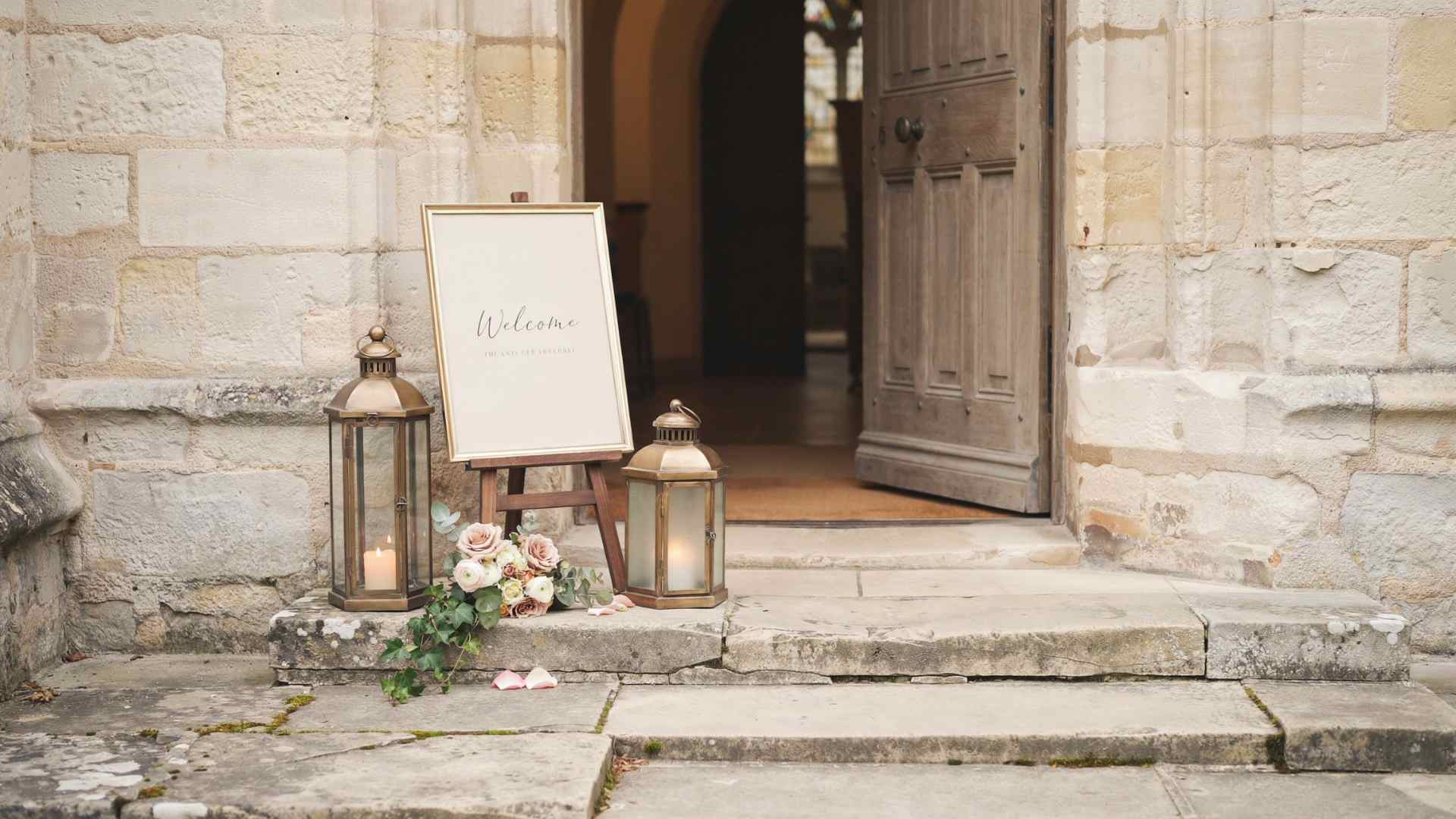
A simple welcome sign paired with two or three lanterns and a small flower arrangement gives guests a clear, warm first impression as they arrive.
This piece has an easy second life, since the same sign and lanterns can be carried straight to the reception entrance afterward.
- Pair the sign with lanterns for a warmer entrance moment.
- Reuse at reception to stretch the decoration budget further.
A strong entrance sets the tone before guests even reach their seats, which makes it worth the first slice of the budget.
Church Wedding Decorations for Aisles and Pews
Aisle decorations should stay secure, be easy to remove, and leave enough space for every guest to walk comfortably. The ADA Standards for Accessible Design emphasize keeping accessible routes clear of obstacles.
6. Satin Ribbon Pew Bows
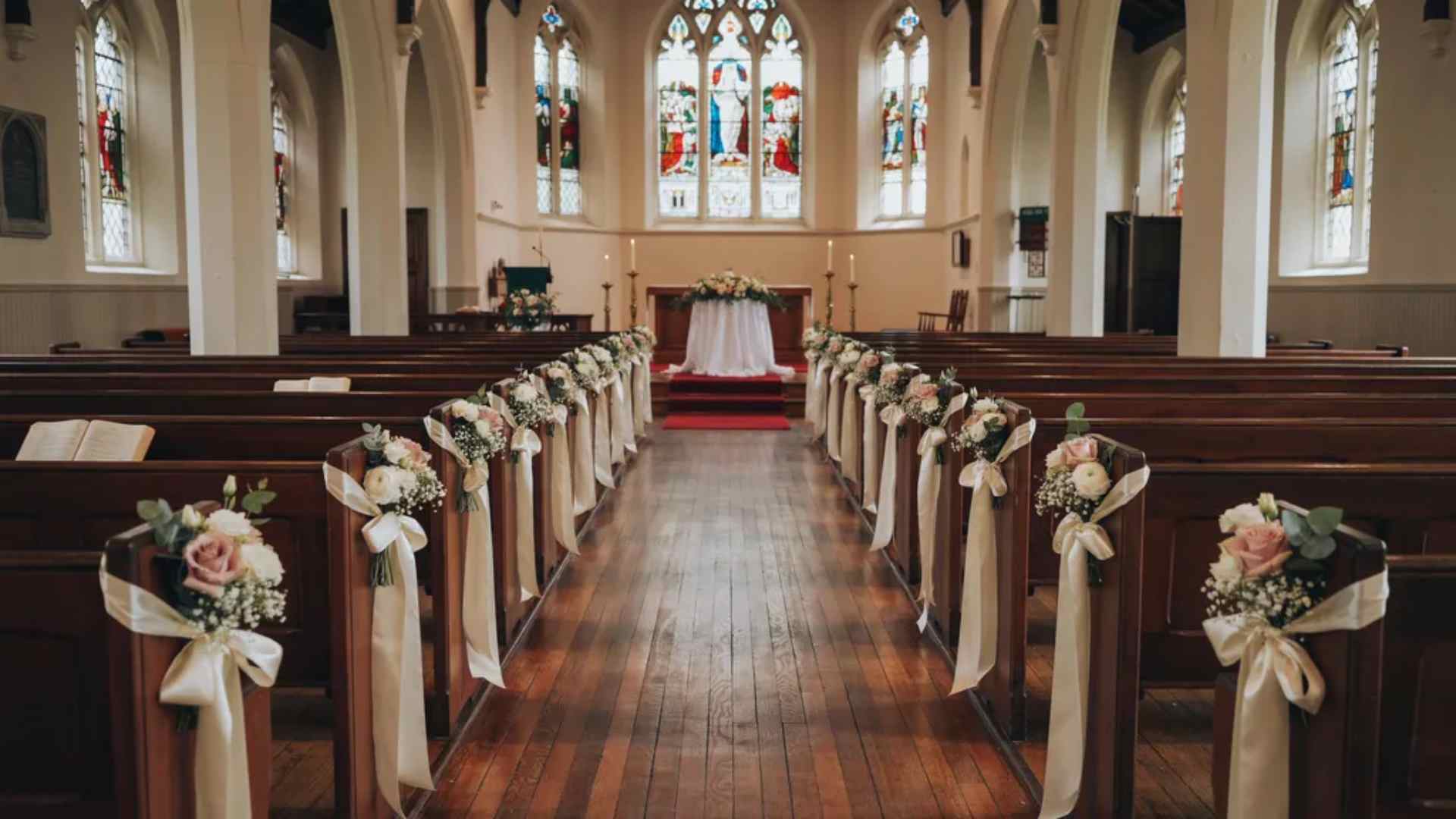
Plain white ribbon, a wedding color, or a layered combination gives every pew a consistent, tidy look without much material cost.
Decorating alternate pews rather than every single row cuts the ribbon needed roughly in half while still reading as a full aisle from a few feet back.
- Decorate alternate pews instead of every row.
- Pick one ribbon width for a consistent finished look.
7. Baby’s Breath Pew Bundles
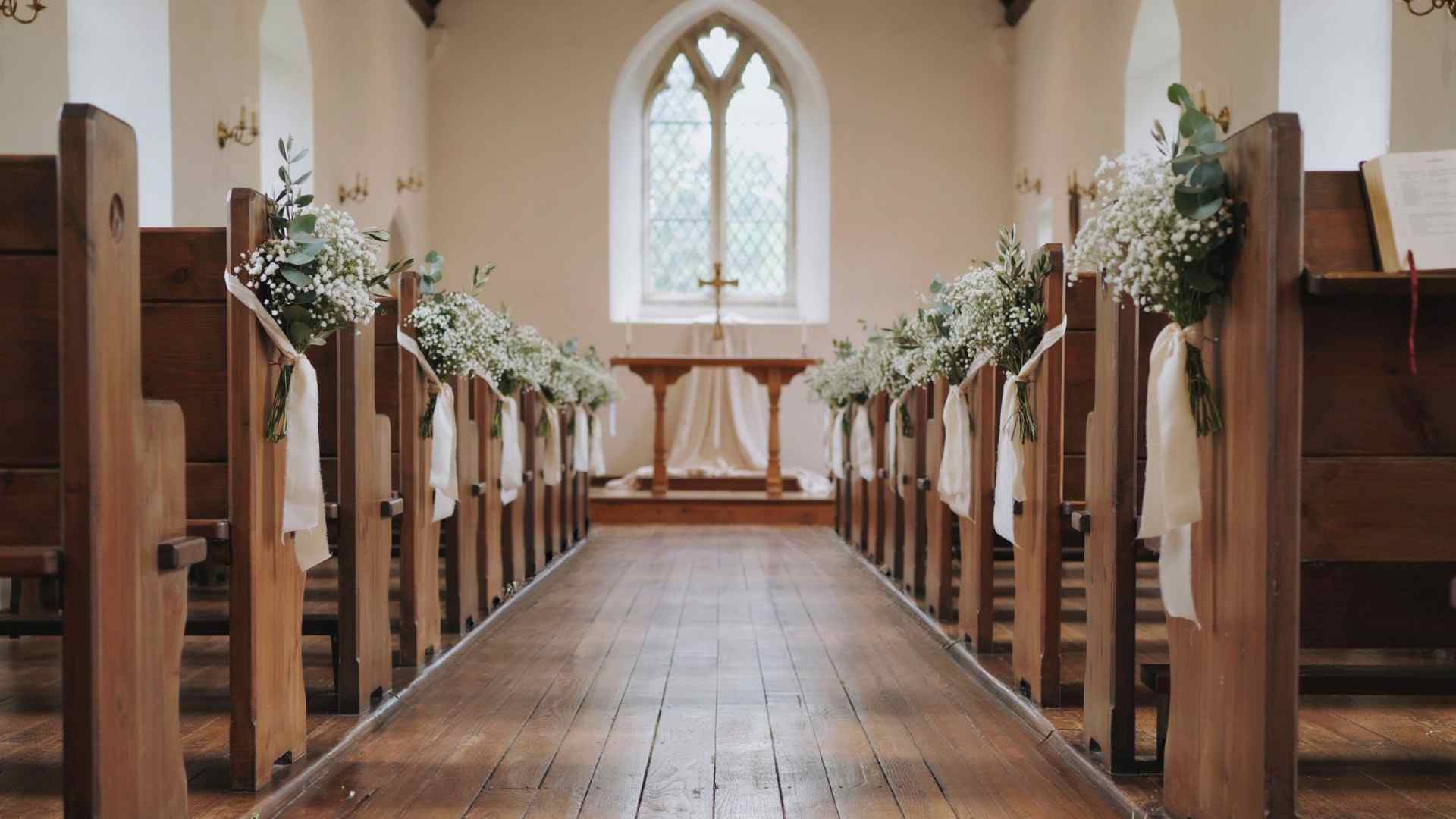
Baby’s breath can reduce material costs compared with larger mixed flower arrangements because smaller bundles often create a fuller look.
Both fresh and faux baby’s breath work here, and faux versions can be prepped weeks ahead without any wilting concerns.
- Choose faux for early prep if the wedding date is weeks out.
- Tie bundles loosely so ribbon doesn’t crush the stems.
8. Single Stem Pew Vases
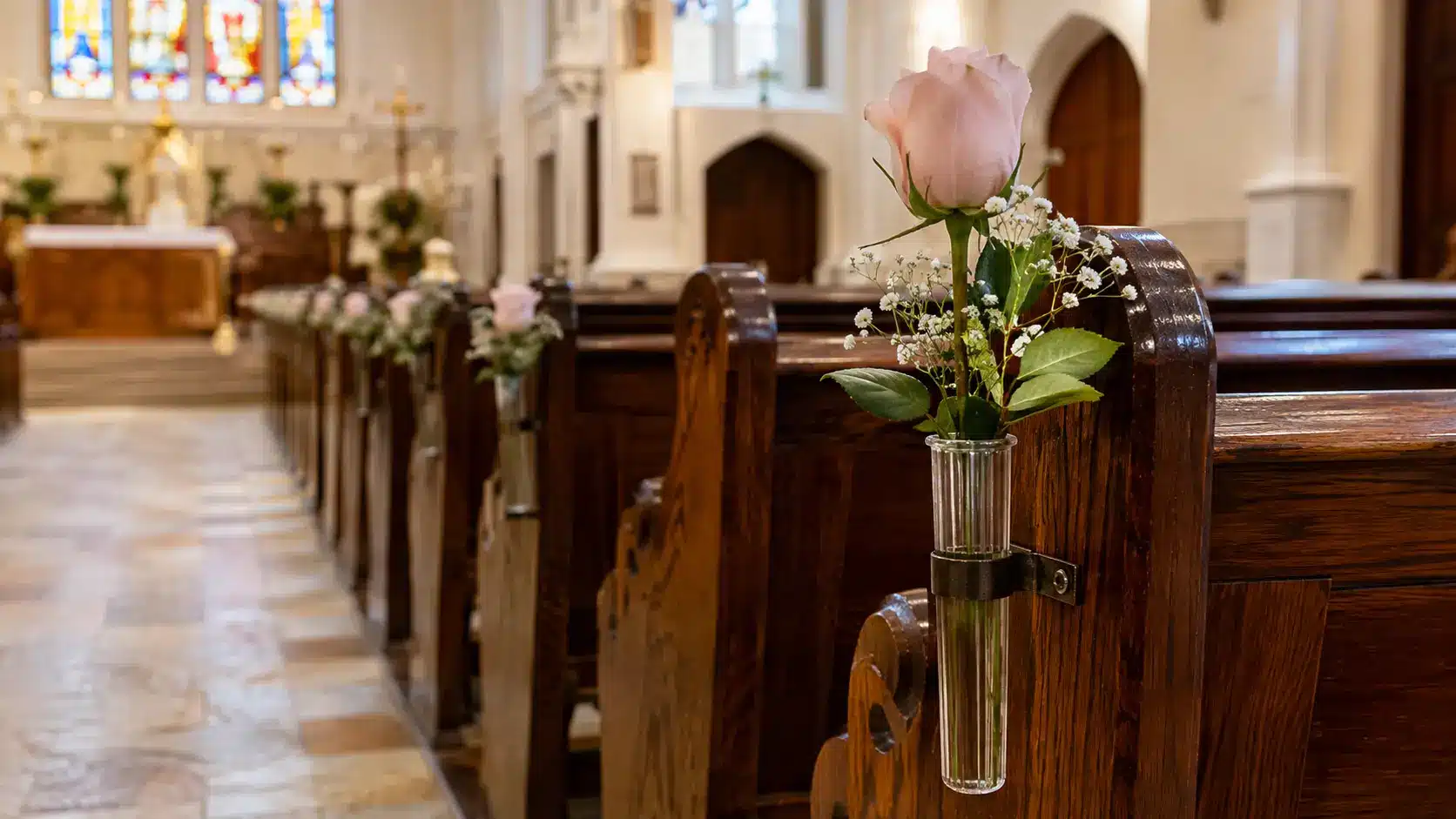
One flower in a lightweight pew vase keeps the aisle decorated without the weight or cost of a full arrangement at every row.
Check how the vase attaches to the pew, since heavy glass containers are more likely to slip or tip during a long ceremony.
- Choose lightweight vases over heavier glass options.
- Test the pew clip before the ceremony day.
9. Greenery on Every Third Pew
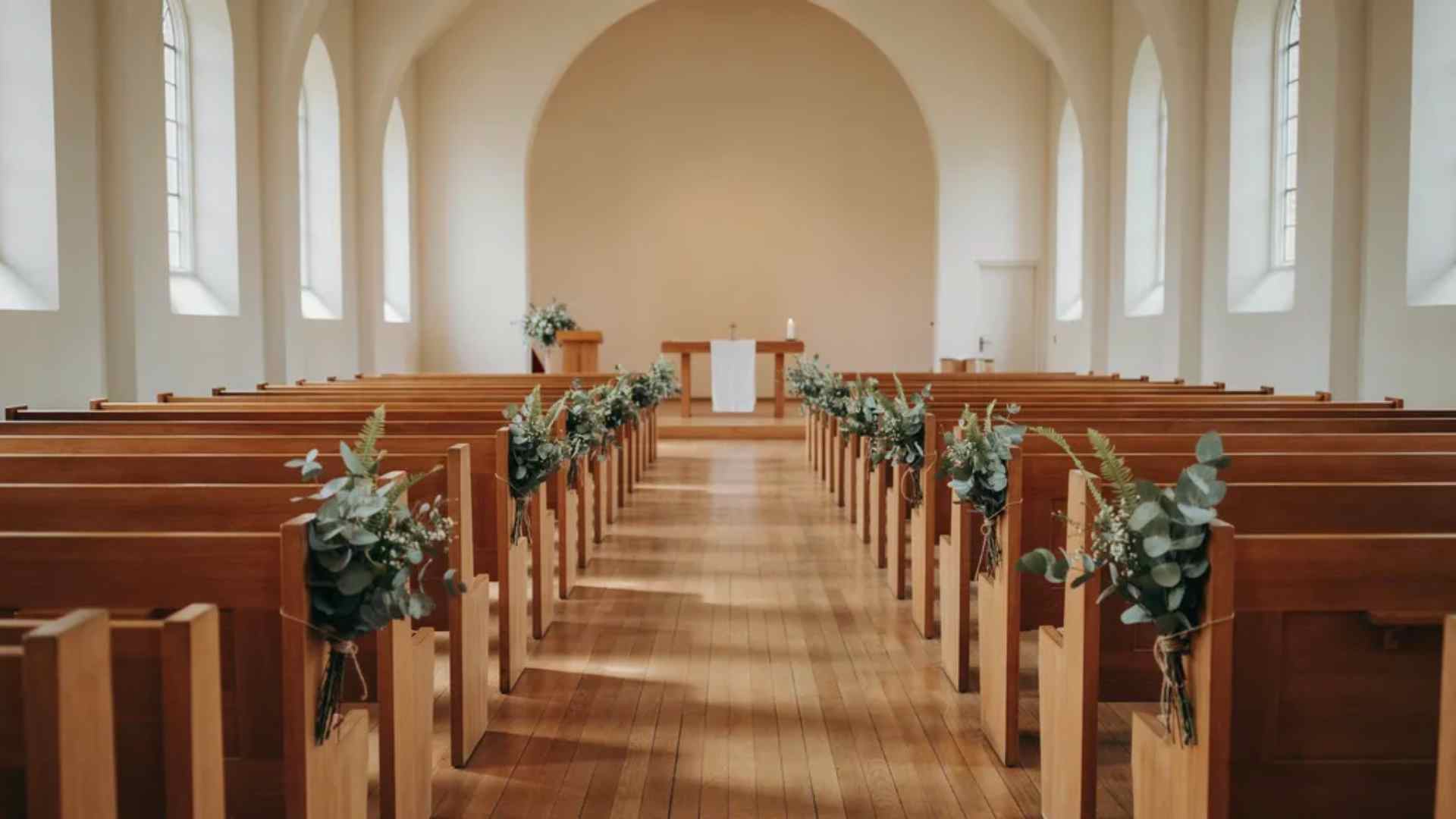
Eucalyptus, ivy, or fern leaves placed on every third pew mark the aisle clearly without the cost of decorating every single row.
This spacing approach is one of the more direct ways to stretch a greenery budget across a long aisle.
- Space greenery evenly for a balanced sightline down the aisle.
- Mix in one flower stem per pew for a small accent.
10. Small Mixed Flower Posies
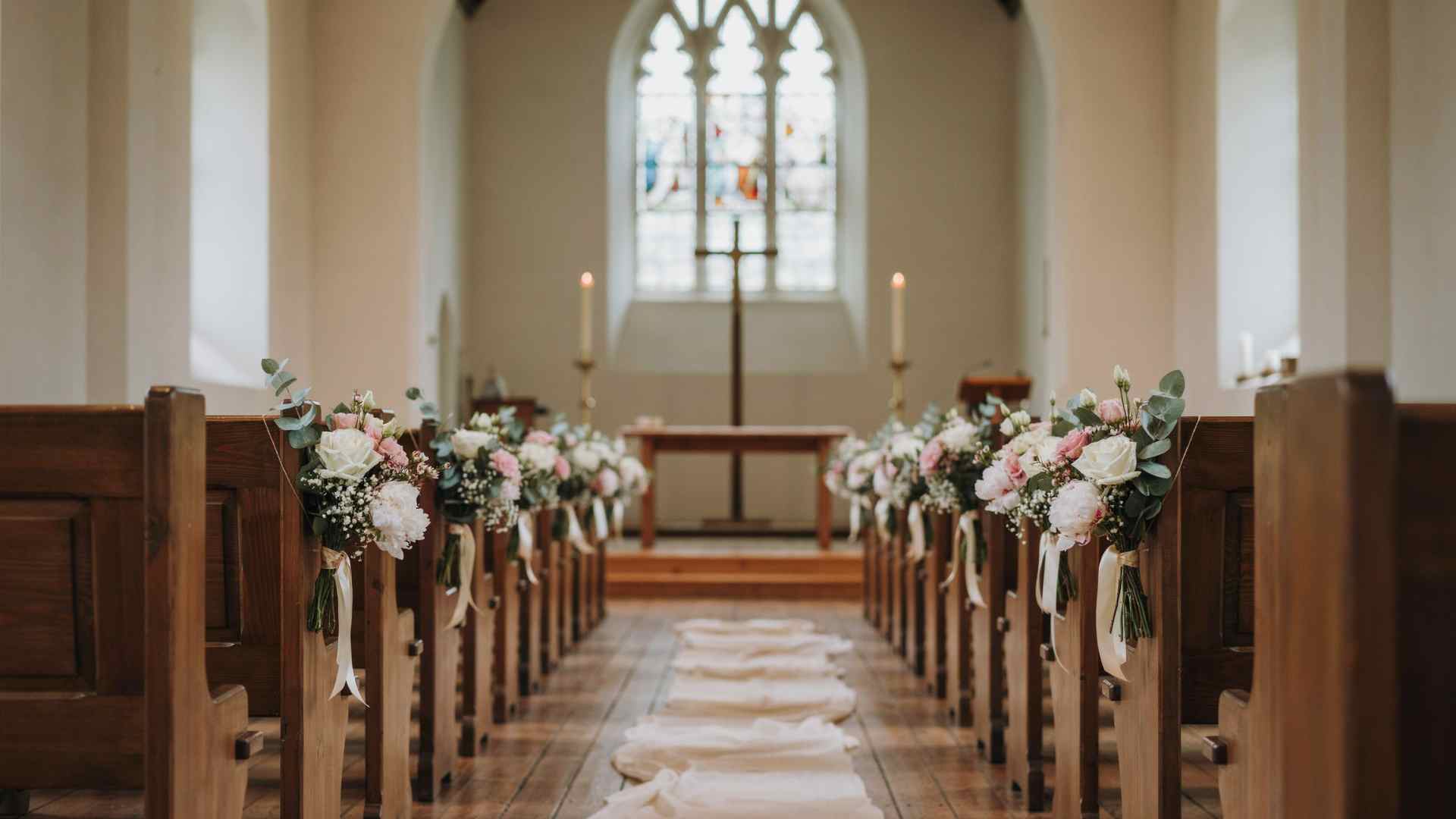
Small arrangements that echo the bridal bouquet tie the aisle decoration back to the couple’s overall color palette.
Limiting these posies to the front rows or reserved family seating keeps both the cost and the setup time manageable.
- Match the bridal bouquet colors for a cohesive look.
- Limit to front rows to control cost and setup time.
11. Eucalyptus and Ribbon Loops
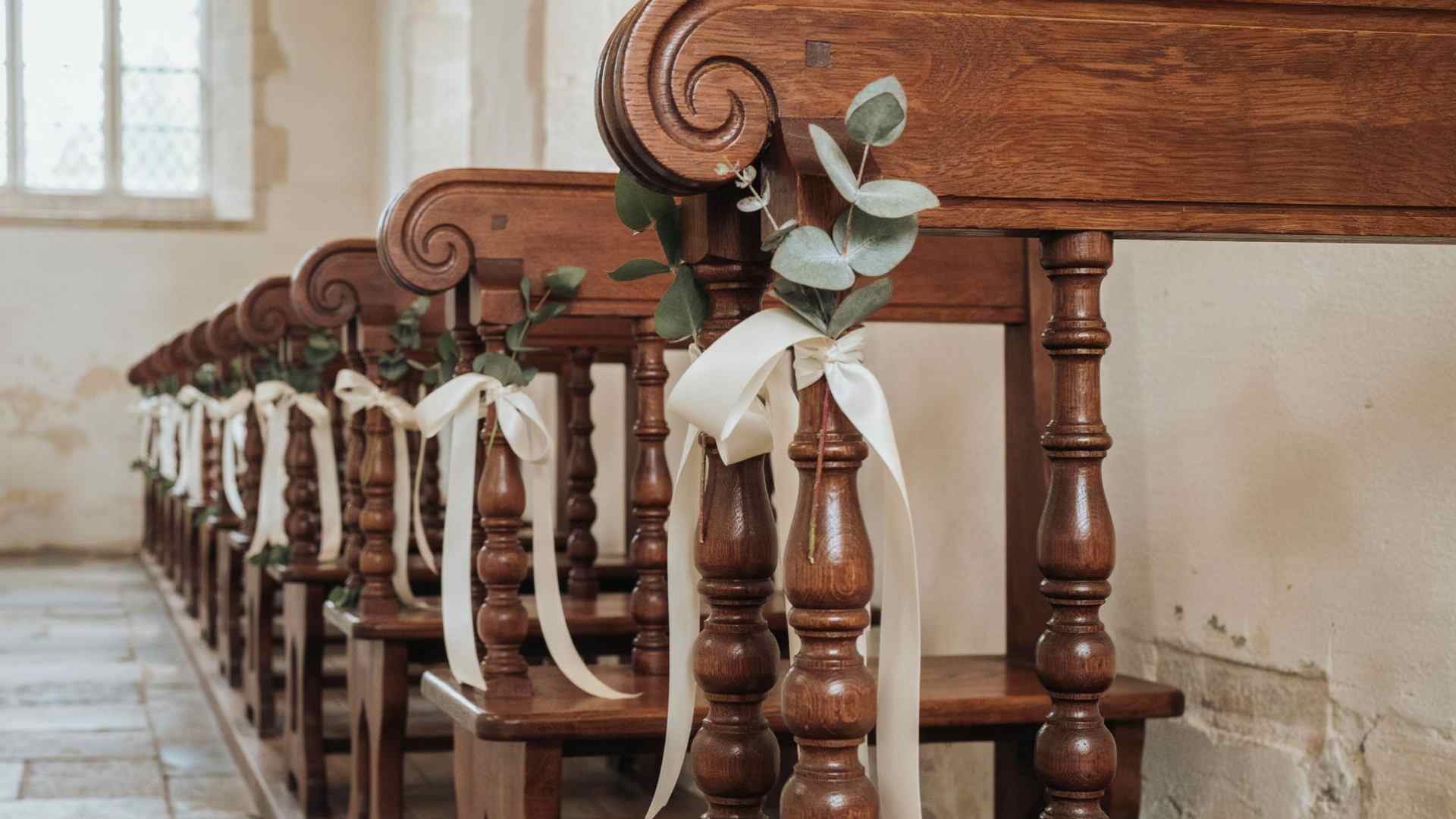
Short eucalyptus stems placed inside wide ribbon loops give a clean, structured look that works especially well in churches with detailed interior woodwork or stonework.
The ribbon loop itself does most of the visual work, so only a small amount of eucalyptus is needed per pew.
- Use wide ribbon loops to frame a small amount of greenery.
- Choose this for detailed interiors where less décor reads better.
12. Reserved Row Markers
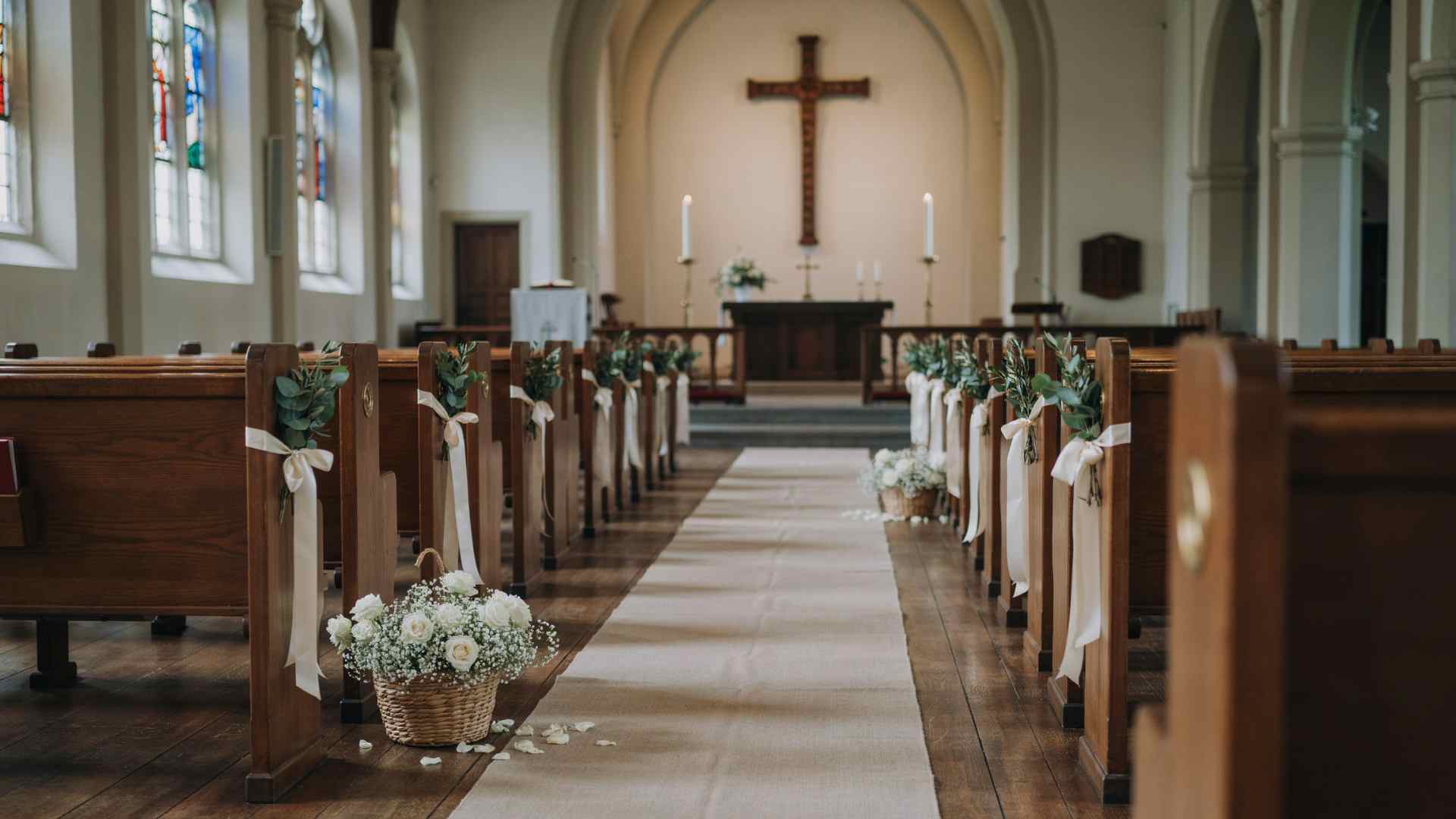
Ribbon, small signs, flowers, or greenery mark out rows reserved for parents, grandparents, and close family so ushers can seat guests with less back-and-forth.
This is a small detail, but it saves real time during guest seating, especially at a larger wedding.
- Mark reserved rows clearly so ushers can seat guests faster.
- Keep markers removable for a quick reset after the ceremony.
13. Lanterns With Flameless Candles
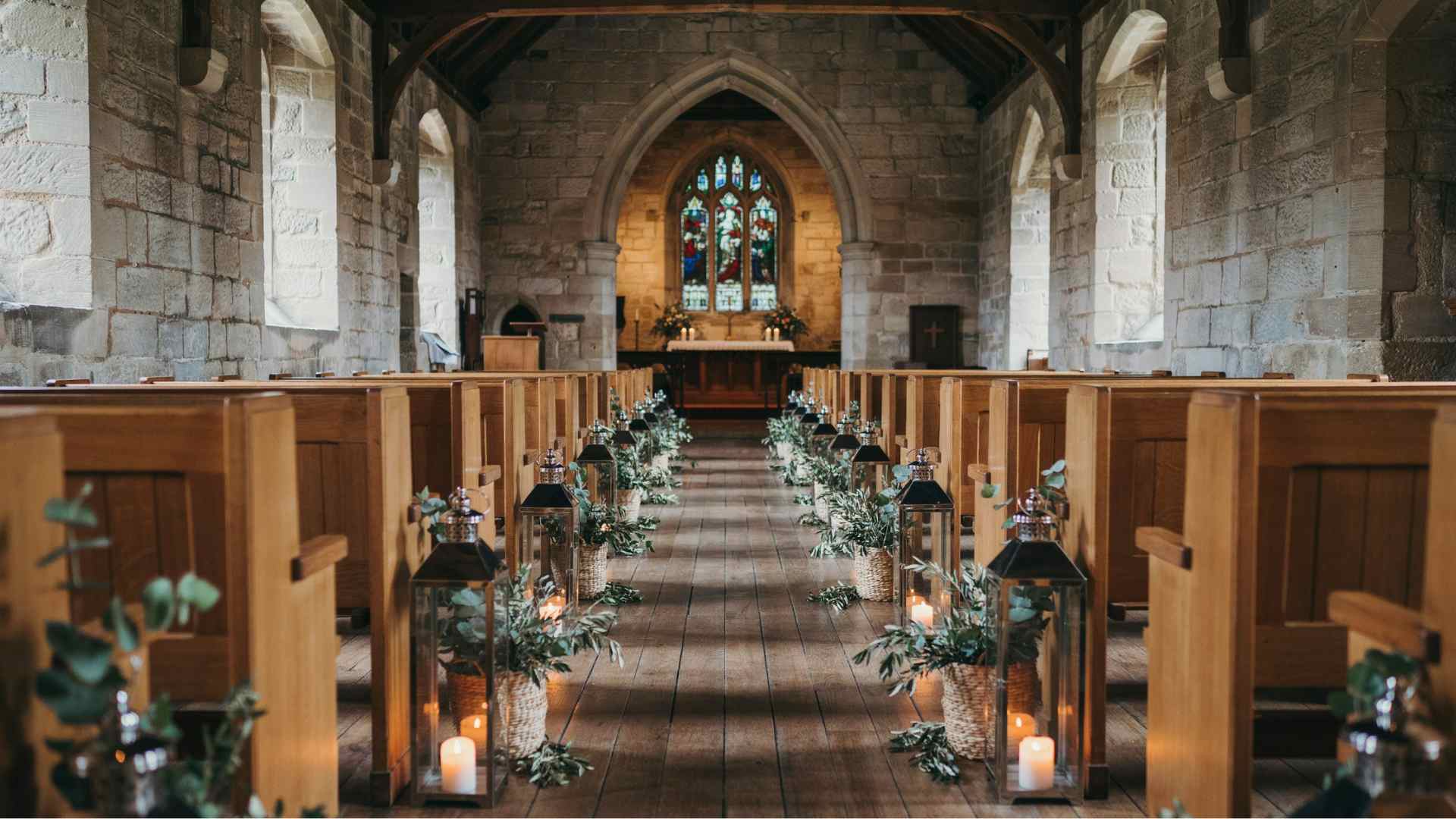
Lanterns placed at set points beside the aisle add a warm glow while avoiding some of the concerns linked with open flames.
Secure placement, aisle clearance, and a battery check before the ceremony all matter here, since a lantern that tips or dies mid-ceremony draws attention for the wrong reason.
- Test batteries the night before so nothing dies mid-ceremony.
- Keep lanterns off the walking path entirely.
14. A Plain Fabric Aisle Runner
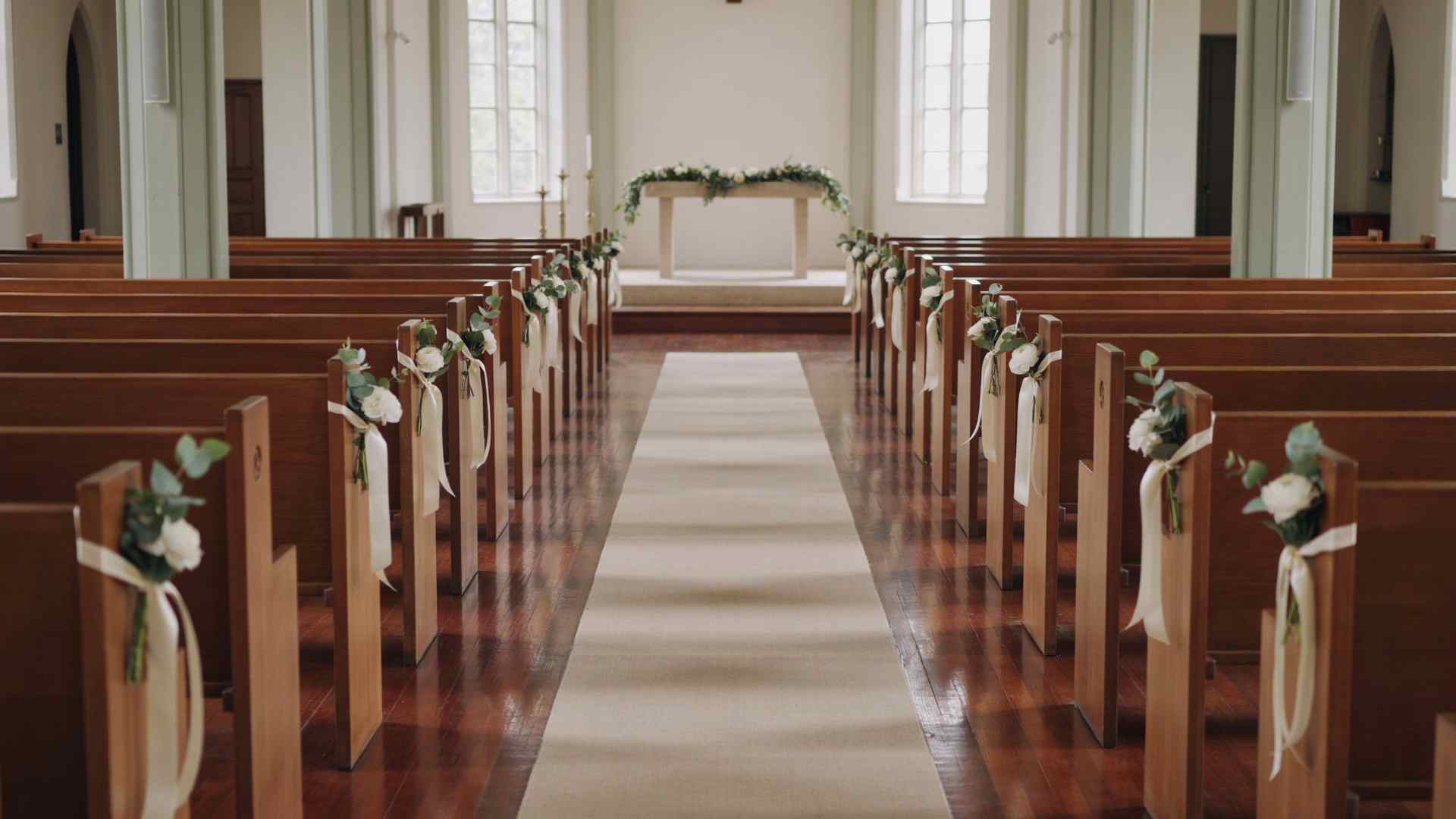
A white, cream, or another soft-colored runner gives the aisle a finished look, provided it lies completely flat from end to end.
The runner needs to be fixed down using a church-approved method, since a sliding runner is both a decoration problem and a safety issue.
- Fix the runner down using only a church-approved method.
- Choose a soft neutral color so it complements rather than competes.
Aisle décor gets seen for only a few minutes during the walk, so simple and secure usually beats elaborate and rushed.
Church Wedding Decorations for the Altar Area
The altar draws the most attention of any spot in the building during the vows themselves, so one or two strong pieces are often enough rather than a crowded display.
15. A Pair of Floral Urns
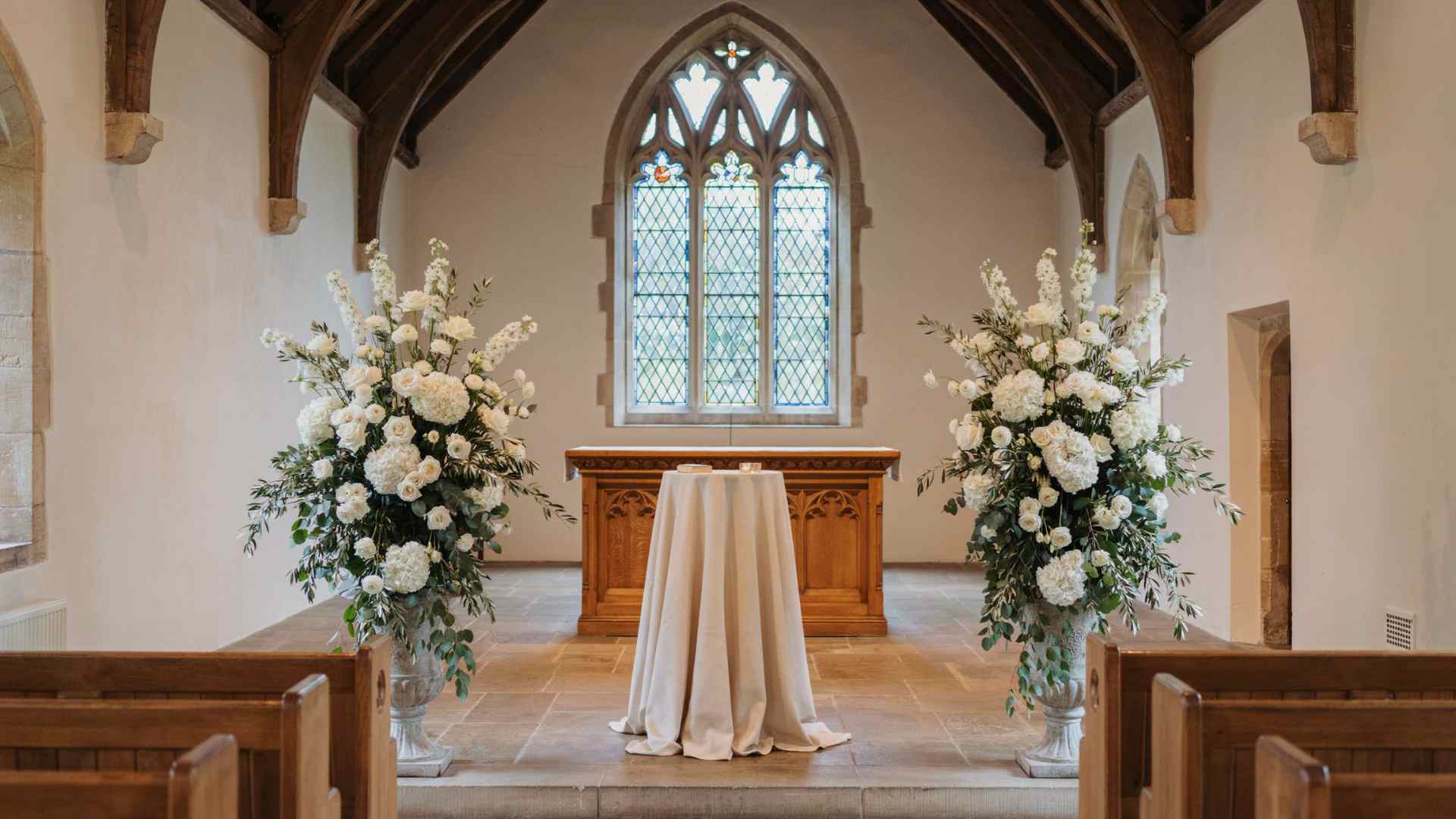
One matching arrangement placed on each side of the ceremony area gives the altar a balanced frame without blocking sightlines to the couple.
Flower height needs a second look here, since anything too tall can block guests seated toward the back from seeing the vows.
- Check flower height against back-row sightlines.
- Match both urns exactly for a balanced altar frame.
16. Potted Ferns Around the Altar
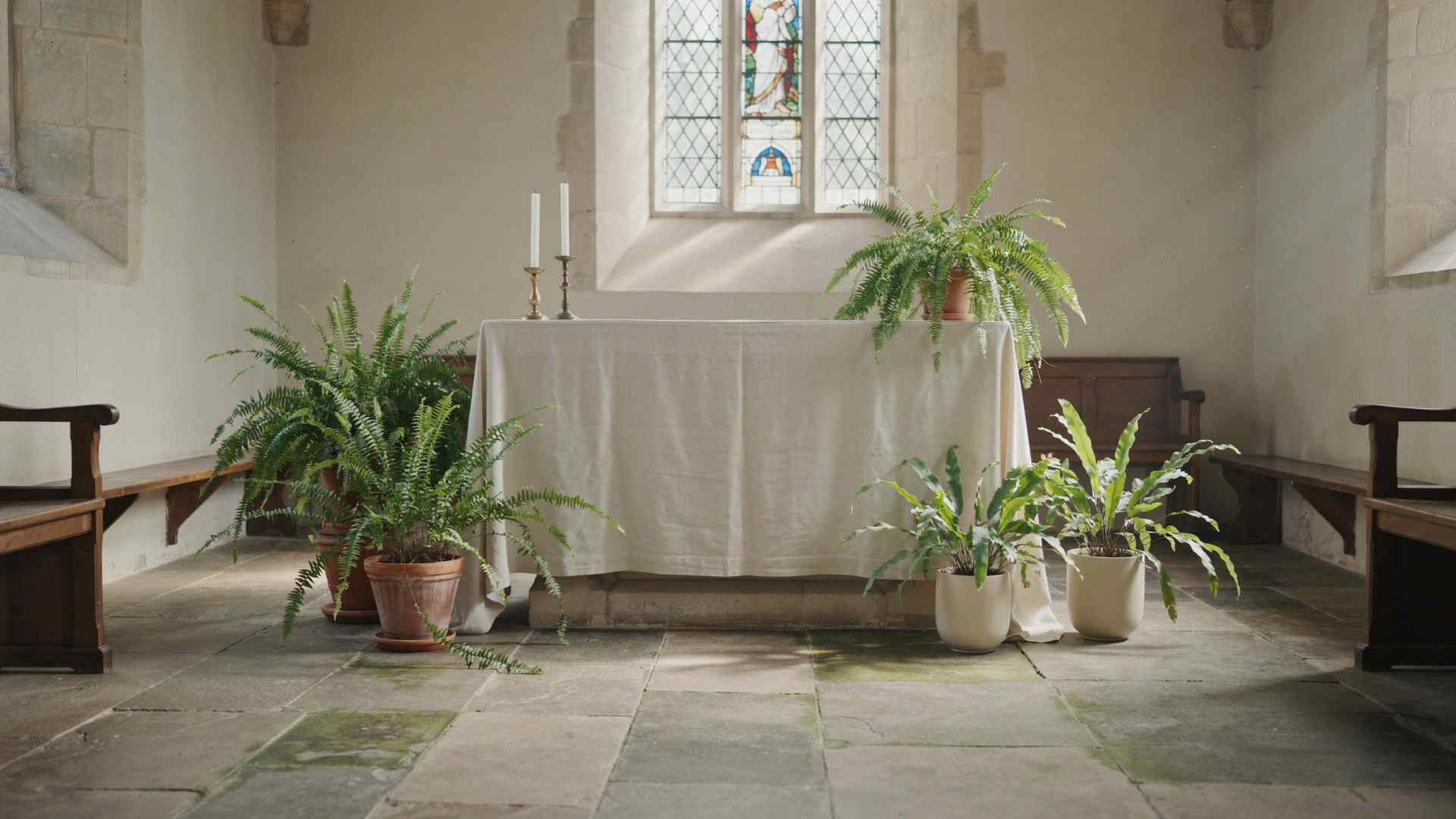
Ferns or other leafy plants soften the hard edges of an altar area without requiring a single cut flower.
Church-owned plants or rented pots are both ways to bring this idea in at a lower cost than a florist-built arrangement.
- Ask whether the church already owns plants before renting or buying.
- Group uneven heights for a fuller, more natural look.
17. Low Flower Arrangements Along the Floor
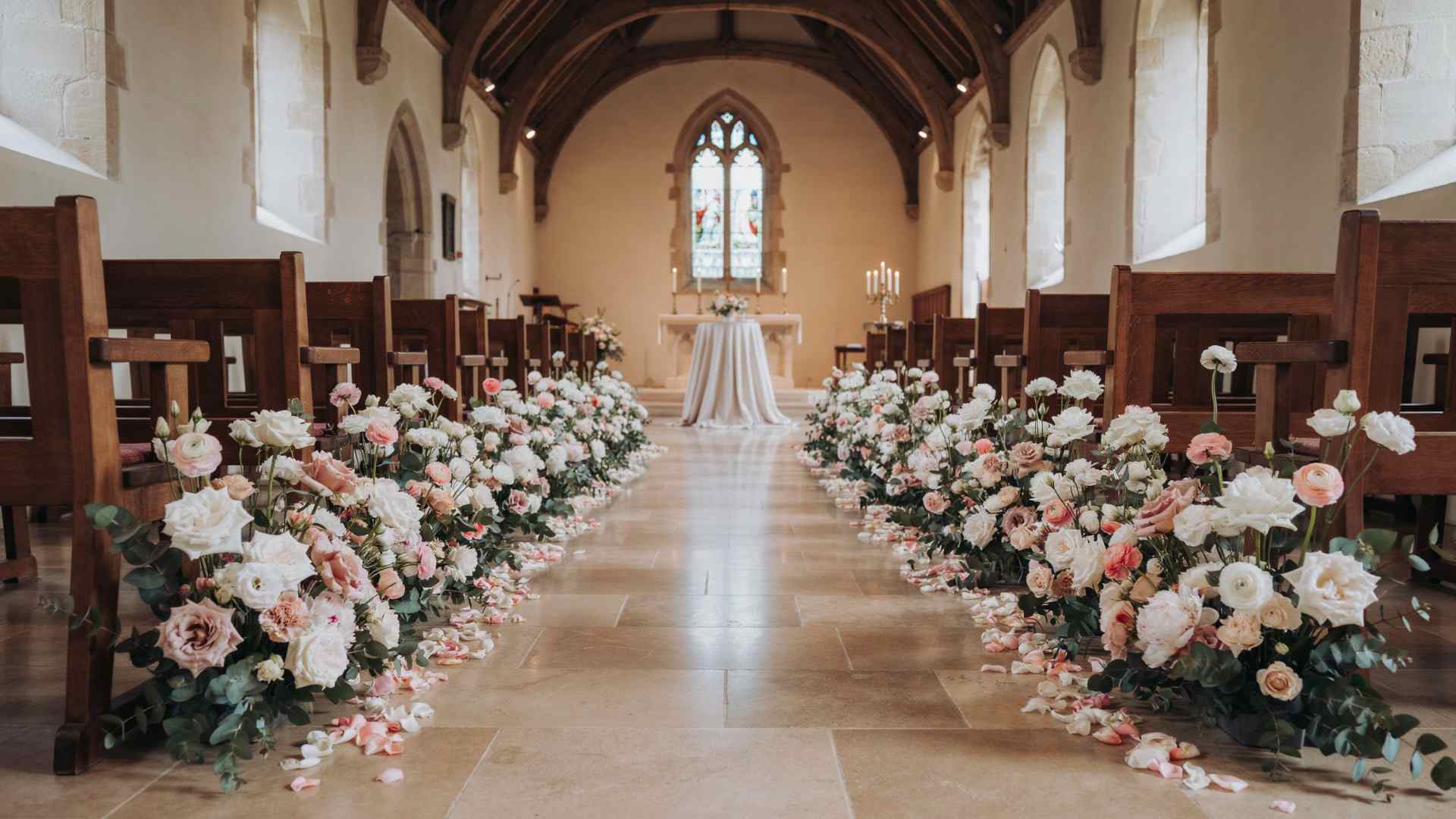
Flowers arranged close to the floor around the ceremony area add color at ground level without competing with taller altar pieces.
Keep these clear of movement paths and altar access, since anything in the officiant’s or wedding party’s way becomes a problem the moment the ceremony starts.
- Keep floor pieces out of walking paths.
- Pair with taller pieces for layered height at the altar.
18. Tall Flowers on Pedestal Stands
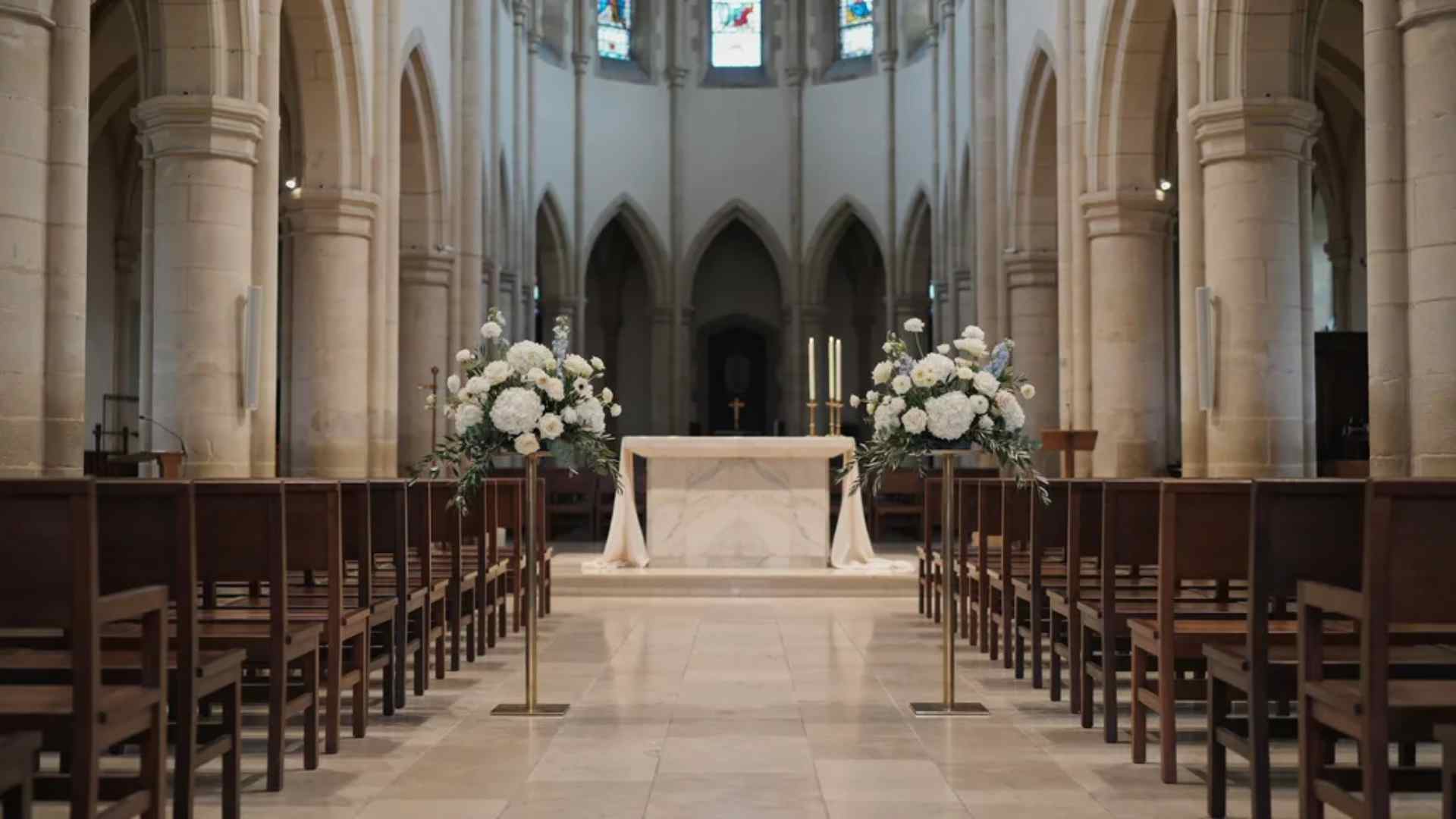
Narrow pedestal stands raise flowers high enough for guests seated toward the back to actually see them over the crowd.
Adding weights to the base of each stand matters more than it might seem, since a tall arrangement is also a top-heavy one.
- Weigh every stand base before the ceremony begins.
- Place stands where sightlines need the most height.
19. A Simple Floral Ceremony Arch
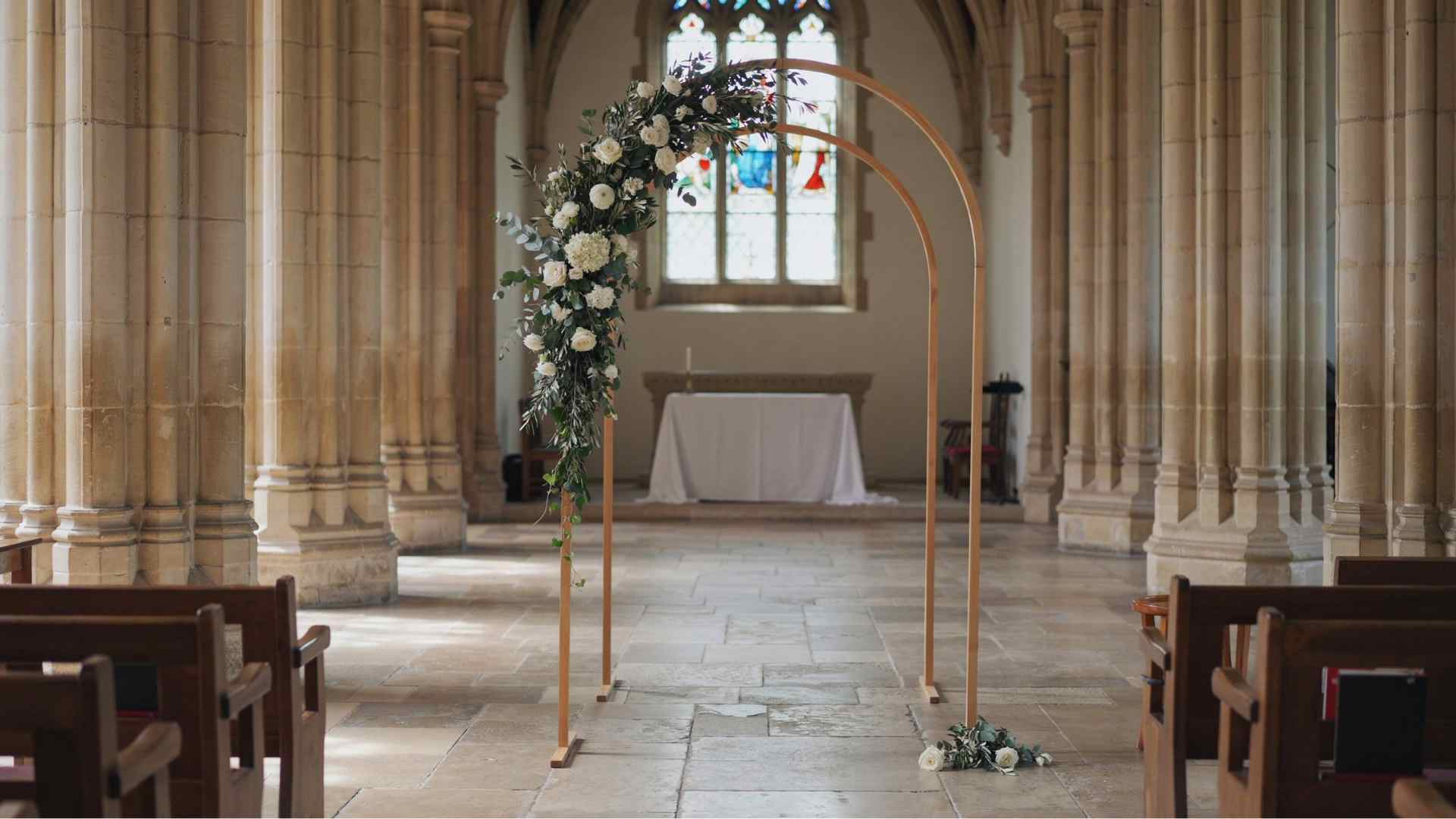
A light arch decorated on one side or at the corners gives the ceremony a focal point without requiring a fully covered structure.
Couples considering a larger ceremony focal point can compare different wedding arch ideas before choosing the right size, flowers, and structure for their church. Permission matters most here, more than anywhere on this list.
- Get direct approval first for any arch near the altar.
- Decorate one side or the corners rather than the full frame.
20. Candles Inside Glass Holders
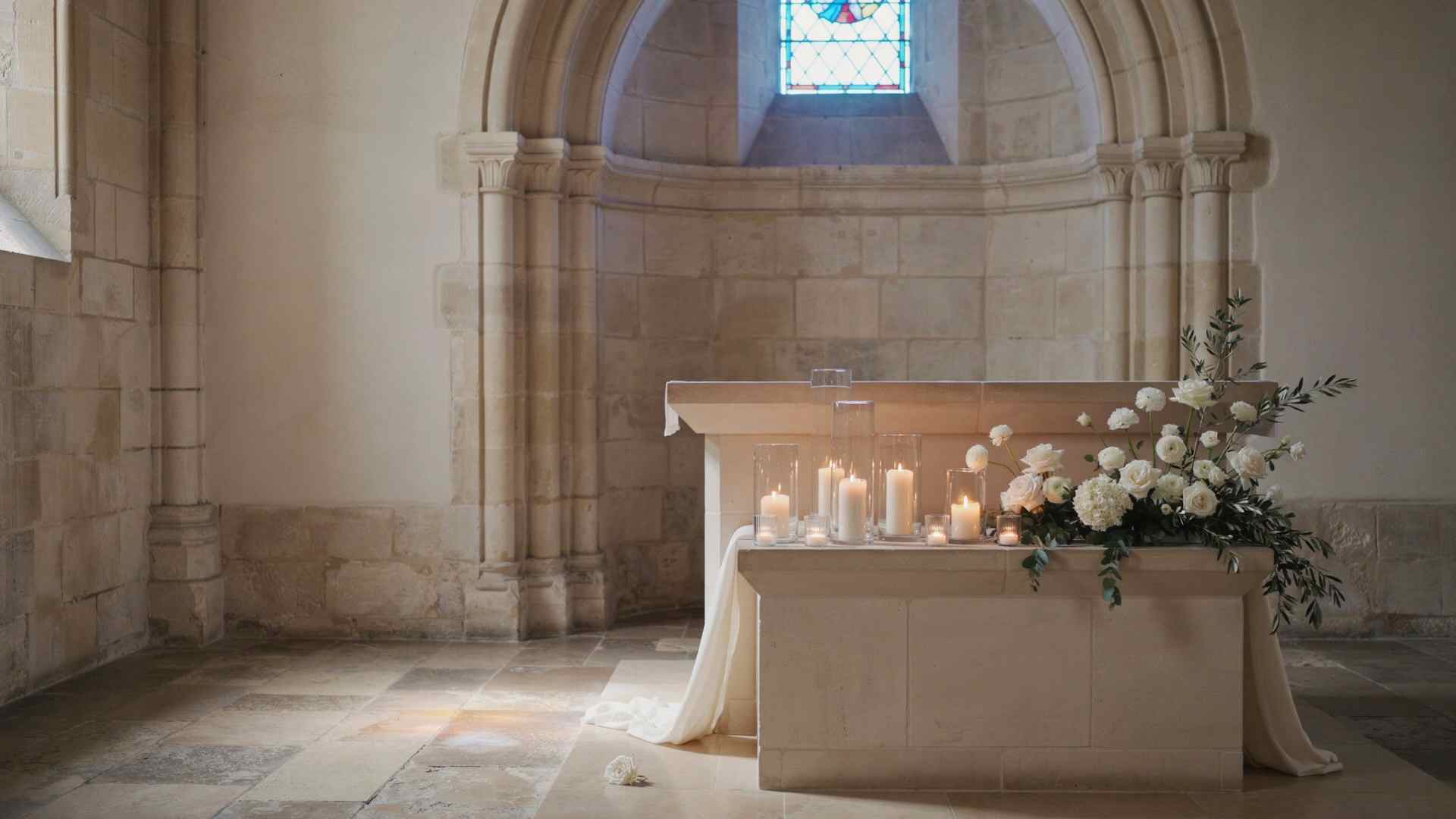
Groups of candles at different heights, placed inside enclosed holders, give the altar a warm glow while keeping the flame contained.
Flameless replacements are worth having ready as a backup, since not every church permits open flame even inside enclosed glass.
- Have flameless backups ready in case open flame isn’t approved.
- Vary candle heights within each grouped cluster.
21. Seasonal Branch Arrangements
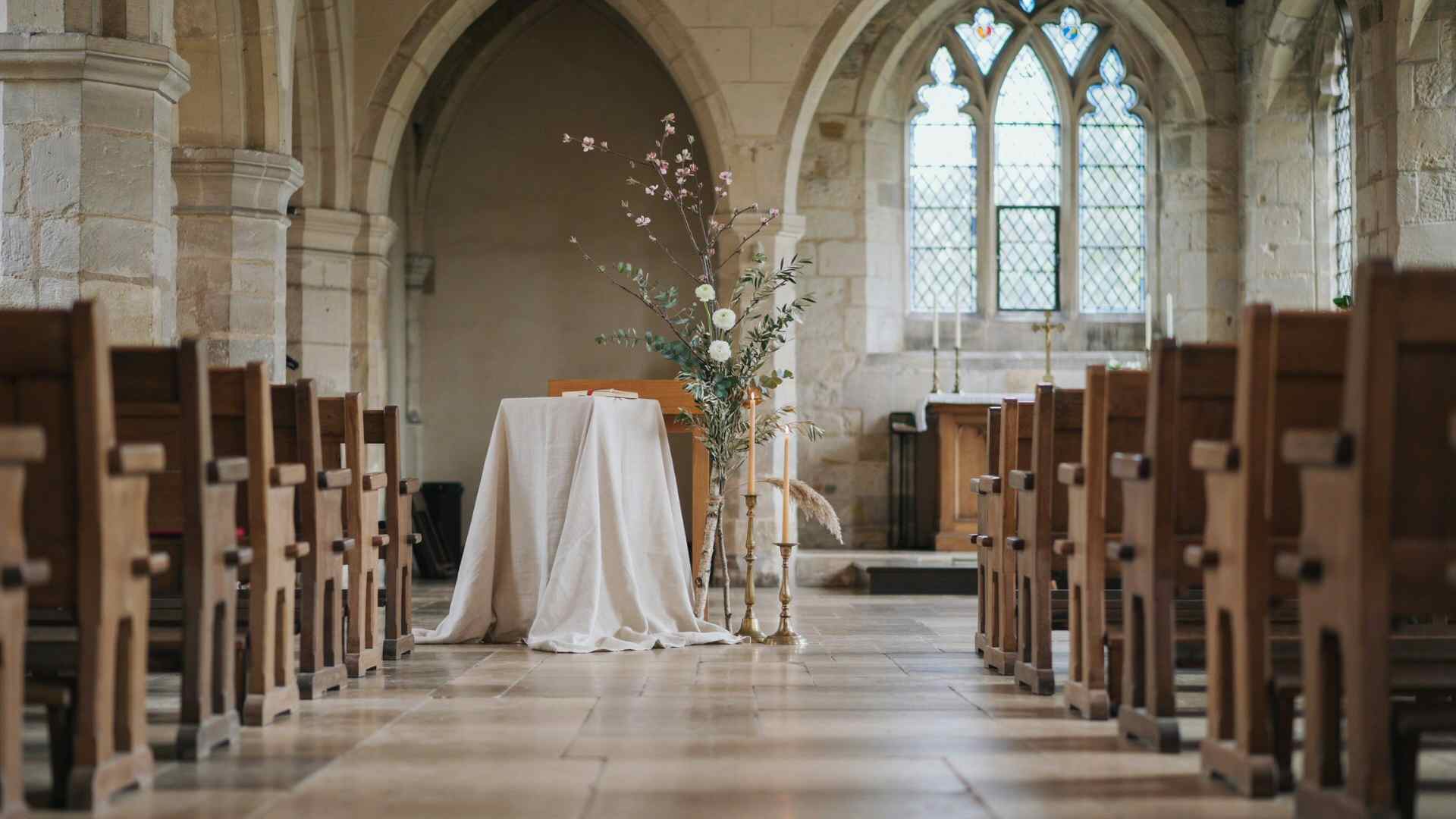
Flowering branches in spring, leafy branches in summer, warm colored foliage in autumn, and evergreen branches in winter give the altar a look tied directly to the wedding date.
Some seasonal branches can cost less than large flower arrangements, depending on availability.
- Match branches to the season for a naturally timed look.
- Swap in branches over flowers to stretch a tighter budget.
One or two of these altar ideas, chosen well, usually carry more weight than a dozen scattered smaller pieces.
Small Church Details That Complete the Setting
A few smaller touches round out the main sections above, adding polish to spots guests notice on the way in or out without a large budget or long setup time.
22. Greenery on Window Ledges
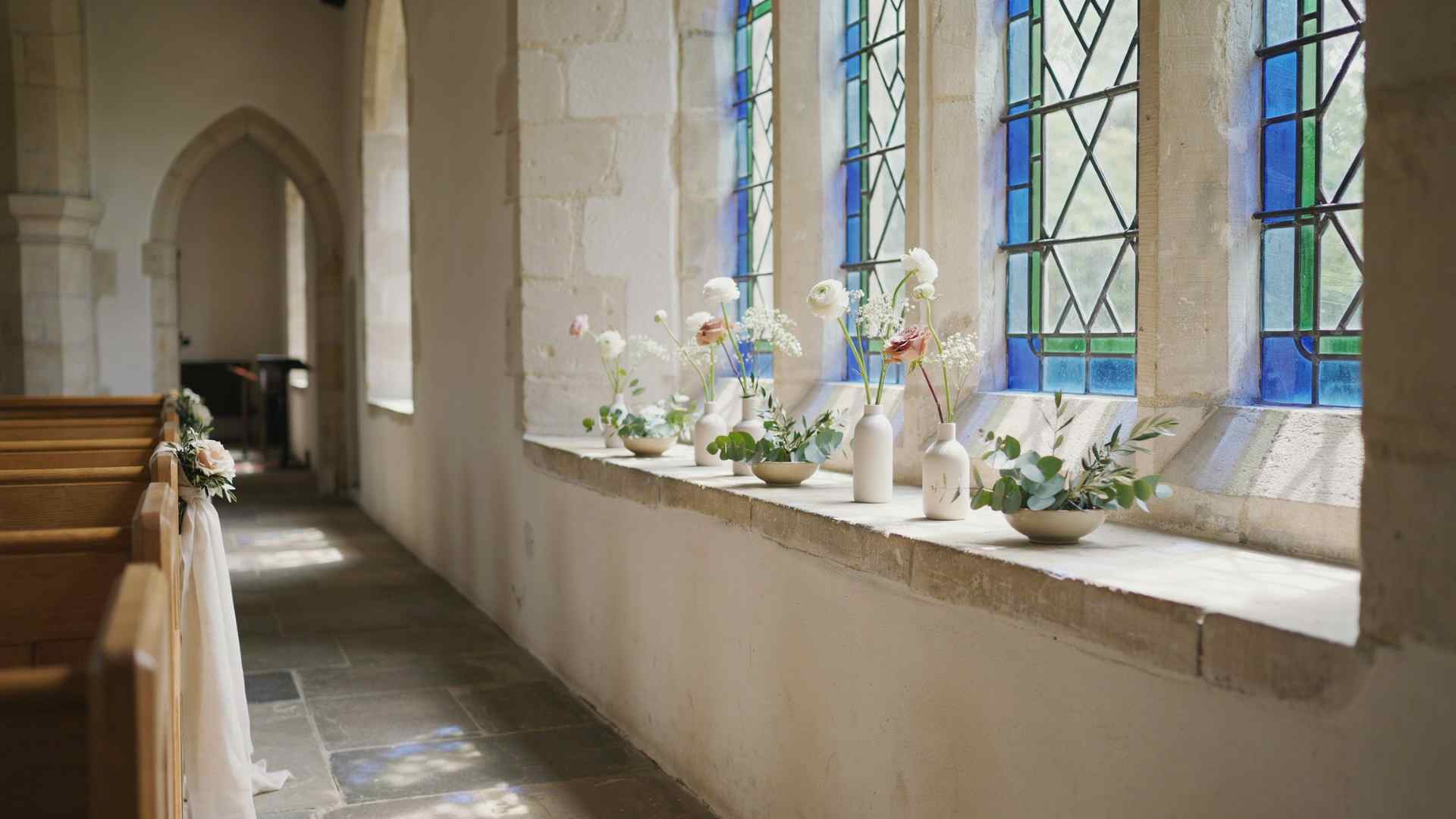
Short garlands, small potted plants, or single flower vases along a window ledge add a finishing touch to a spot most decoration lists skip entirely.
This works especially well in churches with detailed stonework, since a light touch here draws the eye without competing with what’s already there.
- Keep pieces low profile so they never block stained glass or natural light.
- Ask before placing anything directly on a windowsill or ledge.
23. Garlands on Columns and Railings
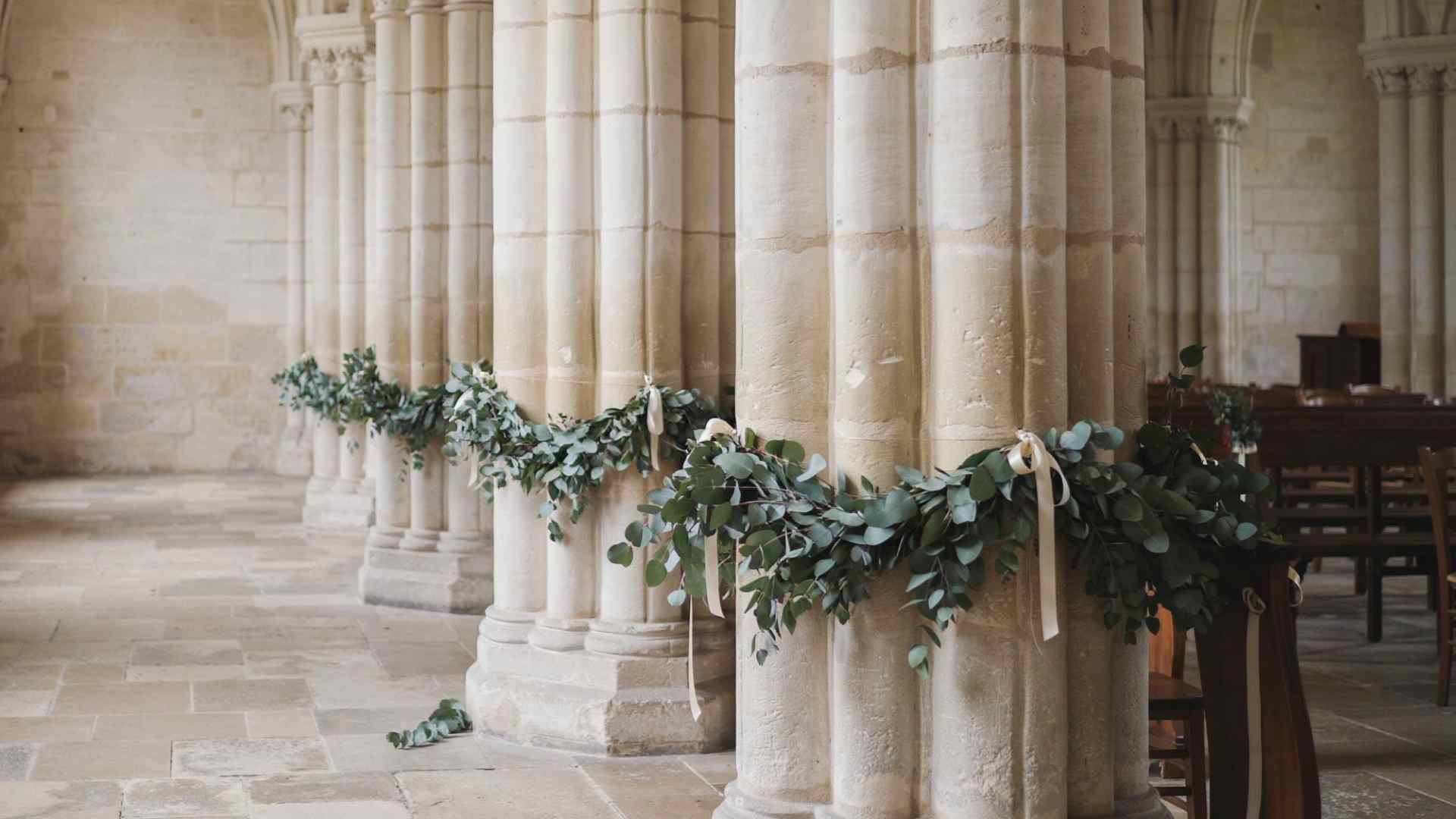
Light greenery wrapped loosely around columns and railings, finished with small ribbon ties, adds texture to spaces that otherwise go undecorated.
The look reads as intentional rather than sparse, and it costs very little compared to filling the same space with flowers.
- Wrap loosely, not tightly, so the greenery keeps its shape.
- Keep handrails fully usable even with greenery attached.
24. A Memorial Flower Arrangement
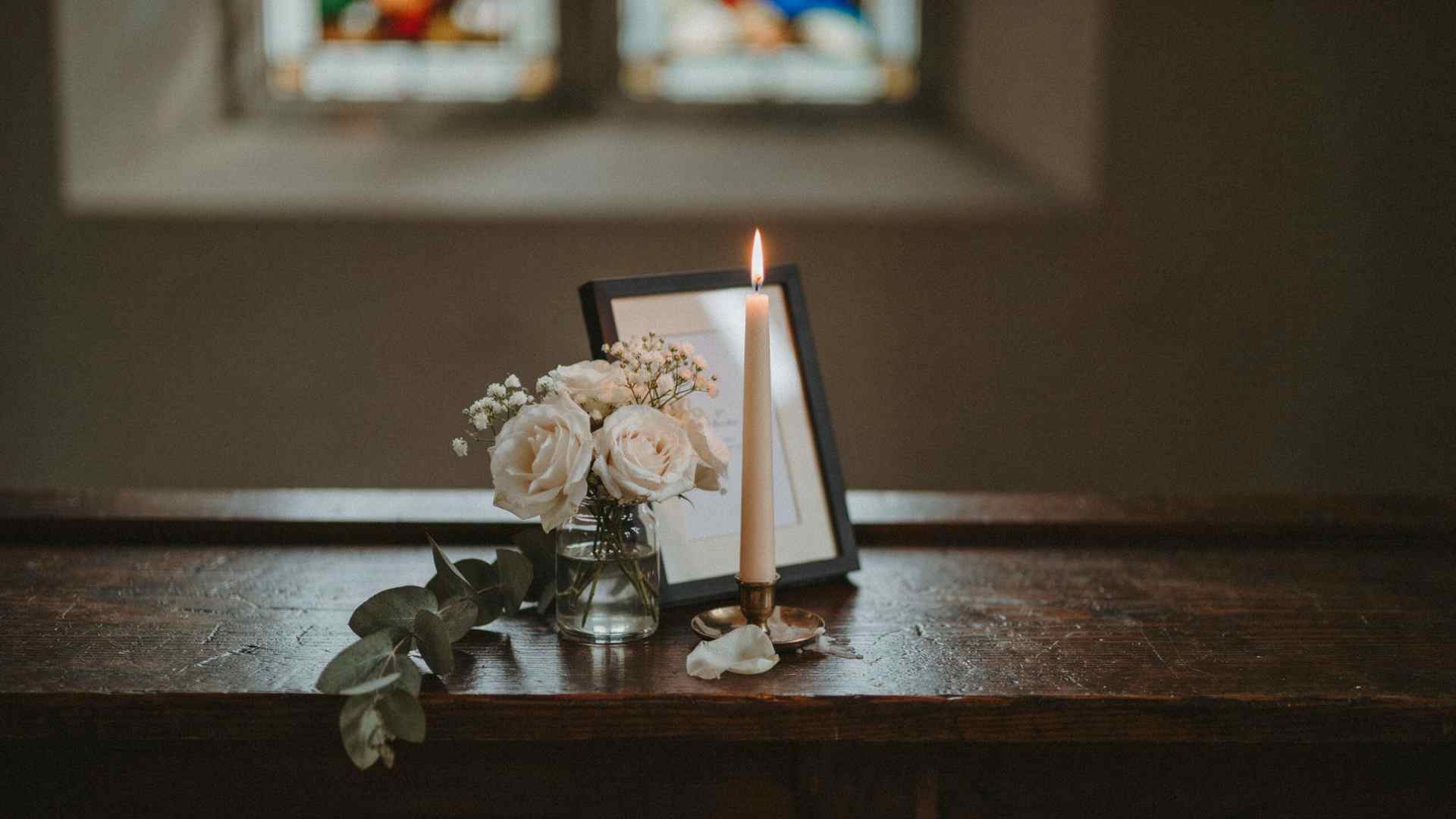
One small arrangement set aside for loved ones who have passed away gives a ceremony a personal, thoughtful touch.
It can sit near a memorial candle, a framed name card, or a reserved seat, and it only takes a single flower type to feel complete and deliberate.
- Get church approval first for exactly where this arrangement sits.
- Keep it small and separate from the main altar display.
25. A Ceremony Program Basket Station
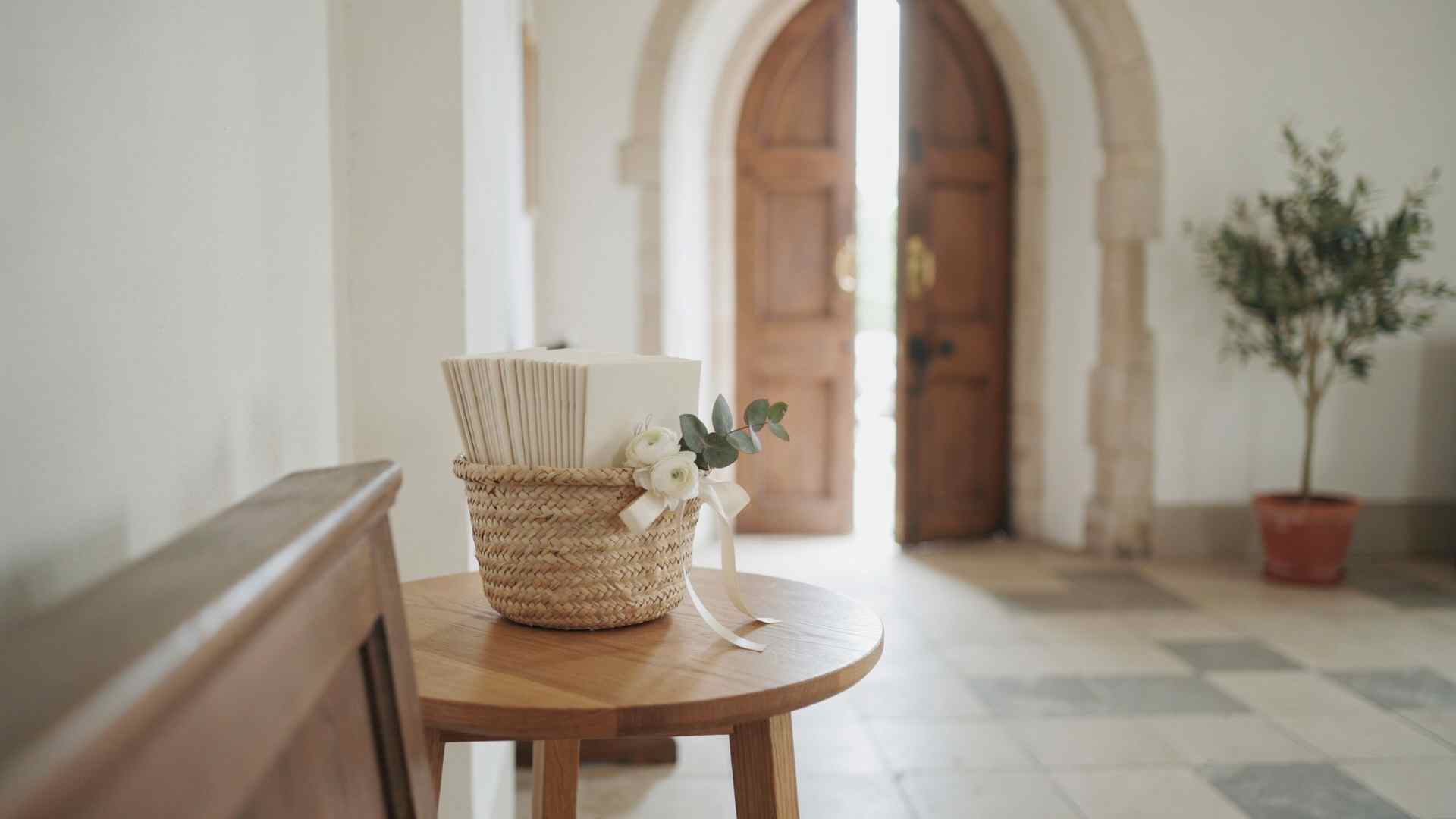
Programs placed inside baskets or trays near the entrance give guests an easy first stop as they arrive.
Adding a small ribbon or flower detail that echoes the rest of the décor turns a purely practical station into one more small decorated moment guests notice on their way in.
- Match the basket detail to the nearby entrance decorations.
- Place the station where the entry line naturally slows down.
These smaller touches take little time to add but often show up in the photos guests remember most.
Low Budget DIY Simple Church Wedding Decorations to Make at Home
If you enjoy handmade details, these ideas can also work alongside other diy wedding decorations to create a consistent look throughout the celebration.
Making one extra of each item is worth the small added cost, since transport is often where fragile pieces get damaged.
26. Ribbon and Faux Flower Pew Ends
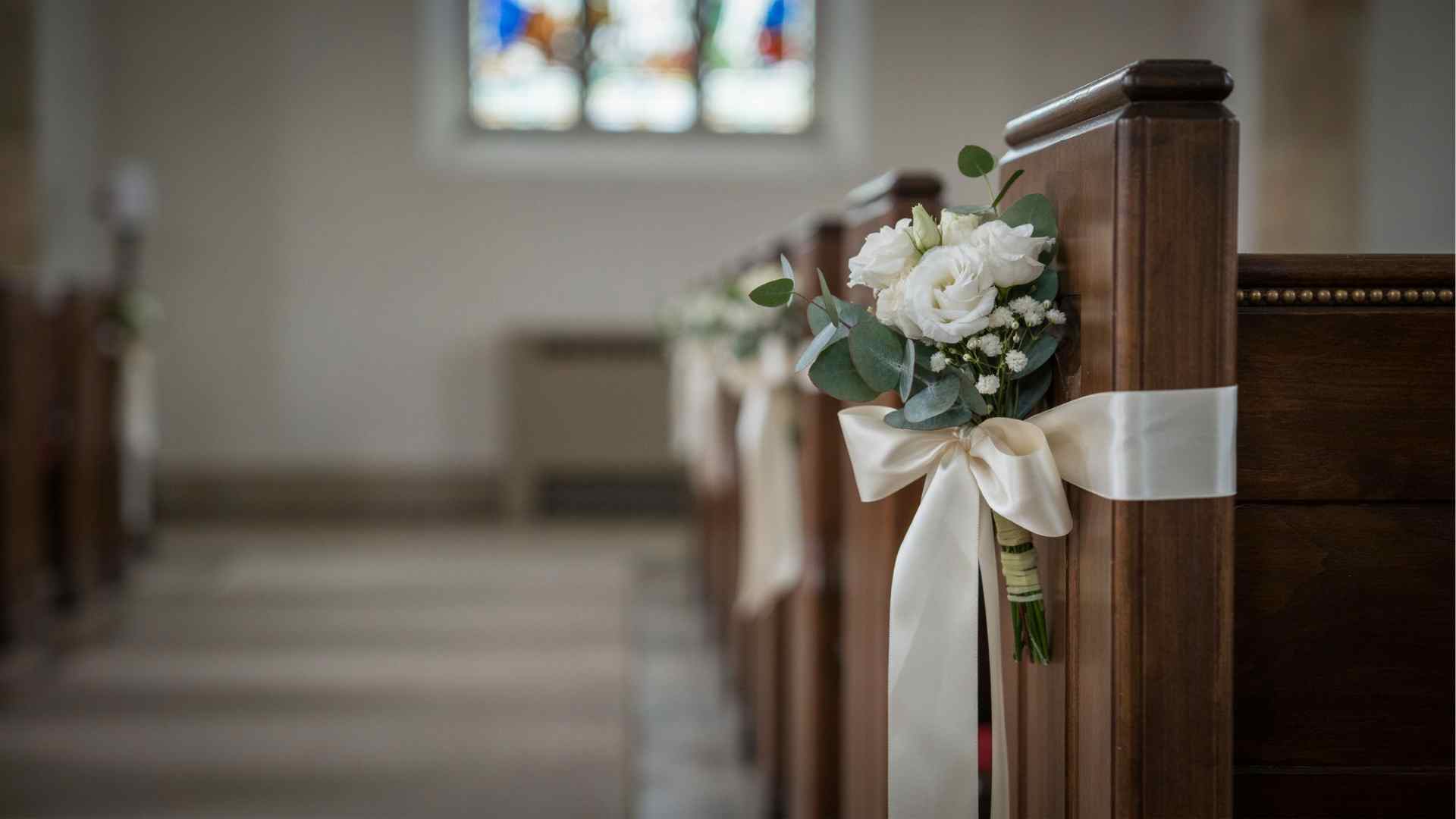
Wide ribbon paired with a few faux flowers and a greenery stem builds a full-looking pew end using very little material.
This is one of the simplest DIY projects on the list, and it holds up well through setup since nothing here is fresh or fragile.
- Materials: wide ribbon, small faux flowers, greenery stems, floral tape, scissors, pew clips.
- Time needed: About 15 minutes per pew end.
27. Paper Cone Pew Flowers
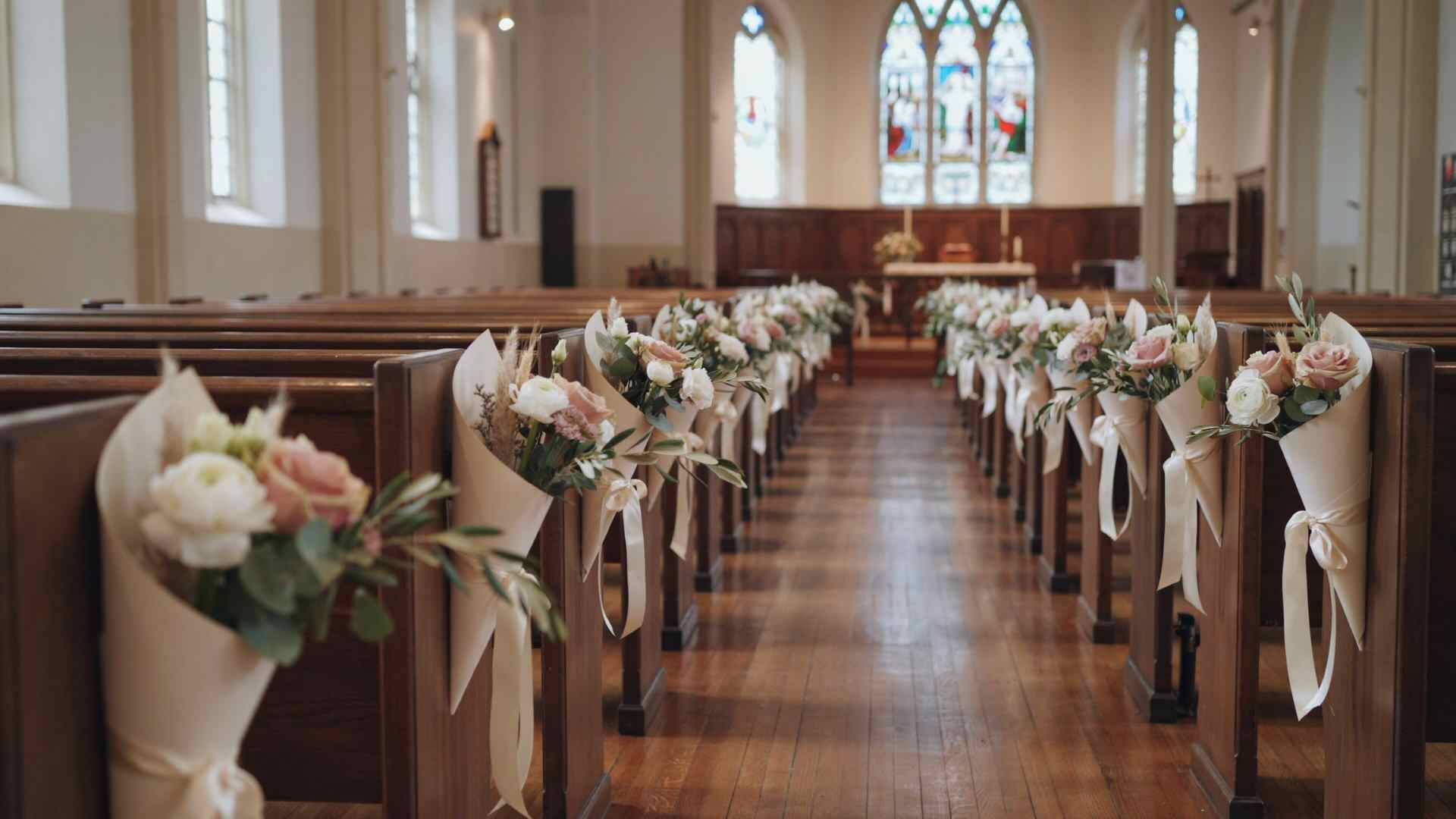
Cardstock cones hold lightweight faux flowers or dried stems in a shape that reads as a finished arrangement, even with very little material.
Ribbon loops, rather than tape, keep the cones attached to the pew without leaving a mark, and the project can be assembled well ahead of time.
- Use ribbon loops only for attaching cones to pews.
- Choose dried stems for a lighter, lower-cost option.
28. Greenery Hoops With Ribbon
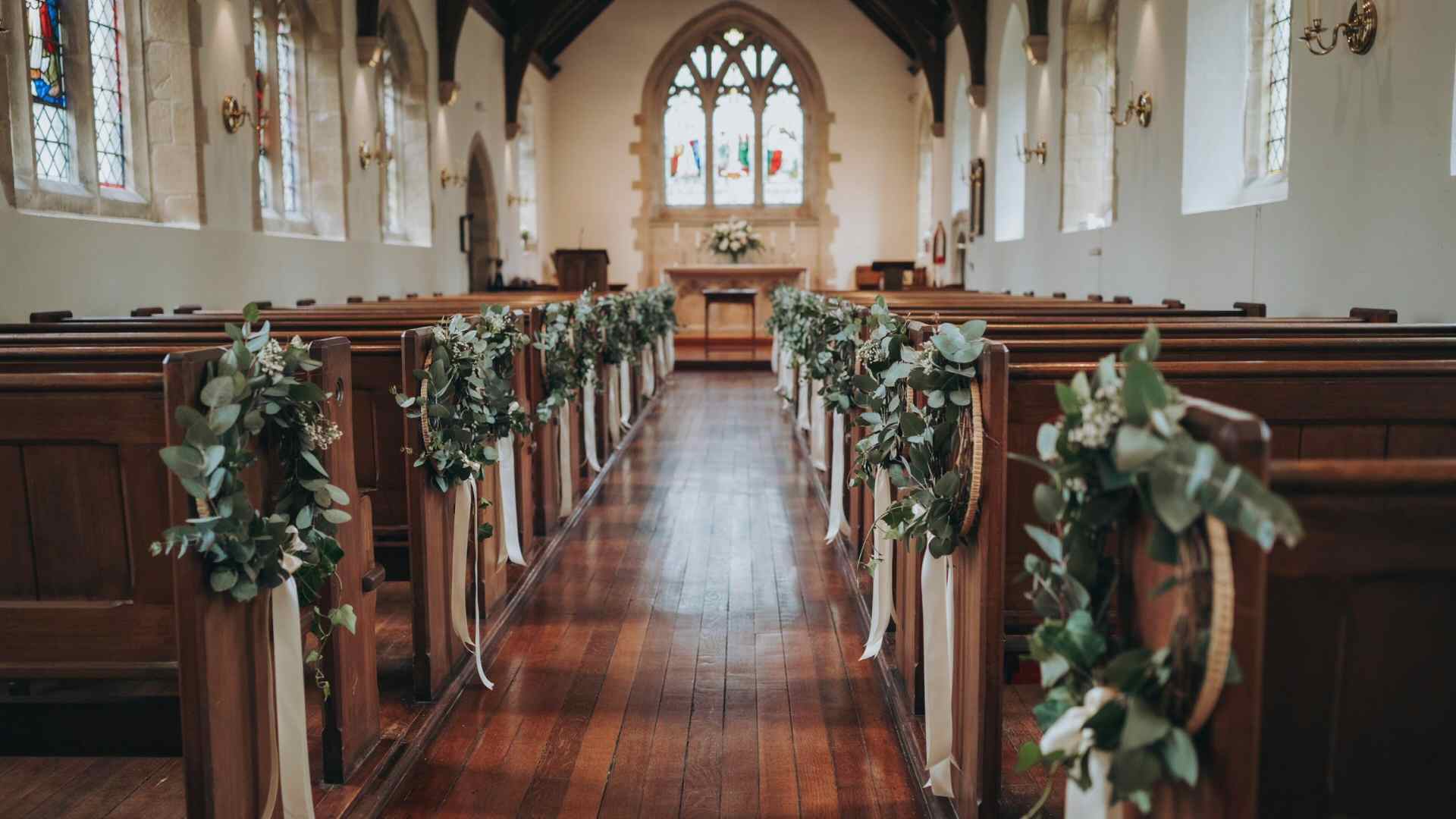
Small craft hoops wrapped in faux greenery, secured with floral wire, and finished with a ribbon tail can hang from selected pews or doors.
The hoop shape holds together well during transport, which makes this one of the sturdier DIY options for couples decorating the day before the ceremony.
- Hang from doors or pews, depending on where you need more color.
- Wire greenery tightly so it holds its shape during transport.
29. Fabric Door Draping With Floral Clips
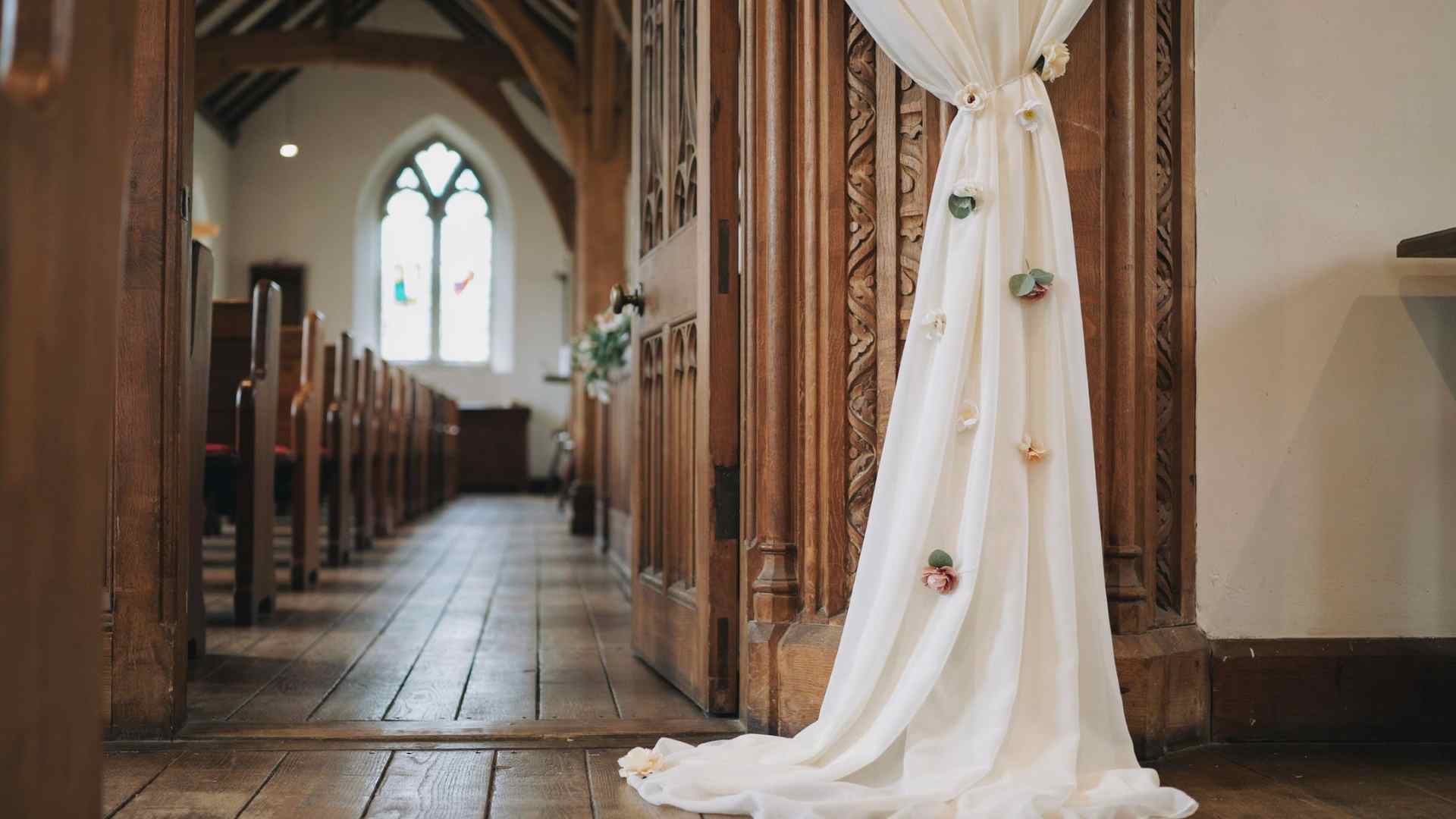
Lightweight fabric hung around one side of the doorway gives an entrance a softer look, with removable flower clips standing in for anything attached directly to the church wall.
Draping only one side keeps the project simple while still giving the entrance a noticeably finished feel.
- Use flower clips instead of pinning fabric to the wall.
- Drape one side rather than the full doorway.
30. A Borrowed Potted Plant Display
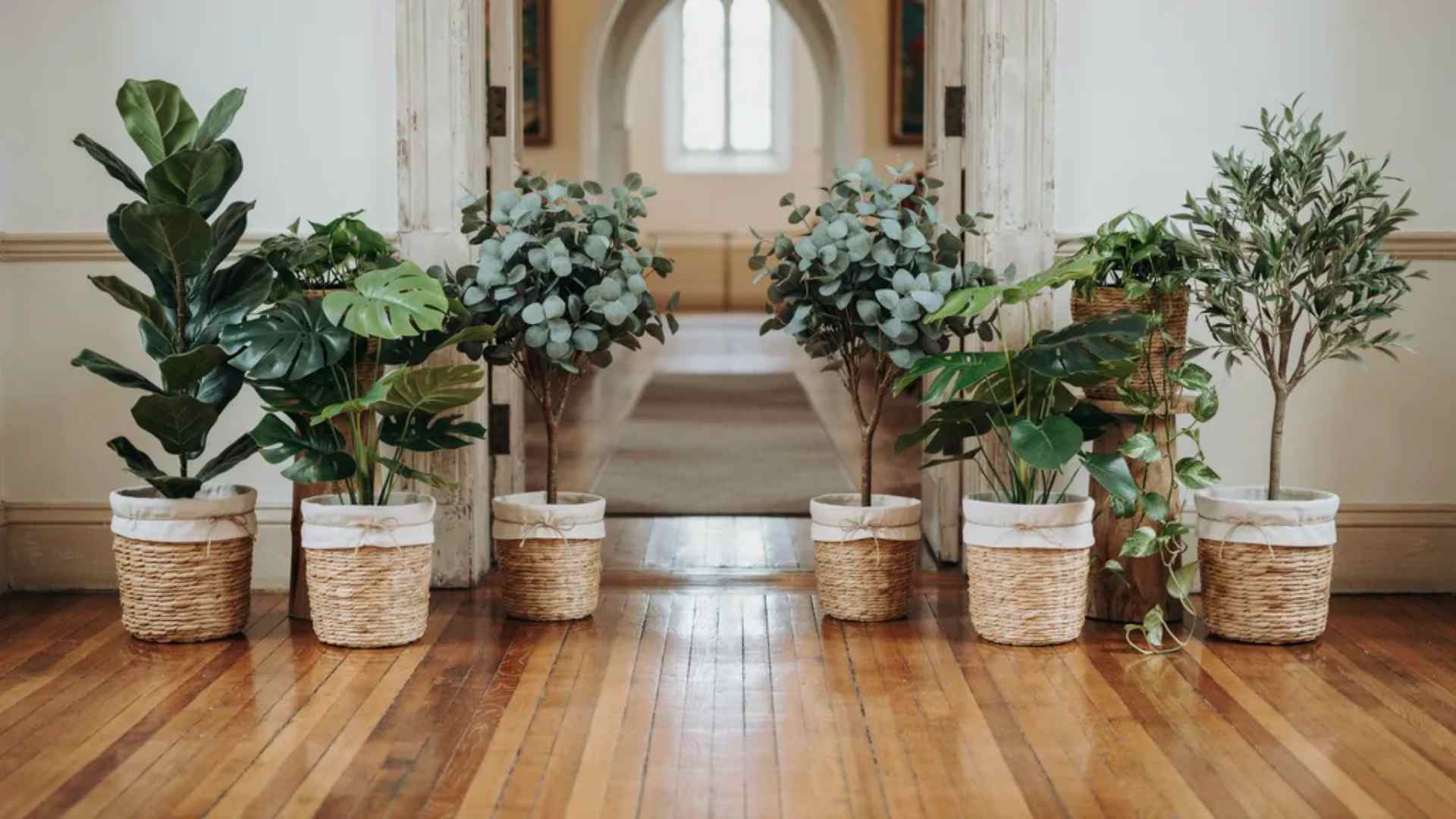
Match plants gathered from family members or the church itself, placed in the same style of basket or fabric cover, so they read as a single cohesive display even though each pot came from somewhere different.
This is one of the lowest-cost ideas on the list, since nothing needs buying new.
- Match the outer basket so mismatched pots look intentional.
- Ask the church first about borrowing any plants on site.
31. Flower Boxes That Move to the Reception
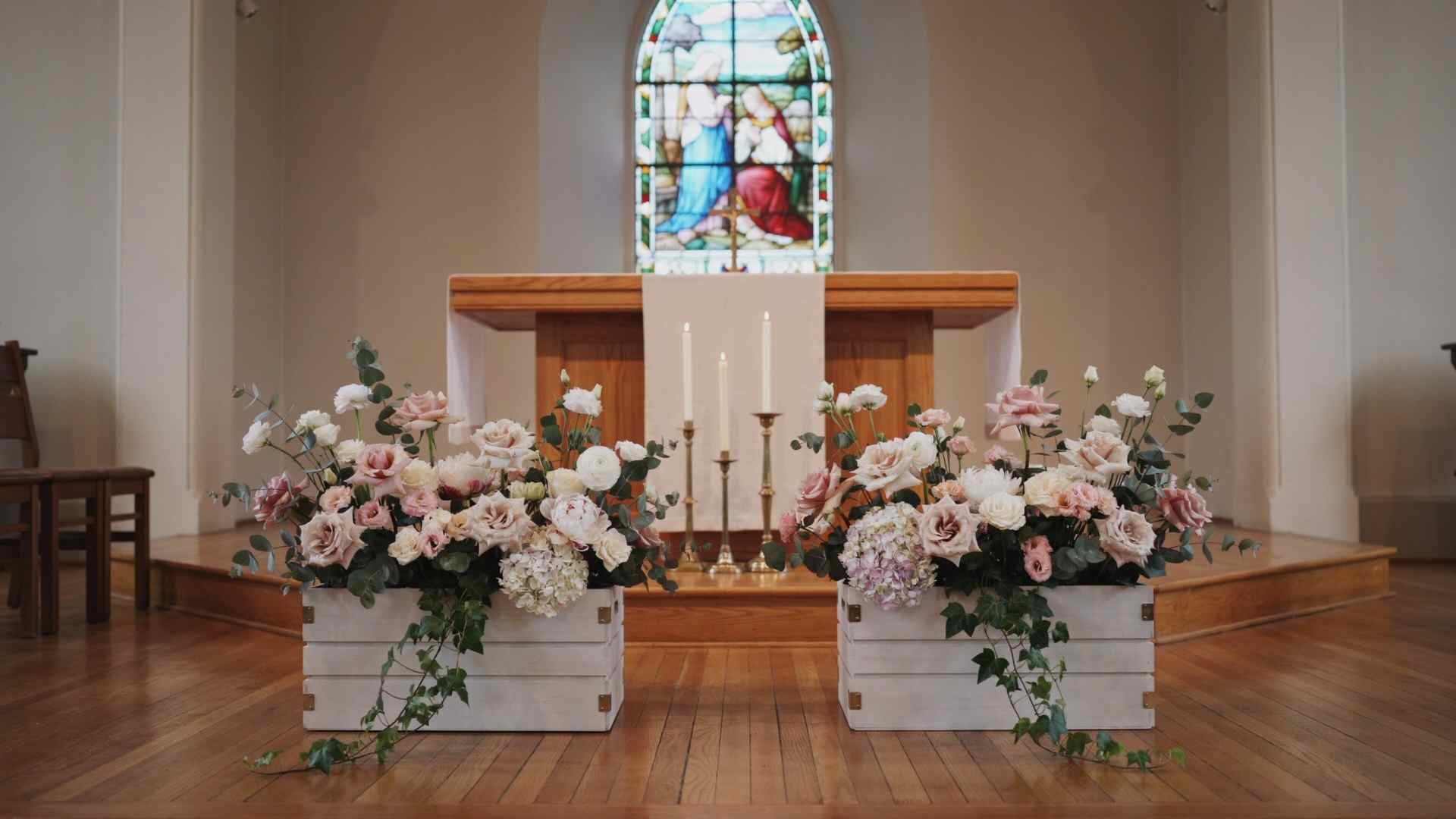
Low flower boxes can line the altar during the ceremony, then move straight to the reception entrance, cake table, or couple’s table once the vows are done.
Reusing ceremony pieces at the wedding reception is a practical way to keep the design connected while avoiding duplicate purchases.
- Build boxes lightweight so moving them takes one trip, not two.
- Plan the reception spot before the ceremony even starts.
Each of these projects can be built well ahead of the wedding week, leaving the final days for setup logistics instead of last-minute crafting.
Church Wedding Decoration Ideas by Season
The wedding date can shape the palette, since seasonal flowers are often easier to source and may help control costs.
Choosing flowers that naturally grow during your wedding season, according to The American Floral Endowment, can also make planning easier.
32. Spring Church Wedding Decorations
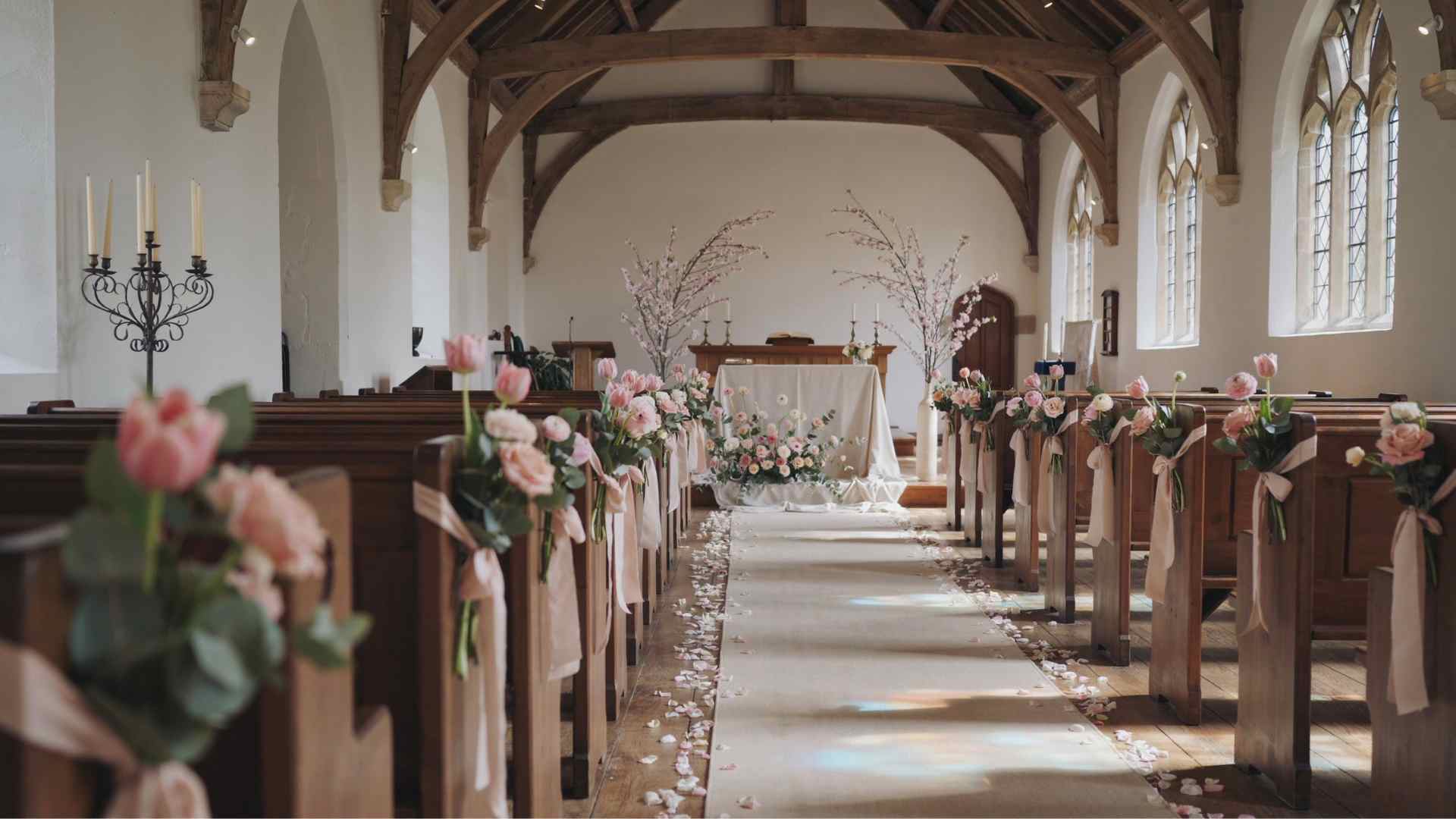
Soft pastels and early blooms give a spring ceremony a fresh, light feel that works well against most church interiors.
Cherry blossom branches, tulips, and pale ranunculus pair naturally with greenery, and pastel ribbon ties the palette together without adding much cost.
- Choose pastel blooms like tulips or ranunculus for a fresh look.
- Add cherry blossom branches for height without a high cost.
33. Summer Church Wedding Decorations
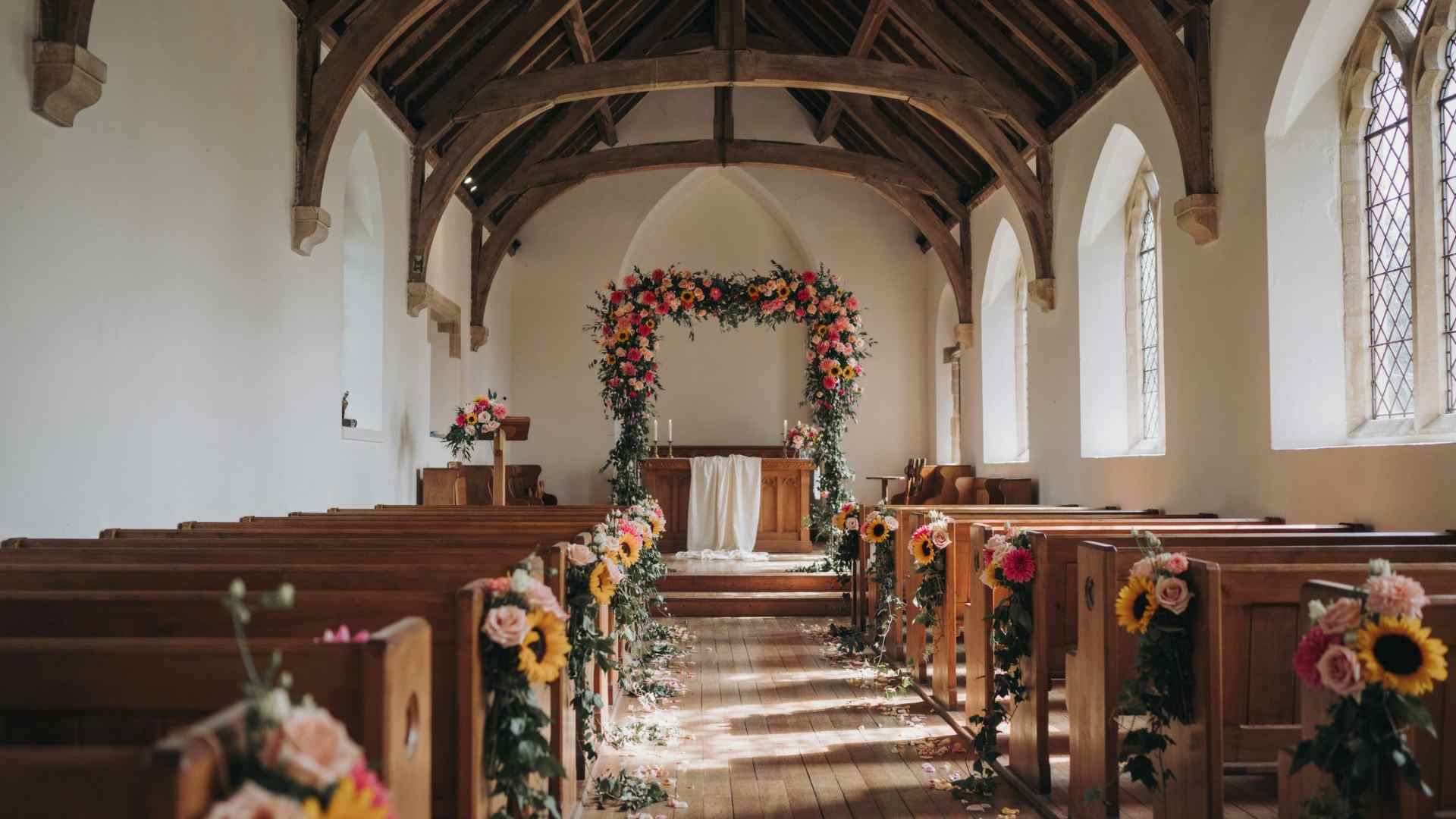
Bold, bright color reads well in a summer ceremony, especially with strong natural light coming through tall windows.
Dahlias, garden roses, and sunflowers hold up better in the heat than softer blooms, and they photograph beautifully against stone or wood interiors.
Couples planning warm-weather celebrations can also pair these choices with summer wedding ideas to coordinate flowers, colors, attire, and guest comfort.
- Pick heat-tolerant blooms like dahlias or sunflowers for summer.
- Lean into bold color since strong daylight suits it best.
34. Fall Church Wedding Decorations
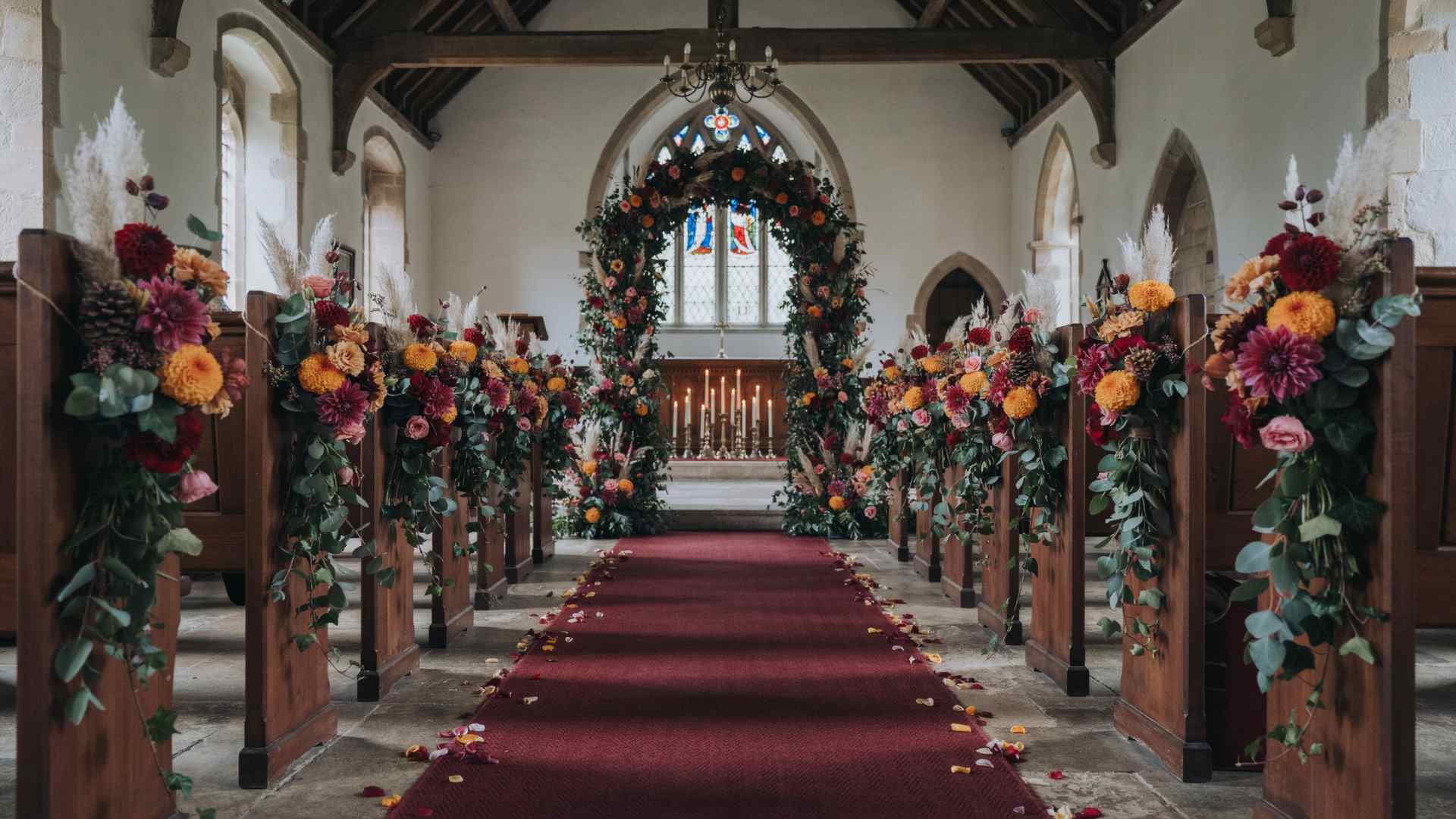
Warm, jewel-toned colors and dried elements suit an autumn ceremony and often cost less than fresh flowers at their peak.
Couples can also look at fall wedding colors when choosing flowers, ribbons, candles, and other church details that match the season.
Burgundy dahlias, marigolds, and dried wheat pair naturally with candlelight, and pinecones or branches add texture at very little added cost.
- Mix in dried elements like wheat or pinecones for texture.
- Choose jewel tones to match the season’s natural palette.
35. Winter Church Wedding Decorations
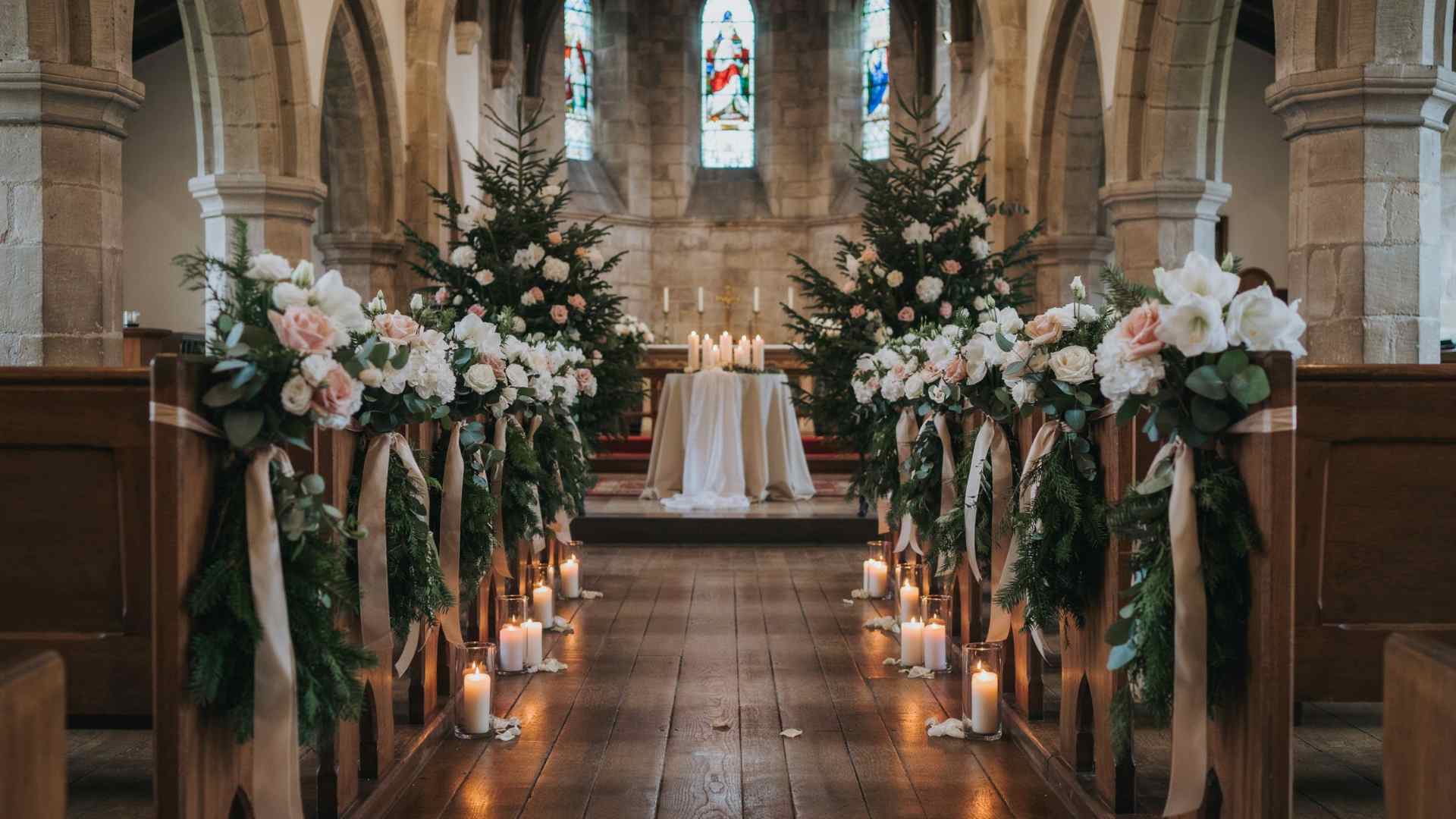
Evergreen branches, white blooms, and warm candlelight give a winter ceremony a classic, cozy feel that suits most church interiors already.
Couples planning a colder-season celebration can also find inspiration in winter wedding ideas when choosing décor, lighting, flowers, and guest details.
White amaryllis or roses paired with greenery and soft lighting create a finished look without needing many flowers.
- Use evergreen branches as a low-cost seasonal base.
- Add warm candlelight to soften a winter interior.
Matching the season this way often costs less than working against it, since in-season blooms are both cheaper and easier to source close to the wedding date.
Mistakes to Avoid to Save Money
Most decoration budgets go off track from the same few habits: buying before checking church rules, using tape or nails without approval, or decorating every pew instead of every second one.
Confirming permissions early and picking one or two focal areas solves both problems at once.
Avoid these:
- Buying decorations before reading church rules
- Attaching anything with tape, nails, staples, or glue without permission
- Blocking aisles, doors, steps, or exits
- Leaving loose petals on slippery flooring
- Skipping a plan for removing decorations afterward
Save money with these:
- Decorate every second or third pew instead of all of them
- Ask which decorations the church already owns
- Borrow planters, lanterns, baskets, and stands
- Rent large stands and arches instead of buying them
- Move entrance and altar pieces to the reception afterward
| Option | Suitable items | Work required | Reuse value |
|---|---|---|---|
| Buy | Ribbon, faux flowers, small accents | Low | High for faux pieces |
| Make at home | Pew ends, cones, greenery hoops | Medium to high | High if kept undamaged |
| Rent | Arches, large stands, urns | Low | None, returned after use |
| Borrow | Plants, lanterns, baskets | Low | Returned to owner |
A little planning ahead of time avoids most of these mistakes and covers most of these savings at once.
Questions to Ask the Church Wedding Coordinator
One planning call can settle most of what shapes the budget and the setup. These five matter most.
- Which areas may be decorated, and what needs written approval?
- Are candles and flower petals permitted?
- What may be attached to the pews?
- When may the setup team enter, and when must everything be removed?
- Is a damage deposit required?
These five answers shape nearly every other decision left on this list, so it helps to ask them early.
How Much Do Church Wedding Decorations Cost?Church wedding decoration costs can range from $100 to more than $5,000, depending on the size of the church, flower choices, labor, and the number of areas you decorate.
If you only decorate the altar and add a few pew accents, costs can stay fairly low. Decorating the entrance, aisle, pews, and altar with fresh flowers will usually push the total much higher. |
Couples planning a smaller celebration can also look at small wedding ideas that focus on meaningful details, fewer decorations, and a more personal ceremony setup.
Summing Up: A Church Wedding That Still Feels Like You
A church does not need to be filled with decorations to feel meaningful.
A few well-placed flowers, ribbons, plants, or lanterns can carry the whole ceremony, especially in the spots guests will actually notice, from the doors they walk through to the altar where the vows happen.
Spend where it counts, respect the building underneath it all, and choose pieces that can move to the reception once the vows are done.
Start with the church rules, keep the budget realistic, and build the rest of this list around whatever fits both. A short planning call makes the rest easy to bring to life.
Frequently Asked Questions
Can You Decorate a Church for a Wedding?
Many churches permit temporary decorations, but you should get approval before buying or making anything for the day.
What Decorations Are Most Important for a Church Wedding?
Altar flowers, selected pew decorations, and one entrance piece matter most, since these three areas give the most visible result for the effort involved.
Can You Use Candles Inside a Church?
Candle policies differ by building. Some churches permit enclosed candles, while others allow only church-owned or flameless versions.
How Do You Attach Wedding Decorations to Church Pews?
Church-approved pew clips, ribbon loops, removable hooks, or freestanding holders work best. Tape, nails, staples, and glue should stay off the list unless approved.