

Getting married does not have to cost a fortune or take months to plan. A courthouse wedding is fast, affordable, and fully legal.
You get the same marriage certificate, the same legal rights, and the same fresh start, without the big price tag or the stress. Thousands of couples choose this option every year, and it works just as well as any traditional ceremony.
If you want to know how it all works, what it costs, and what to bring, keep reading. Everything you need is right here.
What is a Courthouse Wedding?
A courthouse wedding is a legal marriage ceremony performed by a government official. This could be a judge, magistrate, justice of the peace, or court clerk. The ceremony takes place in a government building and usually lasts between 10 and 20 minutes.
You might also hear it called a civil ceremony or a city hall wedding. These all mean roughly the same thing.
The key difference from a church wedding is that no religious figure is involved. It is strictly a legal process.
Couples choose courthouse weddings for many reasons. Some want to save money. Some prefer something small and private. Others want to skip the months of planning that come with a big wedding.
Can You Get Married at the Courthouse?
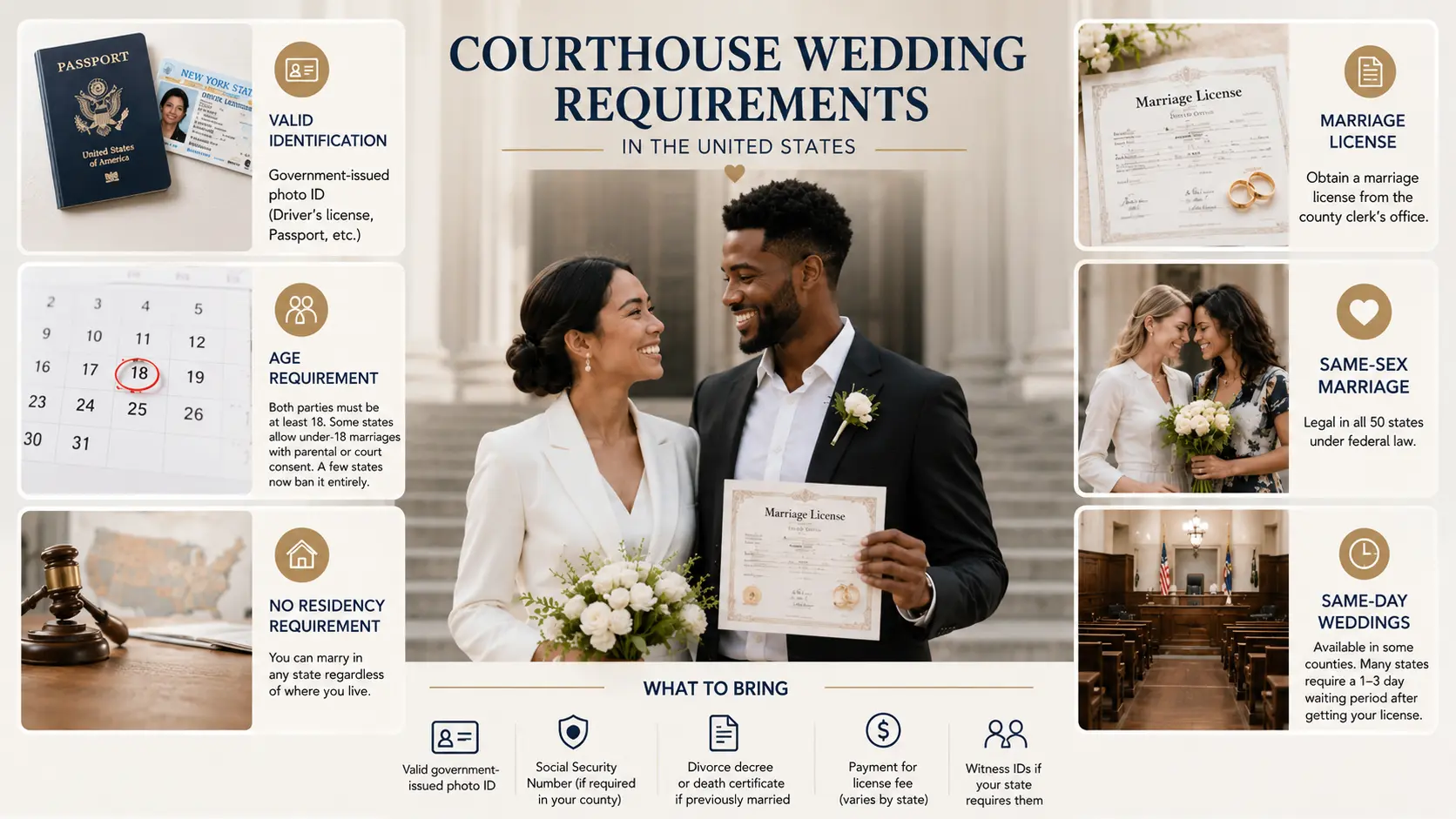
Yes, you can get married at the courthouse. But the rules vary depending on the state and county you are in. Here are the general rules that apply in most places:
- Age: Both parties must be at least 18 years old. Some states allow marriages under 18 with parental or court consent. A few states now ban it entirely. Check your state law.
- ID: You will need a valid, government-issued photo ID. A driver’s license or passport works in most cases.
- Residency: Most states do not require you to be a resident. You can get married in a state you do not live in, but you must typically obtain your license in the same county where the ceremony will take place.
- Non-U.S. citizens: Yes, foreigners can get married at a U.S. courthouse. You will need a valid passport and may need additional documents depending on your visa status.
- Same-day weddings: Some states allow you to get married the same day you apply for the license. Others have a 1- to 3-day waiting period after getting your license. Check your local county rules before you plan.
- Same-sex marriage: It has been legal in all 50 states since the 2015 Supreme Court ruling. Any courthouse in the U.S. must marry same-sex couples.
- Both people present: In most states, yes, both people must be there in person to apply for the license and attend the ceremony.
Courthouse wedding rules can vary more than most couples expect, so always check your local county website before making plans. A quick check now can save you from delays, missing documents, or rescheduling your ceremony later.
How to Get Married at the Courthouse Step by Step
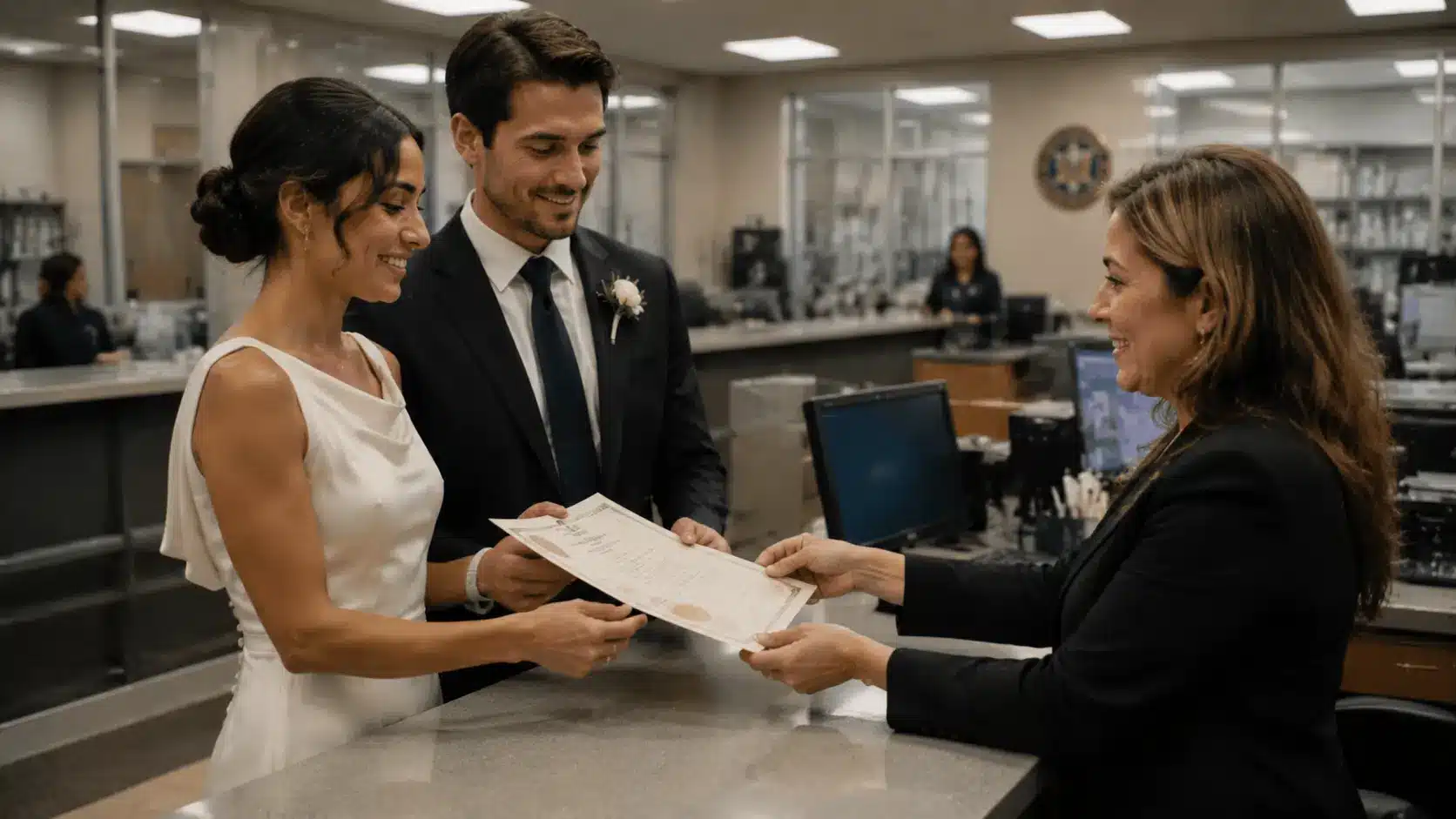
The courthouse wedding process is simpler than most people expect, but missing one step can delay everything. Here is exactly how the process works from start to finish.
Step 1: Apply for a Marriage License
This is always the first step. You and your partner go to the county clerk’s office together and fill out an application. You will need to bring your IDs and pay a fee.
The fee for a marriage license ranges from about $20 to $175 or more, depending on the state and country.
Fees have been rising in several states, so always confirm the current amount with your local county clerk before your visit. Some places charge more. Once approved, the license may be issued right away or take a few days.
Most marriage licenses are valid for 30 to 90 days, though some states have no expiration date at all. Check your state’s rules so you don’t rush or miss your window. You need to complete your ceremony before it expires.
Step 2: Schedule Your Courthouse Ceremony
Some courthouses let you walk in and get married the same day. Others require you to book an appointment in advance. Many county clerk offices now have online booking systems.
Busy seasons like spring and summer can mean longer wait times. If you are flexible on dates, a weekday appointment in the fall or winter will usually get you in faster.
Step 3: Bring Witnesses if Required
Some states require one or two witnesses at the ceremony. Witnesses usually need to be at least 18 years old.
If you do not have anyone to bring with you, check with your courthouse in advance. Some clerks can serve as witnesses, and in some states, witnesses are not required at all.
Step 4: Attend the Ceremony
The ceremony itself is short. You will meet the officiant, say your vows, and sign the marriage license. The whole thing usually takes 10 to 20 minutes.
Some officiants allow you to write your own vows. Others follow a standard legal script. You can ask about this when you schedule your appointment.
There may be a small guest limit depending on the courthouse. Some courthouses have a private room for ceremonies, while others do so in a more open space.
Step 5: Receive Your Marriage Certificate
After the ceremony, your officiant files the signed marriage license with the county. You then receive a certified copy of your marriage certificate.
This is an important document. The license is what you apply for before the wedding. The certificate is the official proof that you are legally married.
Keep multiple certified copies since you will need them for name changes, insurance, immigration, and other legal matters.
How Much Does It Cost to Get Married at the Courthouse?
This is one of the biggest reasons couples choose a courthouse wedding. The cost is much lower than a traditional wedding.
| Expense | Typical Cost |
|---|---|
| Marriage license | $20 to $175+ |
| Ceremony fee | $25 to $300 |
| Certified certificate copy | $10 to $30 |
| Photographer (optional) | $200 to $1,000+ |
The overall cost of a courthouse wedding is often $50 to $120 for the basics. If you add a photographer and nicer outfits, the total can go up, but you can still keep it well under $1,000.
Compare that to the average traditional wedding ceremony in the U.S., which costs around $30 to $175+, and note that fees vary sharply by county. A courthouse wedding gets you the same legal result for a fraction of the price.
Pros and Cons of a Courthouse Wedding
A courthouse wedding is not perfect for everyone. Before making a decision, it helps to look at both the advantages and the limitations side by side.
| Pros | Cons |
|---|---|
| Very affordable | Limited customization during the ceremony |
| Quick and simple to plan | Small guest count |
| Low stress | Less formal atmosphere |
| Intimate and private | Appointment availability can be limited |
For many couples, the lower cost and simplicity easily outweigh the downsides. The right choice depends on whether you care more about convenience, like a micro wedding, or creating a large traditional wedding experience.
What Documents Do You Need for a Courthouse Wedding?
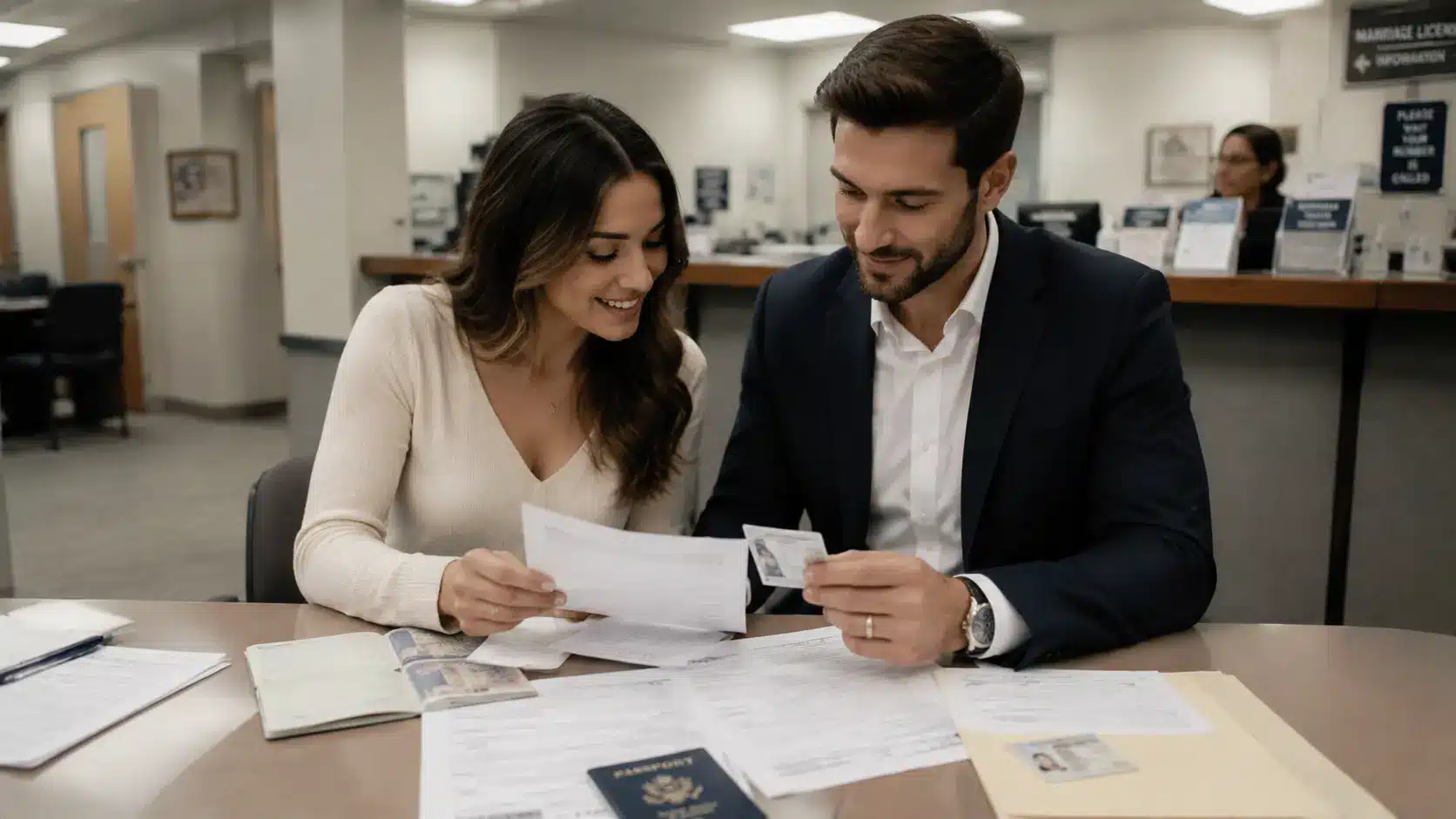
Showing up without the right paperwork is one of the biggest reasons courthouse weddings get delayed. Before your appointment, make sure you have every required document ready.
- Government-issued photo ID (driver’s license, passport, or state ID)
- Social Security Number or Social Security card (required in many counties for U.S. citizens)
- Birth certificate (required in some states)
- Divorce decree or death certificate if you were previously married or widowed
- Payment for the marriage license fee (cash or card, depending on the office)
- Witness IDs if your state requires witnesses
Always check your specific county’s website before your appointment. Requirements can vary even within the same state.
What Happens During a Courthouse Wedding?
Most courthouse weddings are quick, simple, and far less intimidating than people expect. Knowing what happens ahead of time makes the entire experience feel smoother and less stressful.
You arrive at the courthouse, go through a security check, and check in with the clerk’s office. You will be directed to a waiting area or a ceremony room. When it is your turn, you meet the officiant, usually a judge, magistrate, or clerk.
The officiant reads a brief legal statement, you exchange vows, and you both sign the marriage license. Your witnesses sign as well if required. That’s it. You are married.
Guest limits vary. Some courthouses allow a small group of family and friends in the room. Others allow only the couple and witnesses. Check your courthouse rules ahead of time.
Photography rules also vary. Most courthouses allow personal photos. Some restrict professional cameras or flash photography.
Do You Need Witnesses for a Courthouse Wedding?
It depends on your state. Some states require one witness. Some require two. And some do not require any witnesses at all.
Witnesses typically must be at least 18 years old. If you need witnesses but do not have anyone available, ask the courthouse in advance. Some offices can provide a staff member to serve as a witness.
Tips for Making a Courthouse Wedding Feel Special
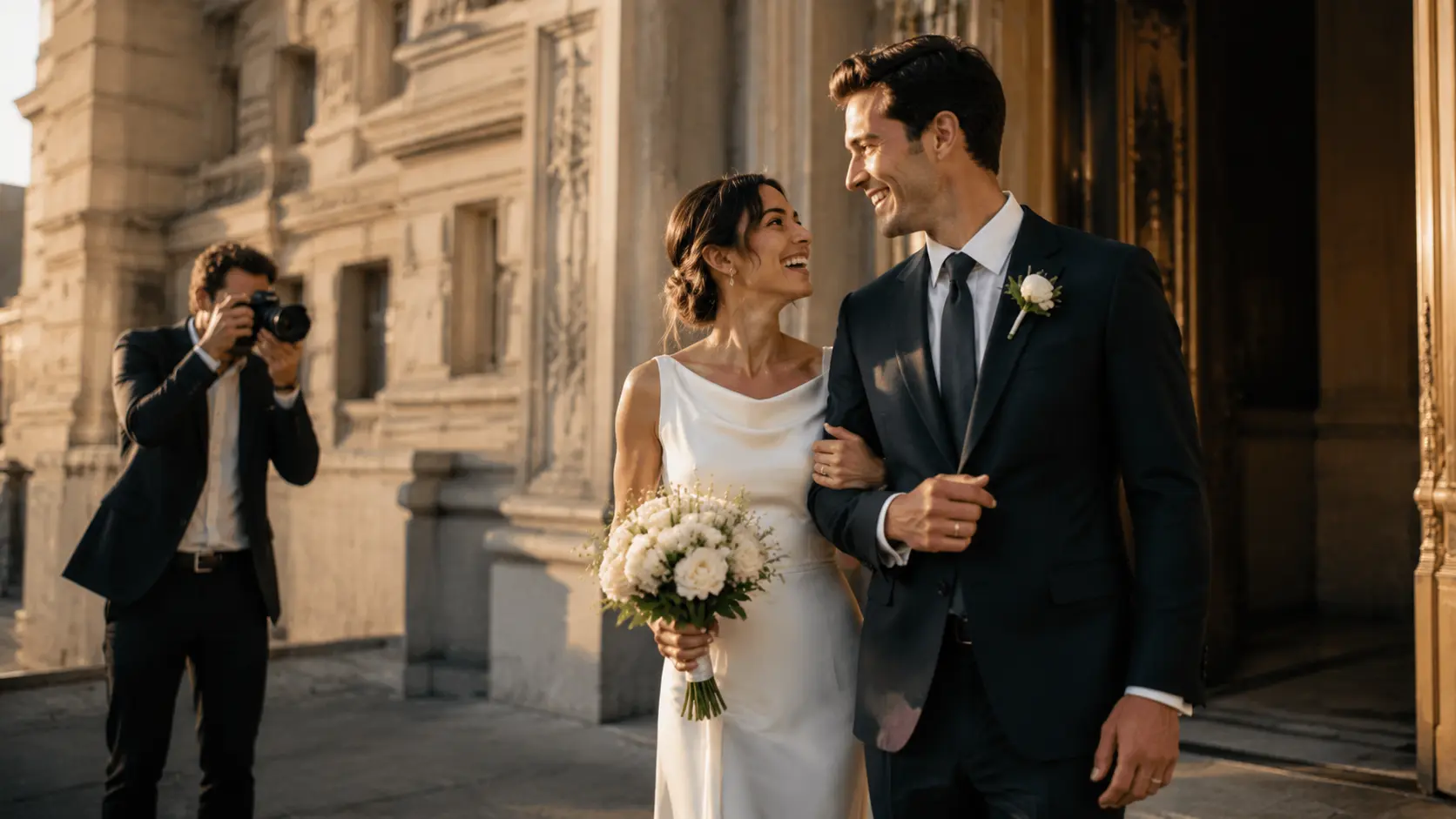
A courthouse wedding does not have to feel cold or rushed. Here are a few ways to make the day more memorable:
- Dress up: Wearing something nice makes the moment feel real and worth celebrating.
- Hire a photographer: Even a one-hour shoot outside the courthouse gives you photos to keep forever.
- Write personal vows: Ask the officiant in advance if you can say something personal during the ceremony.
- Ask about premarital counseling discounts: Some states reduce the license fee or waive the waiting period if you complete a short premarital education course. It can save you money and a few days of waiting.
- Plan a celebration after: Book a nice dinner or a weekend trip. The ceremony is short, but the celebration does not have to be.
- Pick a courthouse with character: Some courthouses are in beautiful historic buildings that make for great photos.
A courthouse wedding may be simple, but that does not mean it has to feel forgettable. Small personal touches are usually what make the day feel meaningful long after the ceremony ends.
Many couples also combine courthouse weddings with other non-traditional wedding ideas to create a celebration that feels more personal and affordable.
Common Courthouse Wedding Mistakes to Avoid
Even a simple courthouse wedding can go wrong if you overlook small legal details. Most problems happen because couples assume the process is easier than it actually is.
- Forgetting witness requirements: Check if your state needs witnesses before the day of your wedding.
- Missing the waiting period: Some states make you wait 1 to 3 days after getting your license before the ceremony. Plan around this.
- Bringing the wrong ID: An expired driver’s license will not work. Bring a current, valid photo ID.
- Assuming walk-ins are welcome, many courthouses now require appointments. Book ahead.
- Confusing the license and the certificate: You need the license before the ceremony. The certificate comes after. They are not the same thing.
A few minutes of preparation can save you from delays, canceled appointments, or extra fees. Double-checking the rules before your wedding day is always worth it.
Final Thoughts
A courthouse wedding is one of the simplest ways to make your marriage official. It takes very little time, costs very little money, and involves almost no planning stress.
The ceremony is short, but what it means lasts a lifetime. Before you go, check your county clerk’s website for local rules on documents, waiting periods, and appointments. Every state is a little different.
Once you have that information ready, the whole process becomes easy to follow. Get your paperwork in order, show up, and walk out legally married. It really is that straightforward.
Frequently Asked Questions
Can You Wear Anything You Want to a Courthouse Wedding?
Yes, there is usually no strict dress code for a courthouse wedding. Some couples wear jeans, while others wear full wedding outfits.
Can You Get Married at the Courthouse without Rings?
Yes, wedding rings are completely optional in a courthouse ceremony. The marriage is legally valid with or without exchanging rings.
Can Parents Attend a Courthouse Wedding?
Most courthouses allow a small number of guests, including parents and close family members. Guest limits vary, so check with your courthouse before the ceremony.