


The smell hits you before you even see the cart. Grilled corn, warm masa, and a little char from the comal that mix is something you don’t forget.
In Mexico, street food isn’t a trend or a travel photo. It’s breakfast before work, lunch between errands, and a late-night snack shared between strangers on a busy sidewalk. It has been that way for centuries.
Here’s a look at the most popular Mexican street foods, regional favorites you might not know yet, the key ingredients behind them, and a few tips to help you order like you’ve been there before.
What is Mexican Street Food and Why is It So Popular?
Mexican street food is exactly what it sounds like: real food made and sold right on the street, from wheeled carts, open market stalls, and small roadside stands that have been part of daily life for generations.
Mexicans call these foods antojitos, which loosely means “little cravings.” The term fits well because these are the foods people reach for between meals, on the way to work, or after a long day.
Today, street food stays popular because it works on every level. It’s cheap, fast, filling, and works as simple, everyday comfort food.
The Essential Mexican Street Food Ingredients
Every great Mexican street food dish comes back to a handful of ingredients that show up again and again, no matter the city or the vendor.
- Corn (Masa, Tortillas, Elote): The base of most dishes. Ground corn makes tortillas, tamales, and thick gorditas, while whole corn is grilled or boiled for elote.
- Chilies and Spices: Dried and fresh chilies bring heat, depth, and color. Cumin, oregano, and garlic round out the flavor.
- Beans and Meats: Black and pinto beans are staples. Pork, chicken, and beef are the most common proteins, often slow-cooked or griddled.
- Fresh Toppings: Raw white onion, lime juice, and cilantro are added right before eating for brightness and crunch.
- Sauces and Salsas: Red, green, and smoky salsas finish nearly every dish and range from mild to very hot.
Once you know these building blocks, every dish on the menu starts to make a lot more sense.
Mexican Street Foods You Need to Try at Least Once
Some dishes show up on every corner for a reason. These are the ones you should know by name before your first trip to a Mexican market or food street.
1. Tacos
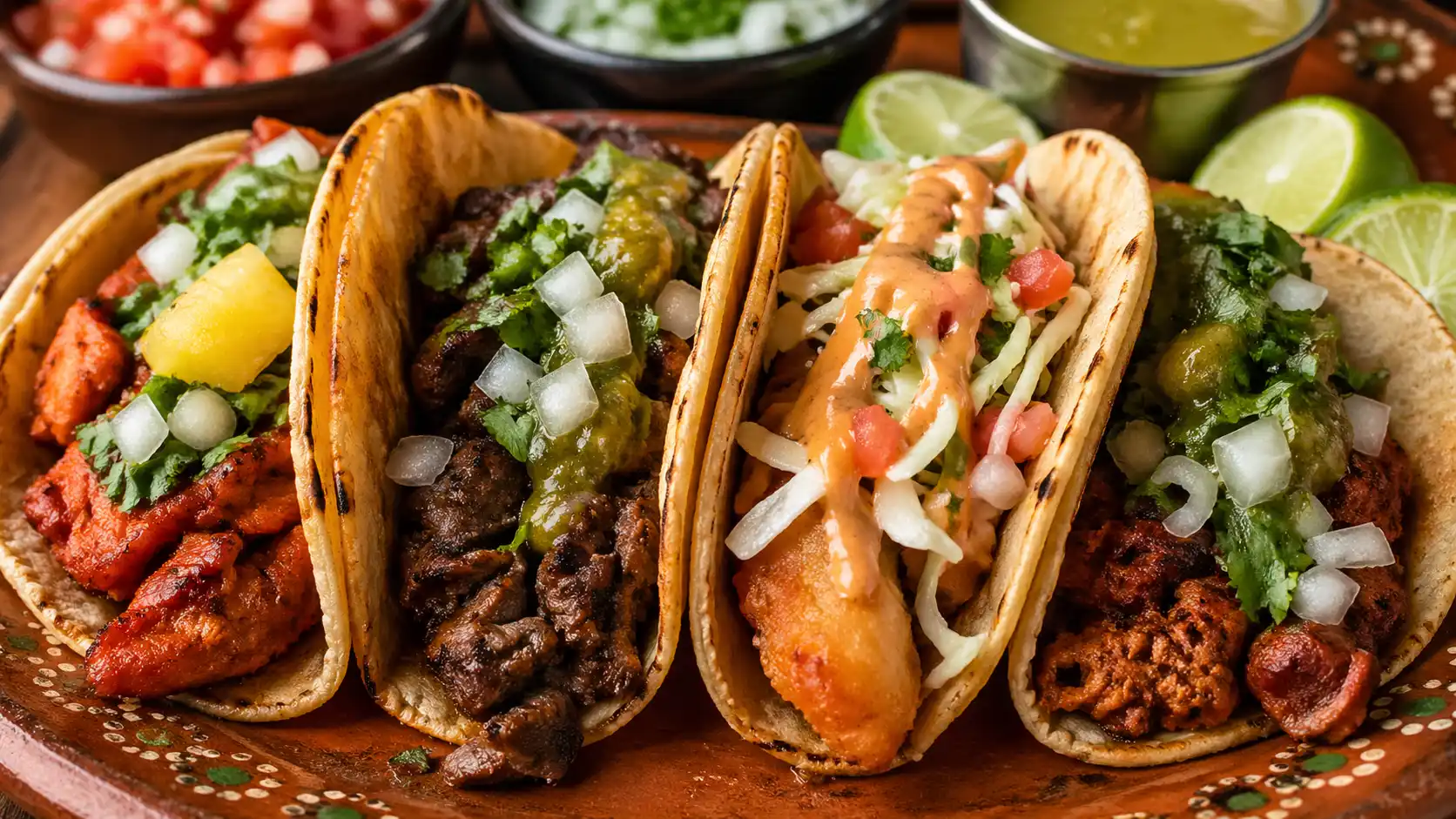
Tacos are the backbone of Mexican street food, and they’ve held that spot for centuries.
A warm corn tortilla folds around al pastor pork shaved from a rotating spit, smoky carne asada grilled over open flame, or crispy battered fish straight from the coast.
Each type tastes completely different, but the build stays simple. A few fresh toppings and a spoonful of salsa, and it’s done.
2. Tamales
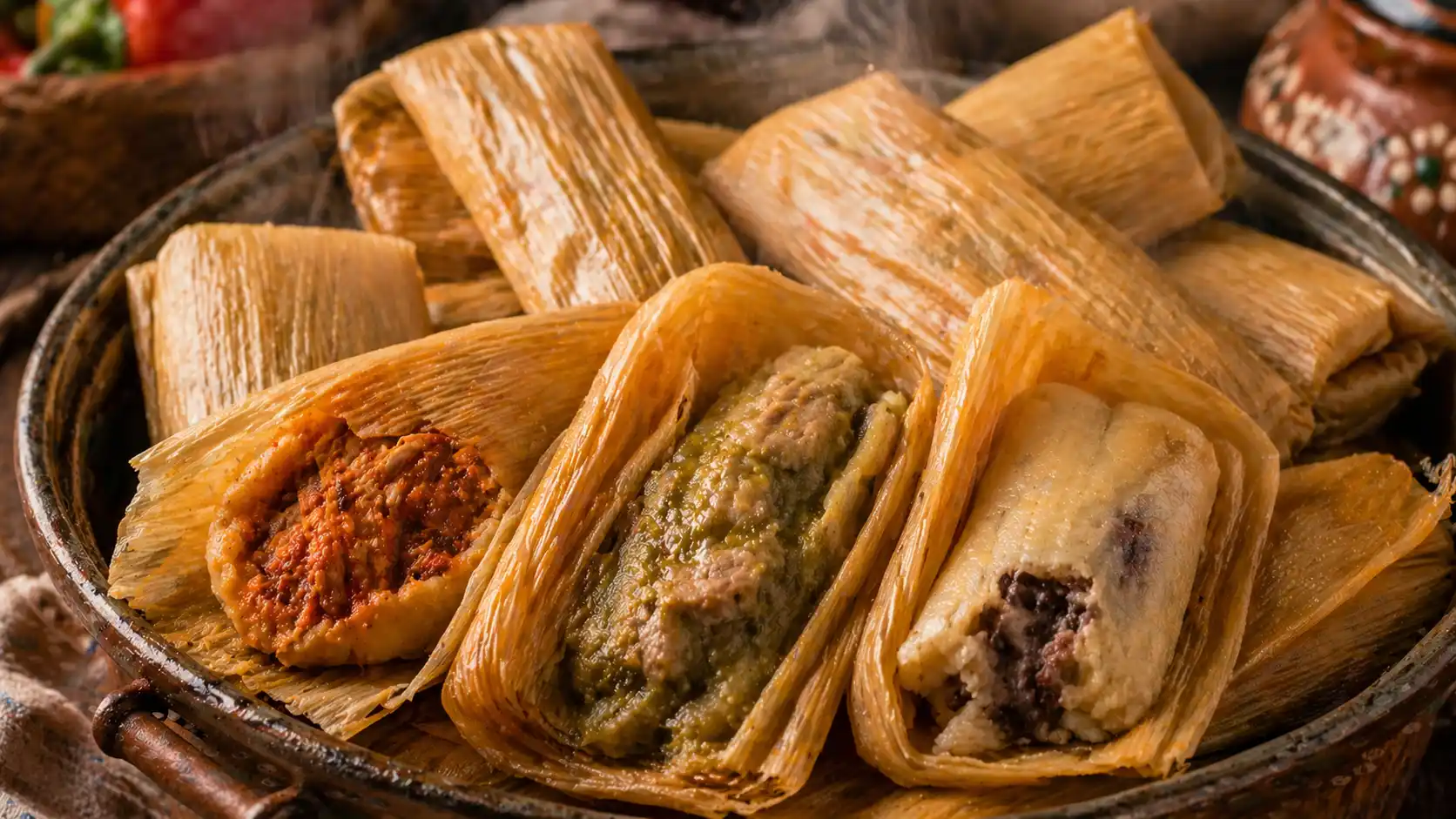
Tamales have been made in Mexico for over 3,000 years, and the process hasn’t changed much. Corn dough gets packed with a filling, wrapped tightly in dried corn husks, and steamed low and slow until firm.
Fillings range from spiced pork or chicken to black beans, cheese, and even sweet versions made with raisins and cinnamon.
Street vendors sell them straight from the pot, warm and ready to unwrap.
3. Elote (Mexican Street Corn)
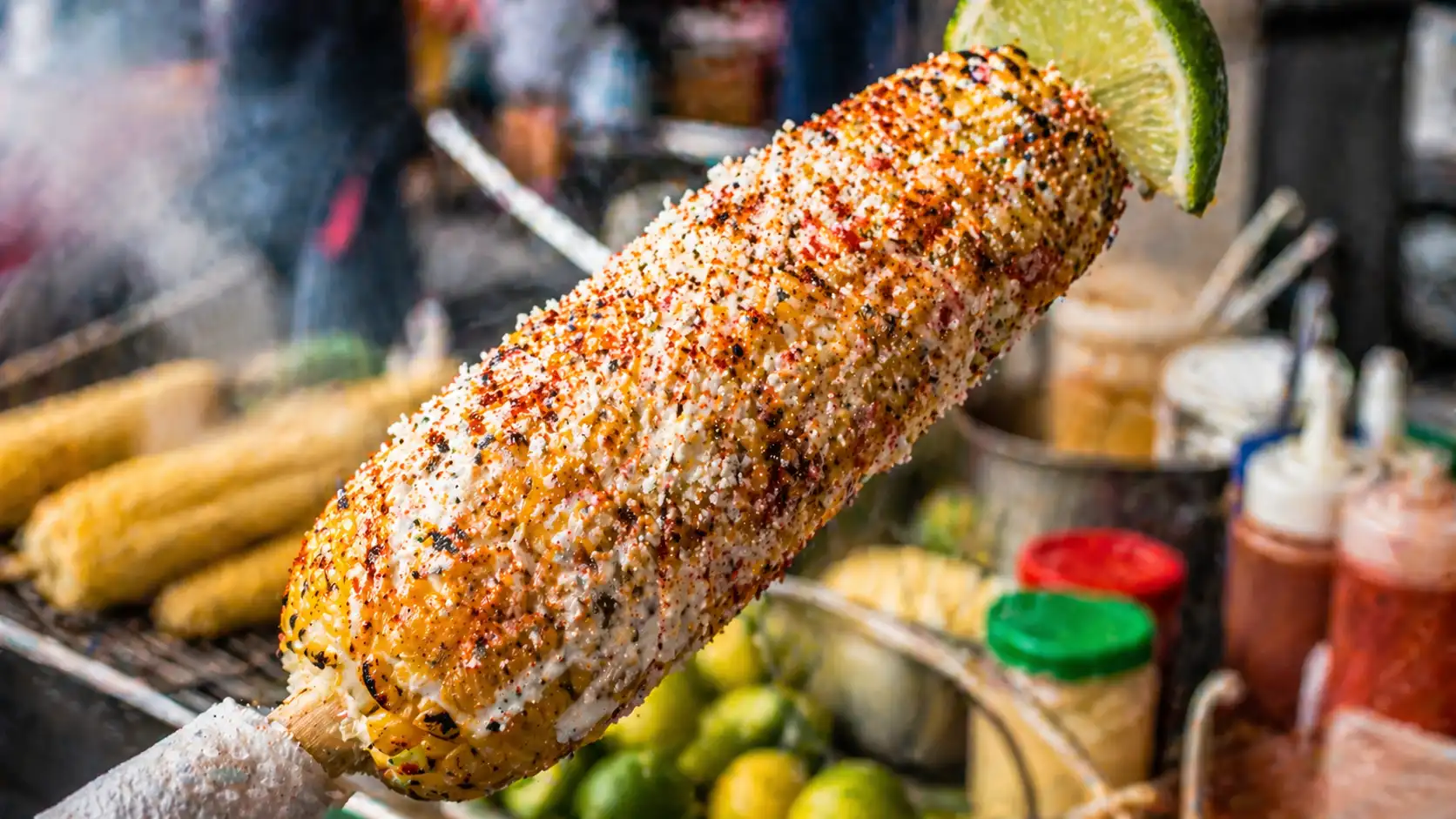
Elote is grilled corn on the cob, and it’s one of those street foods that looks messy before you even take a bite.
The corn is charred on a comal or over an open flame, then slathered with mayo, rolled in crumbled cotija cheese, dusted with chili powder, and finished with a hard squeeze of lime.
It’s salty, smoky, creamy, and a little spicy all at once. Street vendors across Mexico have been selling it this way for decades, and it still draws a line.
4. Esquites
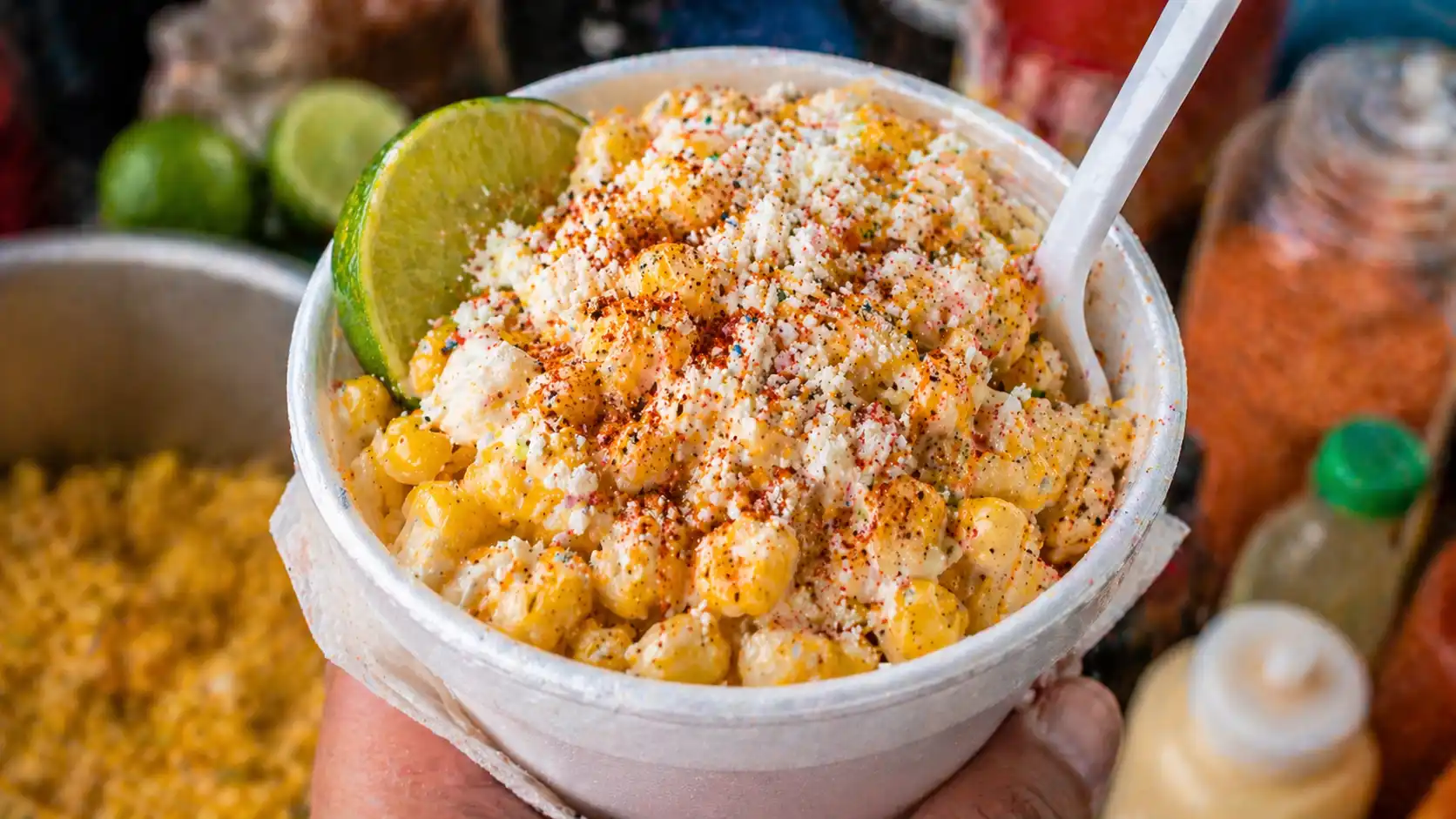
Esquites are the cup version of elote, built with the same flavors but eaten with a spoon.
Cooked corn kernels get tossed with mayo, cotija cheese, chili powder, and fresh lime juice, then served warm in a small cup.
It’s the kind of snack you finish before you’ve walked half a block, and somehow you’re already thinking about getting another one.
5. Quesadillas
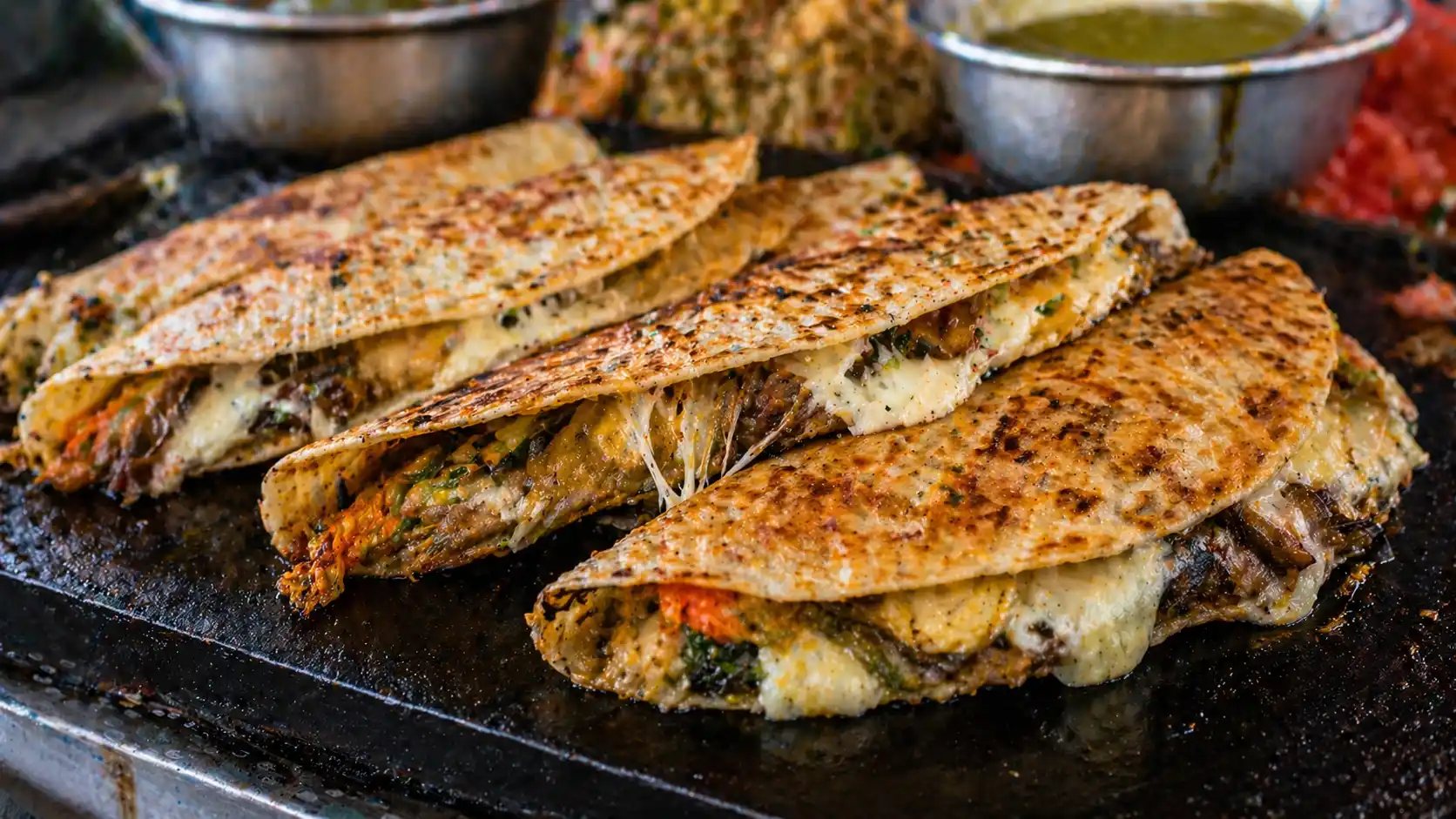
A quesadilla from a street cart is a different thing from what most people picture.
It starts with a hand-pressed corn tortilla laid flat on a hot comal and filled with ingredients like sautéed mushrooms, squash blossoms, or shredded meat; in Mexico City, it may or may not include cheese, depending on what you order.
The tortilla gets folded over and pressed until the outside is crisp and the inside is fully melted. Quick, filling, and hard to stop at just one.
6. Gorditas
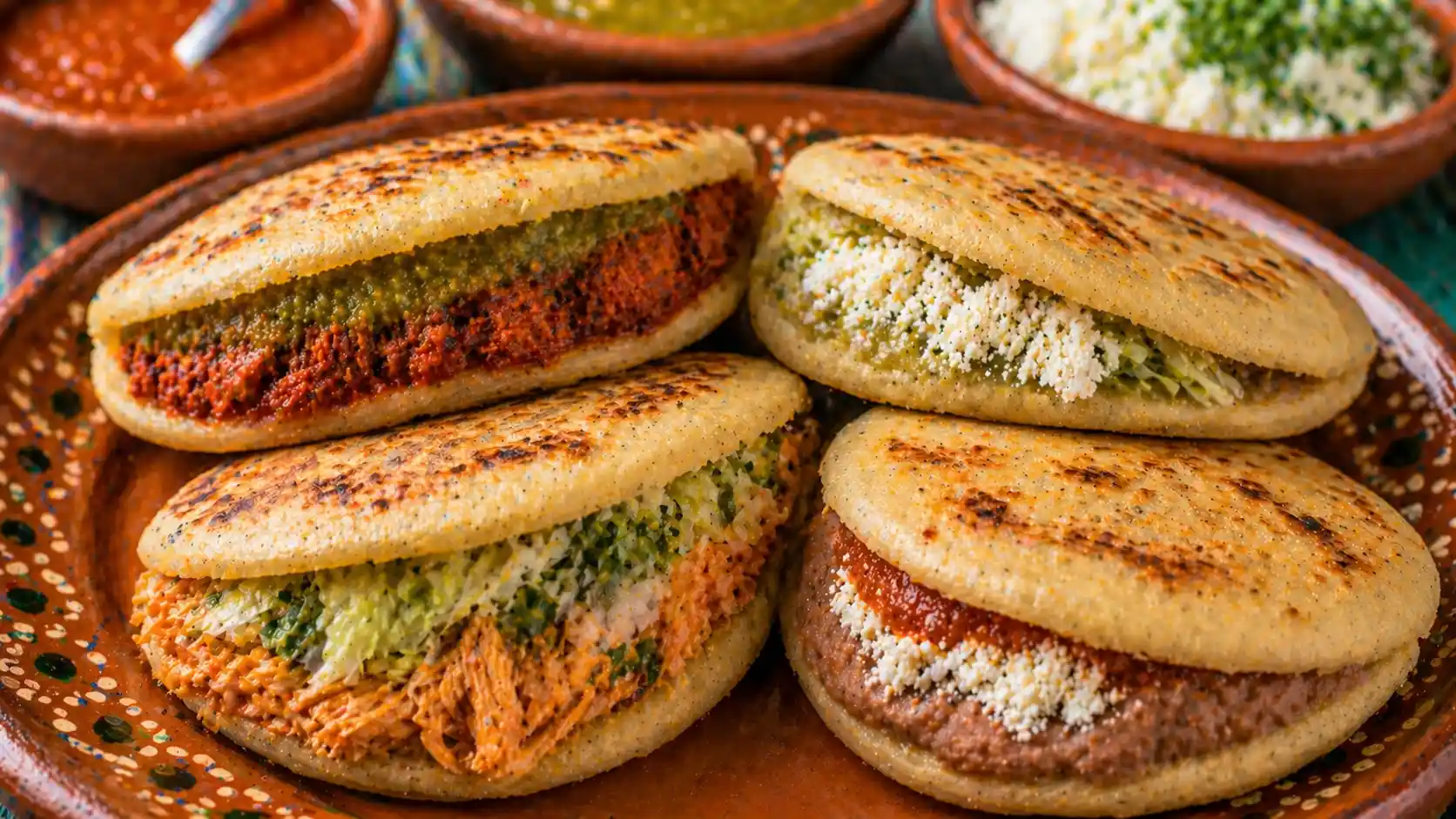
Gorditas are thicker than a regular tortilla, and that extra dough is the whole point.
Made from masa and cooked on a comal until puffed, they get sliced open and stuffed with beans, chicharrón, shredded chicken, or spiced meat.
The outside stays slightly crisp while the inside soaks up whatever filling goes in. It’s a handheld meal that holds together well, which is why street vendors have been making them for so long.
7. Tostadas
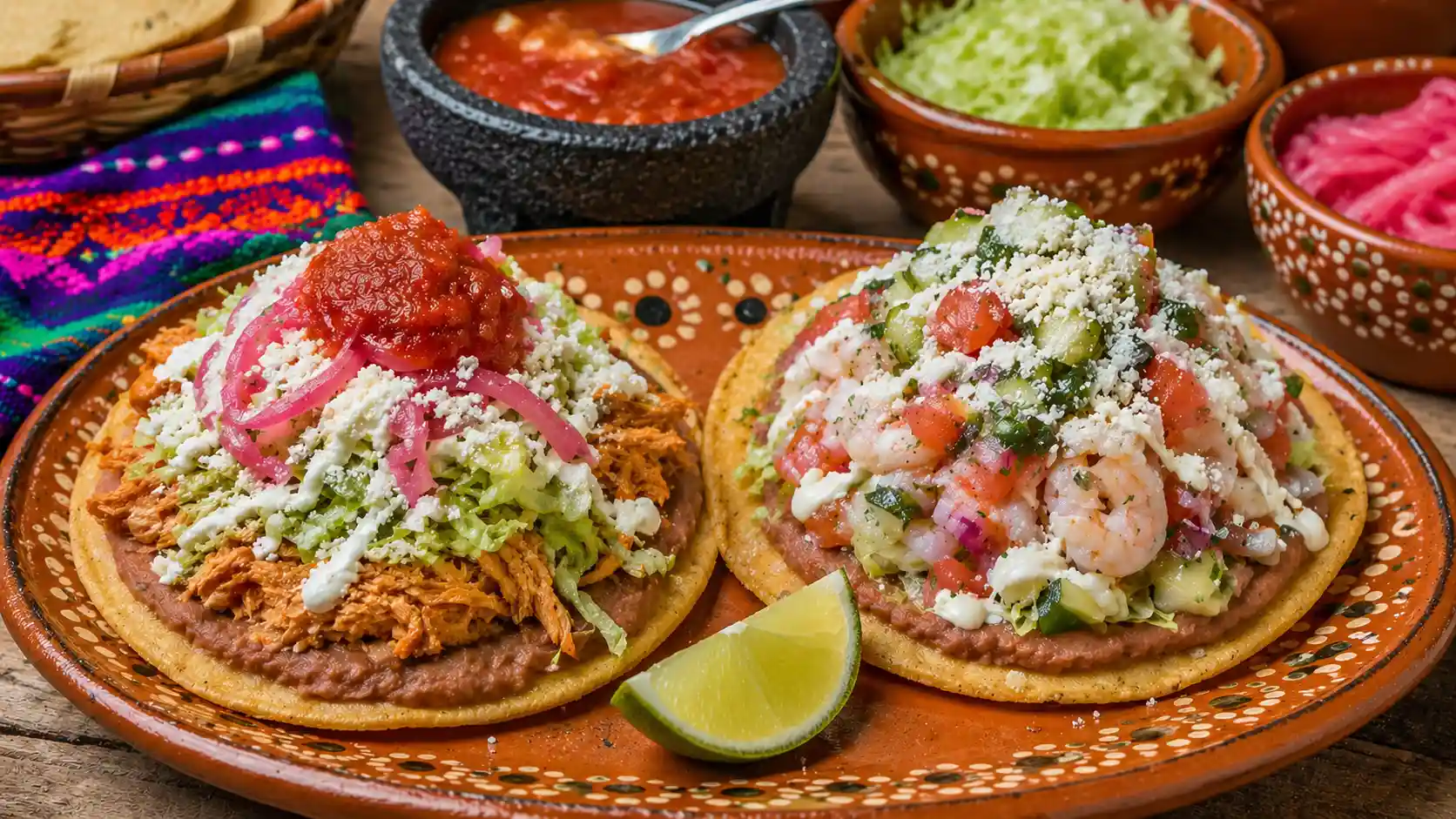
Tostadas start with a flat, fried corn tortilla that snaps clean when you bite into it. That crispy base gets layered with refried beans, shredded meat or seafood, chopped lettuce, crema, salsa, and crumbled cotija cheese.
Every topping sits right on top with nowhere to hide, so the ingredients have to be fresh. Street vendors in coastal areas often pile on ceviche or tinga, making each region’s version a little different from the last.
8. Tortas
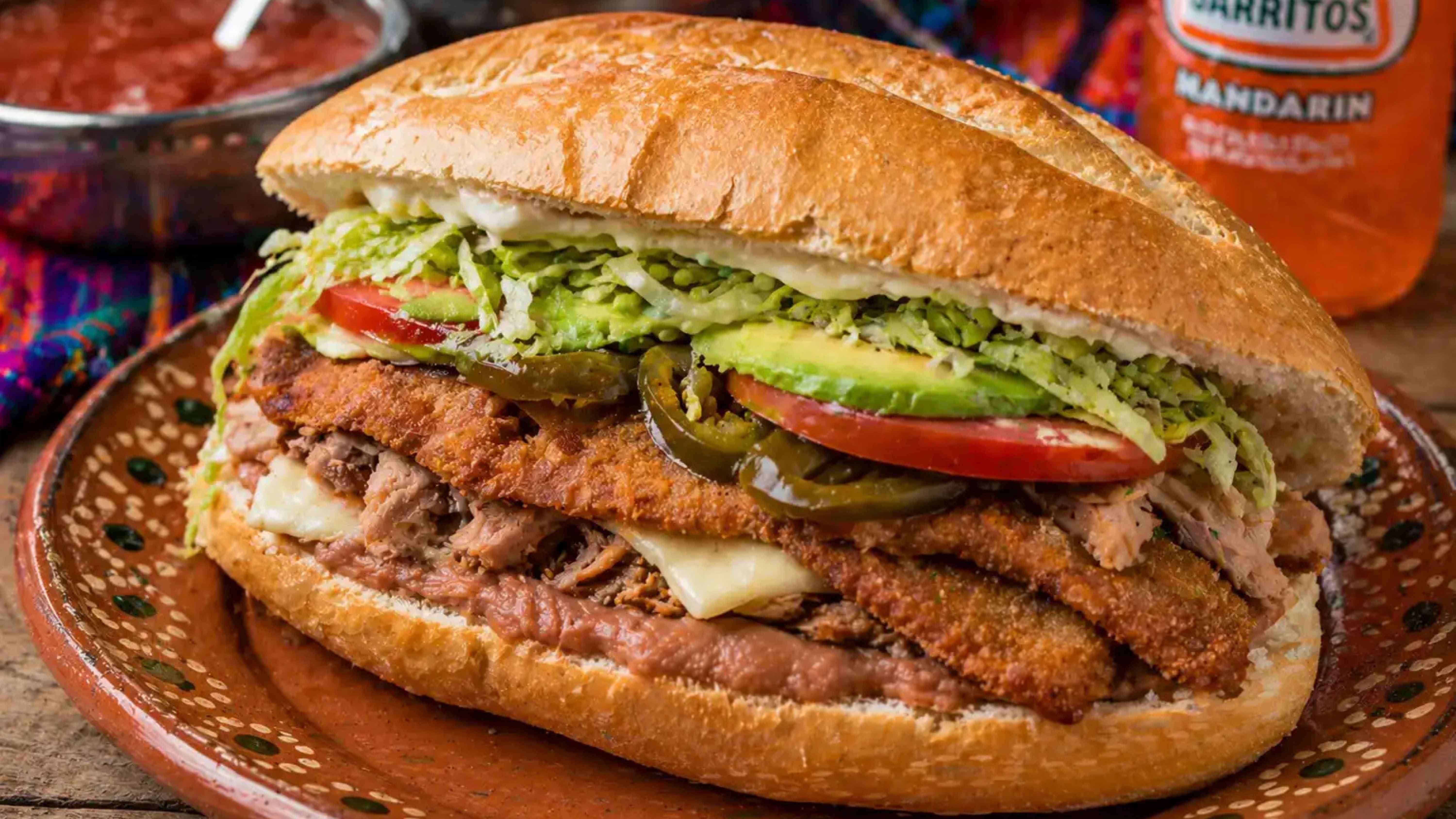
A torta is Mexico’s answer to the sandwich, and street versions are built to be filling.
A soft telera or bolillo roll gets sliced open and spread with refried beans, mayo, or avocado, then packed with layers of meat like milanesa, carnitas, or chorizo, plus jalapeños, tomato, and cheese.
The bread holds everything together just long enough to finish it. Most people need both hands, and that’s usually a good sign.
9. Sopes
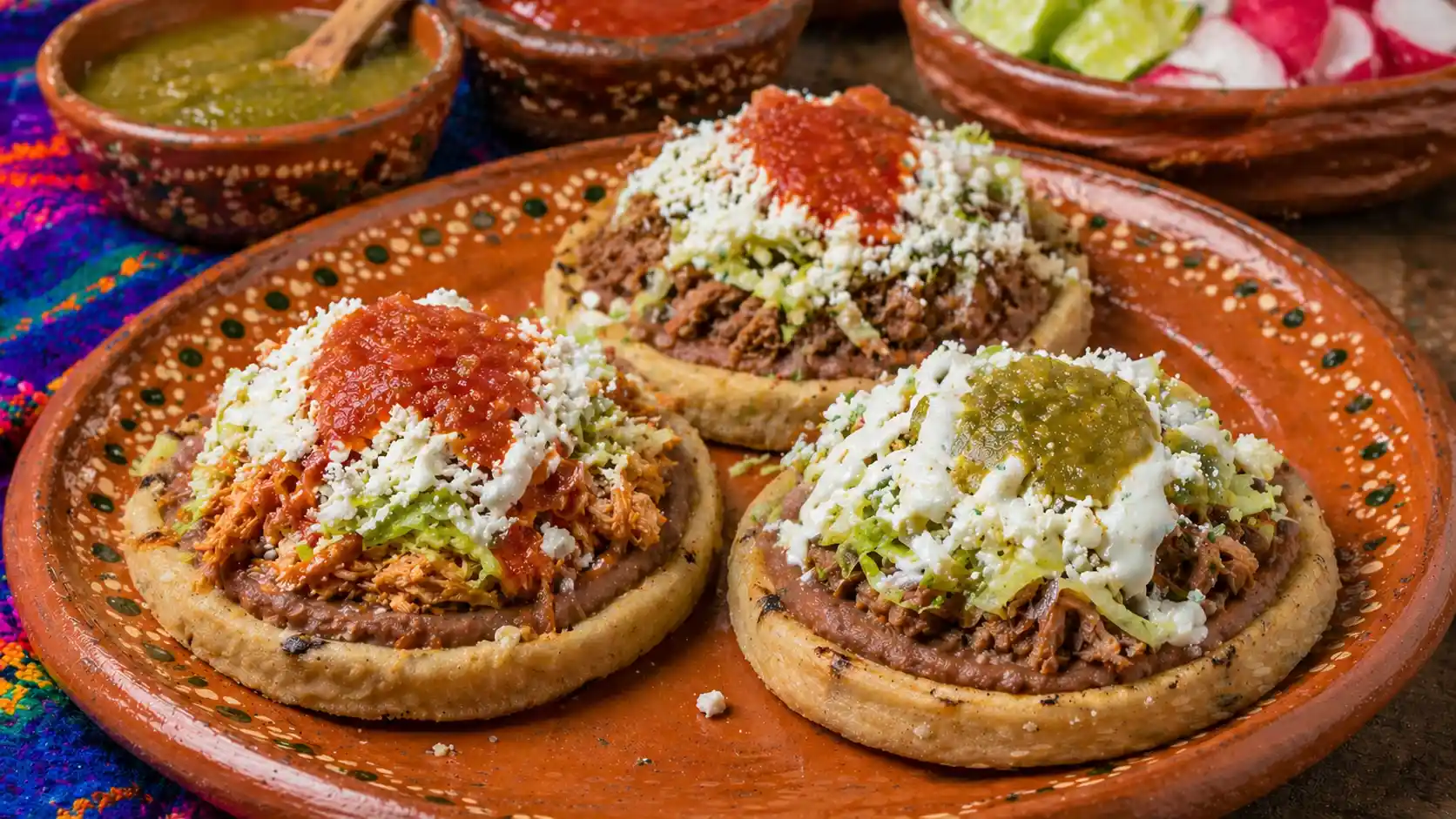
Sopes are small, thick corn bases shaped by hand and cooked on a comal until the edges firm up.
A slight ridge around the border keeps the toppings in place, which usually include refried beans, shredded meat, crema, salsa, and crumbled cheese.
They’re compact and sturdy, built to hold a full set of flavors in just a few bites. Street vendors often make them fresh to order, so the base comes out warm and soft in the middle.
10. Tlayudas
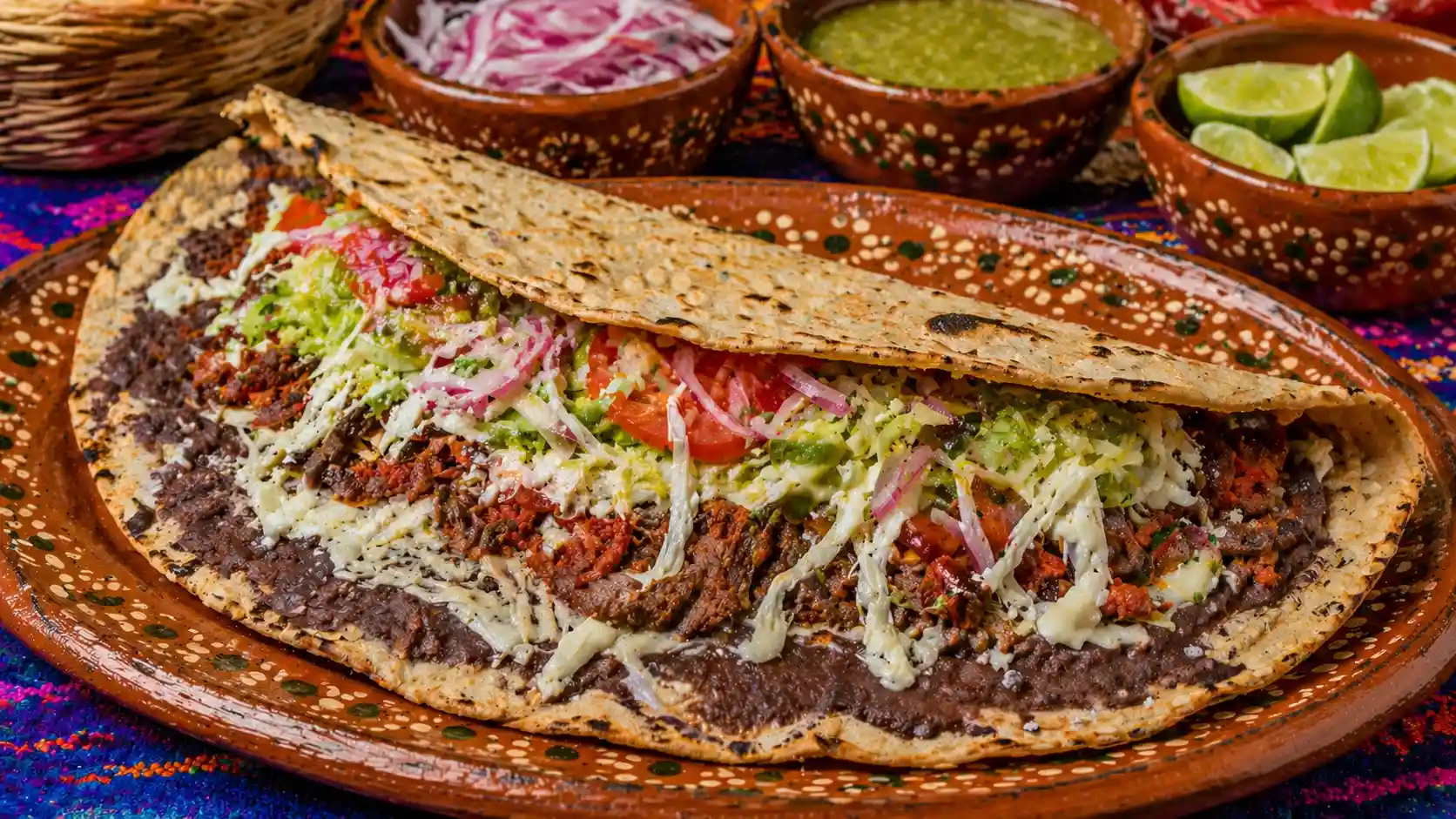
Tlayudas come from Oaxaca, and they’re hard to miss. A large, semi-crispy corn tortilla gets spread with black bean paste, then topped with tasajo or chorizo, Oaxacan string cheese, and fresh vegetables.
The tortilla is big enough to fold in half for eating on the go, as most street vendors serve it. The combination of smoky meat, creamy beans, and melted cheese in every bite explains why locals treat it as a full meal.
11. Pambazos
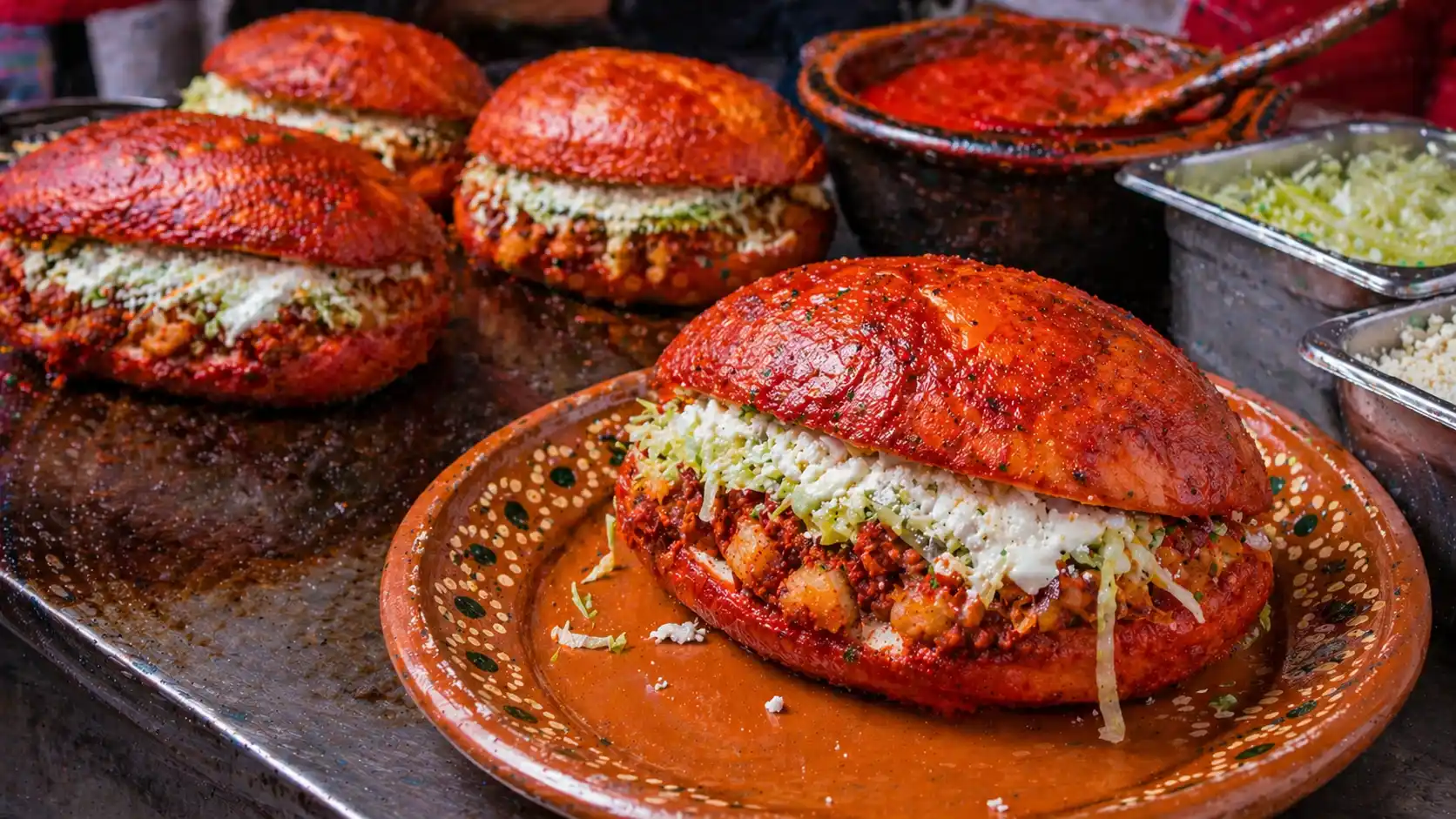
Pambazos are one of the more unusual street foods you’ll come across.
A soft white roll gets fully dipped in a red guajillo chili sauce, then pressed onto a hot griddle until the outside turns deep red and slightly crisp.
Inside, it’s stuffed with papas con chorizo, which is a mix of fried potatoes and crumbled sausage, then finished with shredded lettuce, crema, and salsa. The chili-soaked bread is what sets it apart from the rest of the menu.
12. Churros
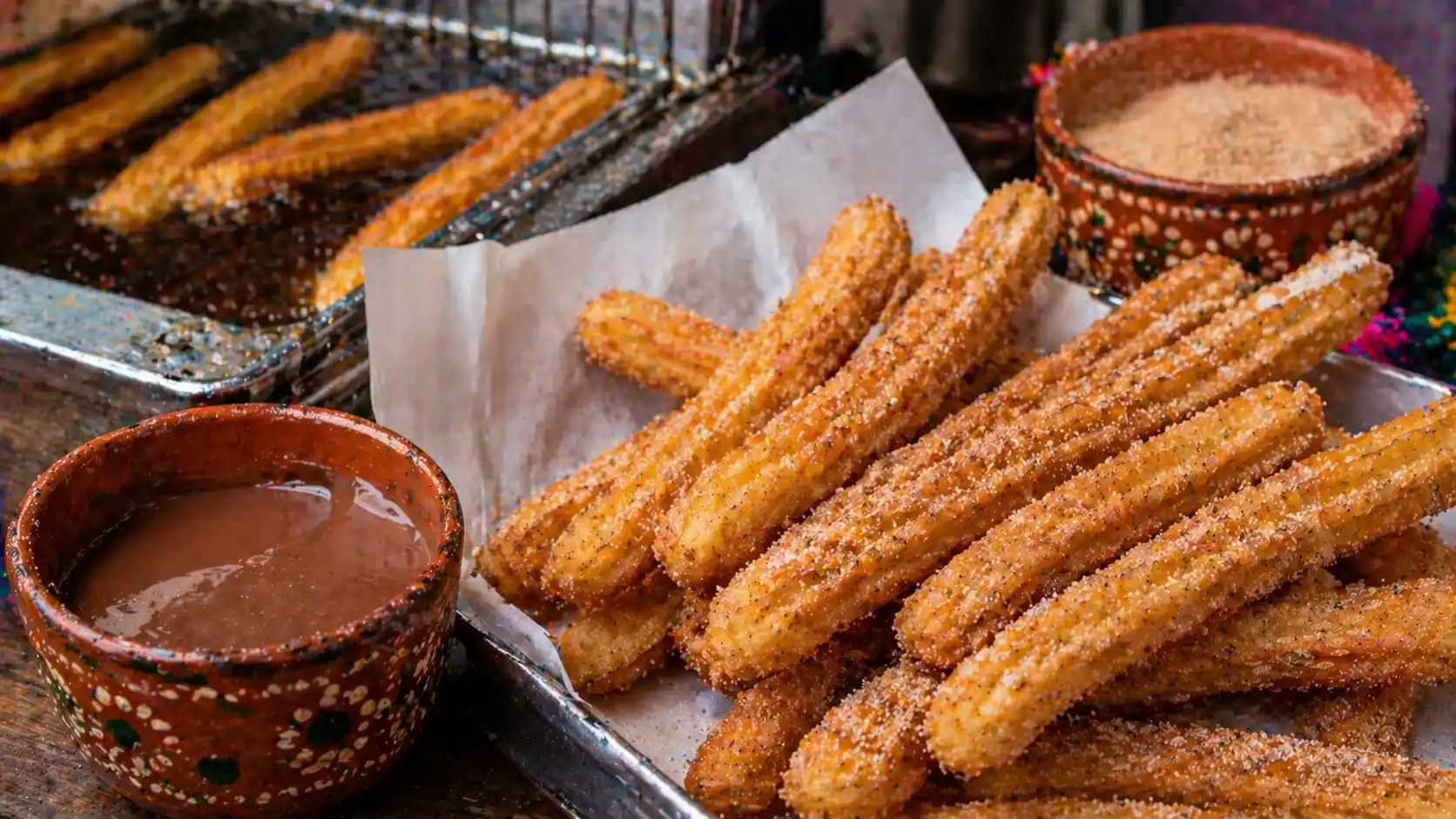
Churros are among the simplest street foods and among the hardest to walk past.
Fresh dough gets piped through a star-shaped tip and dropped into hot oil until golden, then pulled out and rolled in cinnamon sugar while still warm.
Street vendors across Mexico serve them plain or with a small cup of thick chocolate or cajeta for dipping. The outside stays crisp for about five minutes, which is usually all the time you need.
13. Molotes
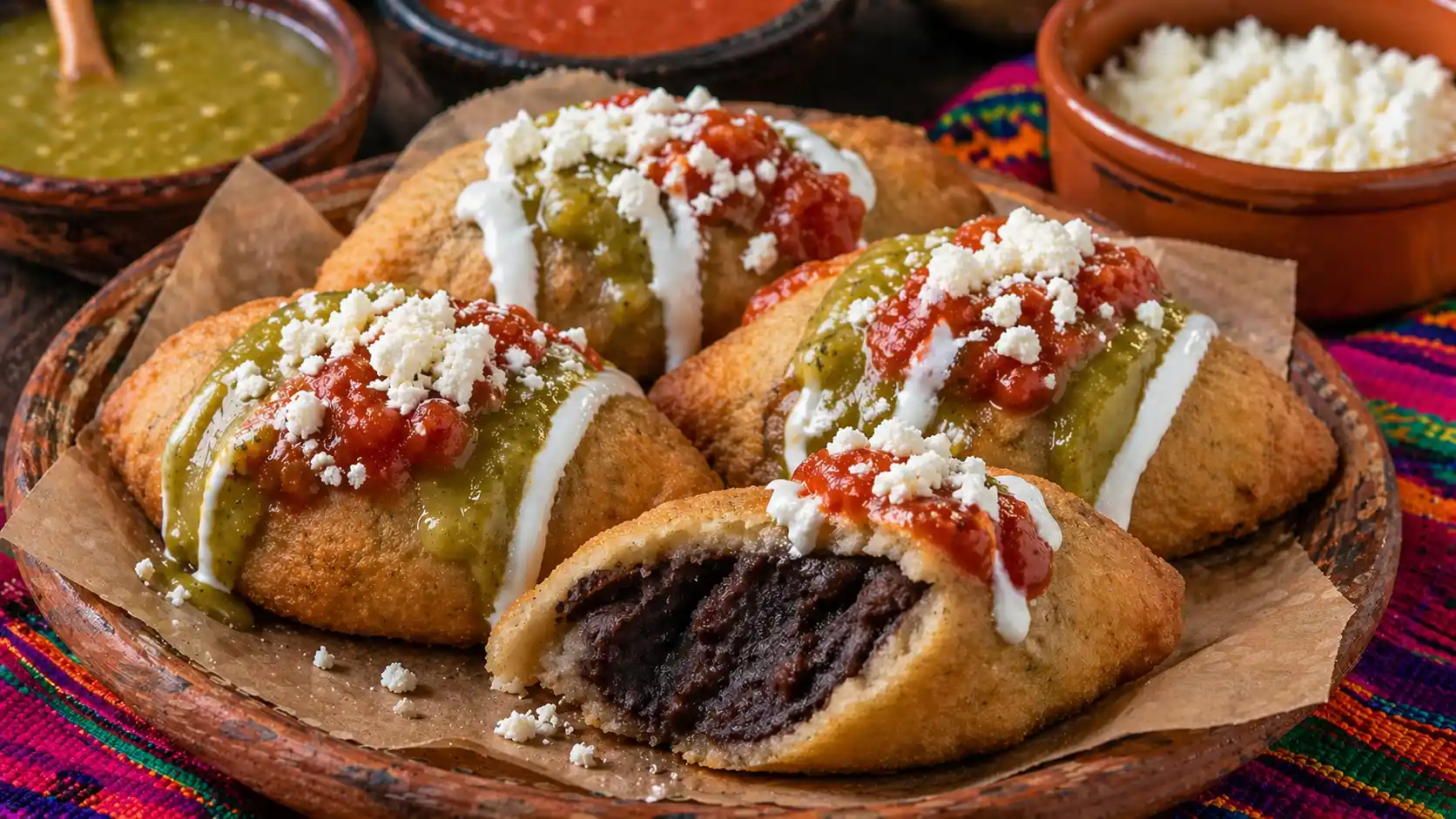
Molotes are a street food from Oaxaca and Puebla that don’t get nearly enough attention.
Masa gets mixed with a small amount of black bean paste or potato filling, then shaped into oval pockets and deep-fried until the outside turns golden and crisp.
They’re served with salsa, crema, and crumbled cheese. Small enough to eat in three or four bites, but the fried masa shell and savory filling make them one of the more satisfying snacks on any street food menu.
14. Camotes
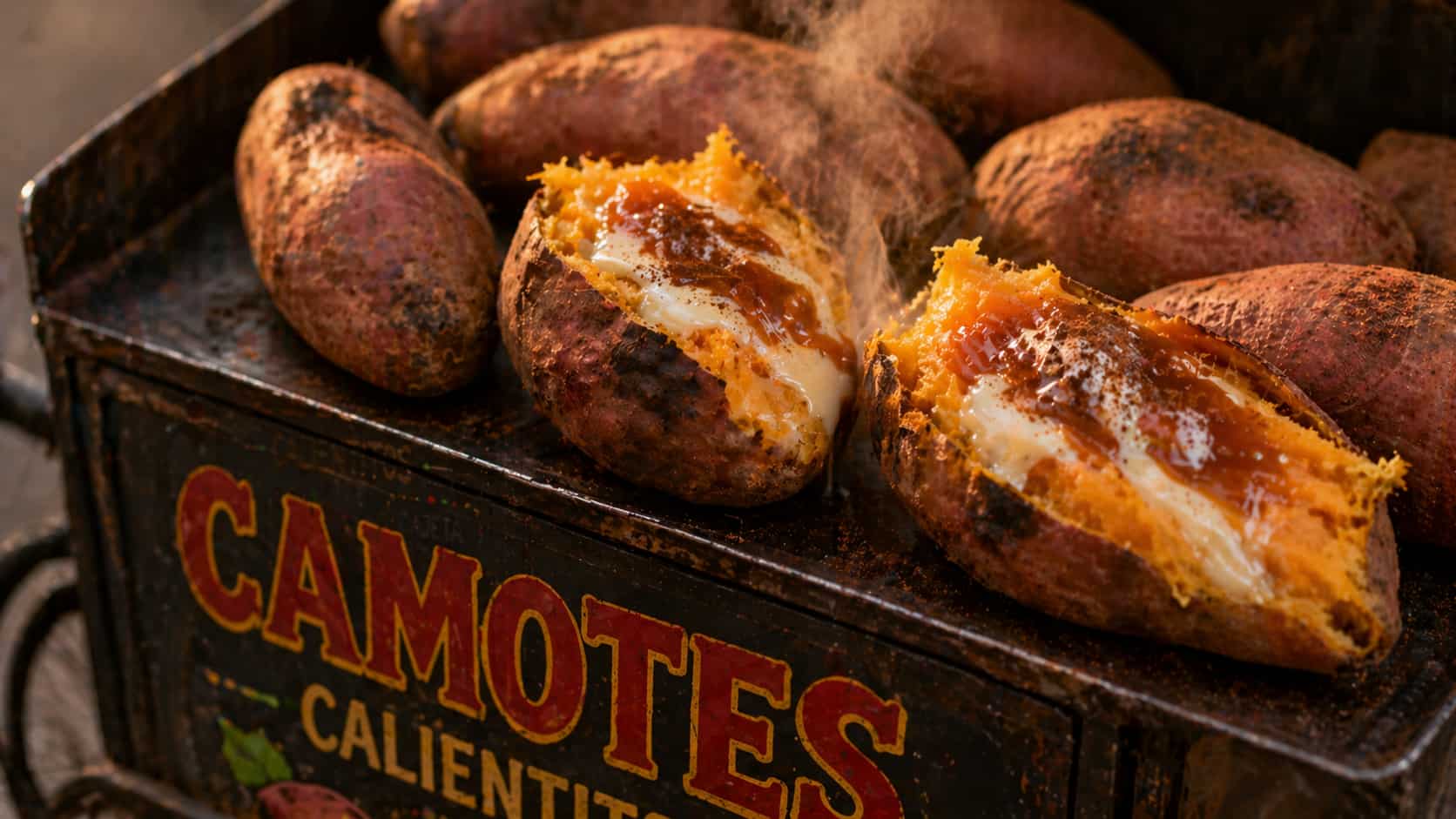
Camotes are sold from small wheeled carts that announce themselves with a long, whistling steam sound before you even see them.
A whole sweet potato gets slow-roasted inside the cart until the skin wrinkles and the inside turns soft and naturally sweet.
Vendors split them open and add toppings like sweetened condensed milk, cajeta, or a sprinkle of cinnamon sugar. It’s simple street food, but the slow roasting brings out a depth of sweetness hard to get any other way.
15. Fresh Street Drinks
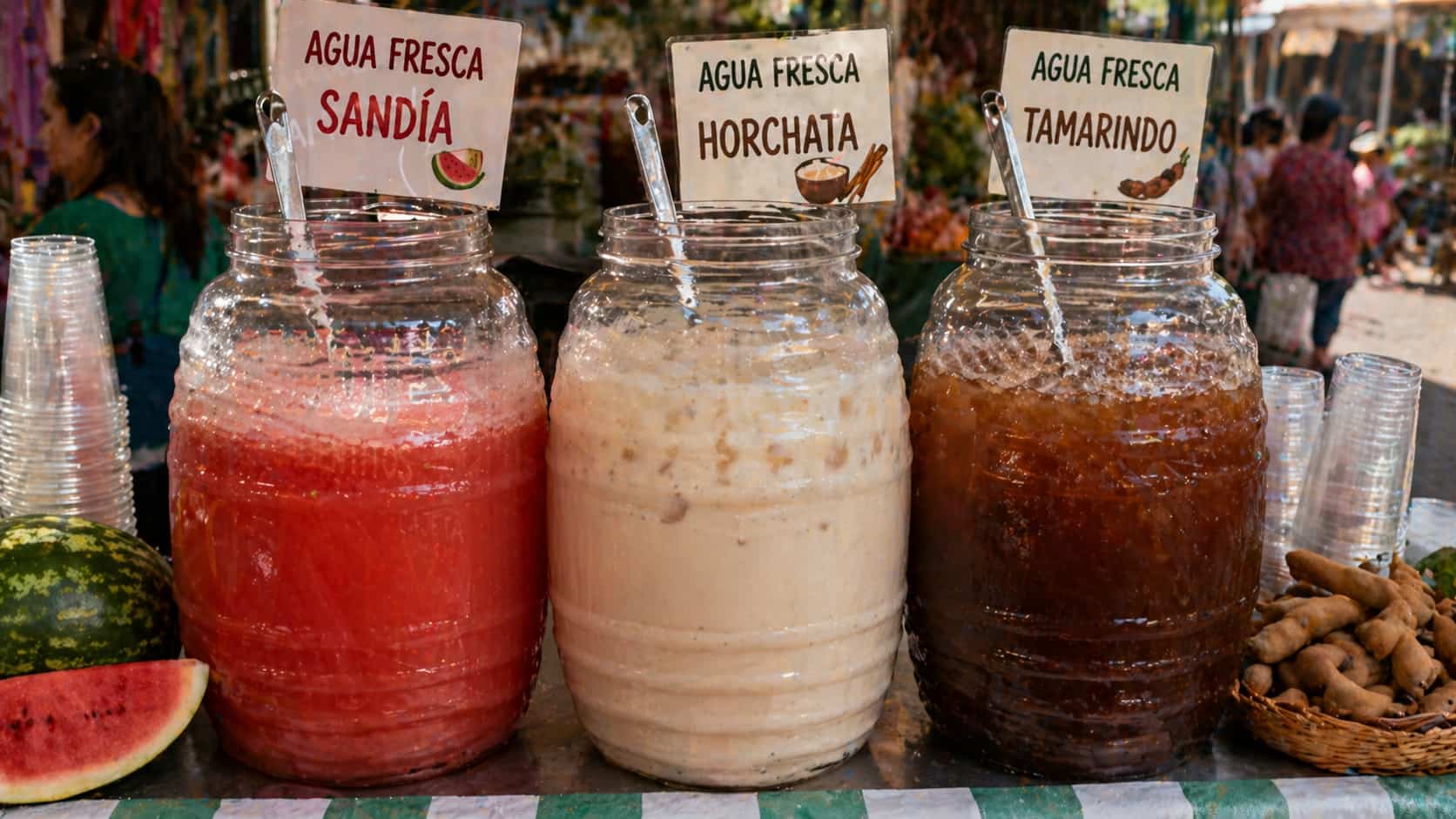
No street food meal in Mexico feels complete without something cold to drink alongside it.
Aguas frescas are the most common choice, made fresh by blending fruit like watermelon, tamarind, or hibiscus with water and a little sugar. Horchata is a creamy rice-based drink flavored with cinnamon that pairs well with spicy food.
Tamarind drinks are sweet and tangy at the same time. The best part is that most vendors make their drinks fresh each morning, so what’s in the jar changes with the season.
Regional Differences in Mexican Street Food
Mexico is a big country, and street food changes significantly depending on where you are. The region shapes the ingredients, the cooking style, and even how food gets served.
| Region | Signature Street Foods |
|---|---|
| Mexico City | Tacos al pastor, tamales from morning carts, tortas piled high with milanesa or carnitas |
| Oaxaca | Tlayudas with black beans and tasajo, molotes, and snacks built around rich mole sauces |
| Northern Mexico | Carne asada tacos, flour tortillas instead of corn, and grilled meat dishes in larger portions |
| Coastal Regions | Fish and shrimp tacos, tostadas loaded with ceviche, and fresh seafood are sold steps from the water. |
Traveling between regions means eating completely different menus, even when the dish shares the same name.
Mexican Street Food Culture
Mexican street food has never just been about eating. Street vendors, known as vendedores, have been central to neighborhood life for centuries, setting up before sunrise and staying until the last customer leaves.
Tianguis, the traditional open-air markets, bring entire communities and age groups together around food stalls that sell everything from fresh tamales to grilled meats.
In 2010, UNESCO recognized traditional Mexican cuisine as an Intangible Cultural Heritage, and street food sits right at the heart of that recognition.
Tips for Trying Mexican Street Food Like a Local
The best street food experiences don’t come from menus. They come from paying attention to what locals are already doing.
- Look for Busy Stalls: High foot traffic means food sells fast and gets made fresh. A quiet cart is worth skipping.
- Eat Standing: Most vendors don’t have seating, and that’s normal. Standing at the cart is how it’s meant to be done.
- Don’t Skip the Salsa: Vendors put out salsas for a reason. A small spoonful changes the whole dish.
- Try Small Portions from Multiple Vendors: One taco here, one esquite there. That’s how you actually get a feel for the food.
Keep these ideas in mind, and even a quick street food stop can turn into one of the best parts of your trip.
Conclusion
Mexican street food has lasted this long because it was never built to impress. It was built to feed people well, using nearby ingredients and techniques passed down through families for hundreds of years.
A taco al pastor cooked on a spit, a warm tamale pulled from a pot, a cup of esquites eaten on the walk home- each one carries the weight of a food culture that hasn’t needed to change much because it already got things right.
The flavors are bold, the portions are honest, and the people making the food usually grew up eating it.
That combination is difficult to beat anywhere in the world.
Frequently Asked Questions
What is the Most Popular Mexican Street Food?
Tacos are the most widely eaten street food in Mexico. Al pastor, carne asada, and carnitas are the most common fillings, sold from carts across every city and region.
What Does Antojitos Mean in Mexican Street Food?
Antojitos translates loosely to “little cravings.” It refers to the small, snack-style street foods like sopes, gorditas, and quesadillas that Mexicans eat between meals or on the go.
Is Mexican Street Food Safe to Eat?
Yes, for most people. Stick to busy stalls with high food turnover, avoid raw toppings if you have a sensitive stomach, and go slow when trying new spices for the first time.
What Time of Day is Best for Mexican Street Food?
Morning is ideal for tamales and atole. Lunch hours between 1 and 3 PM offer the widest selection. Taco stands serving al pastor and suadero are best after 8 PM.