

Something enchanting happens when you make your marriage commitment amidst the elements.
The outdoor wedding idea works whether you have an intimate backyard affair or are looking at hosting a garden party, beach wedding, forest clearing, vineyard, or estate wedding.
As is expected, there will be issues with planning an event held in the great outdoors.
Among them are planning for the weather, shading from the sun when it’s hot, lighting in the evening, comfort of your guests, and power sources for lighting and music.
In this article, we will discuss ideas that can help you plan your ceremony, reception, tables, menu, lighting, and cover-ups.
What Makes an Outdoor Wedding Work?
When planning an outdoor wedding, the venue must complement the design.
It should have a personal touch, whether it is a backyard, garden, or family-owned property, while the design must guide the guests from the ceremony area to the reception space.
An ideal outdoor wedding needs contingency plans for every possibility, including a backup shade plan, a rain plan, and enough seats so nobody is left standing under the hot sun.
Consider proper lighting when night falls. With the basics sorted, everything else will be easier.
| Outdoor wedding ideas should utilize the surrounding environment to provide a comfortable atmosphere for the guests without exposing them to extreme sun, rain, winds, or the uneven surface of the grounds. |
Outdoor Wedding Ceremony Ideas
Whatever type of outdoor venue you have chosen, whether a garden or a beach, here are some simple ways to add a touch of personality to your event.
1. Design a Welcoming Outdoor Wedding Entrance
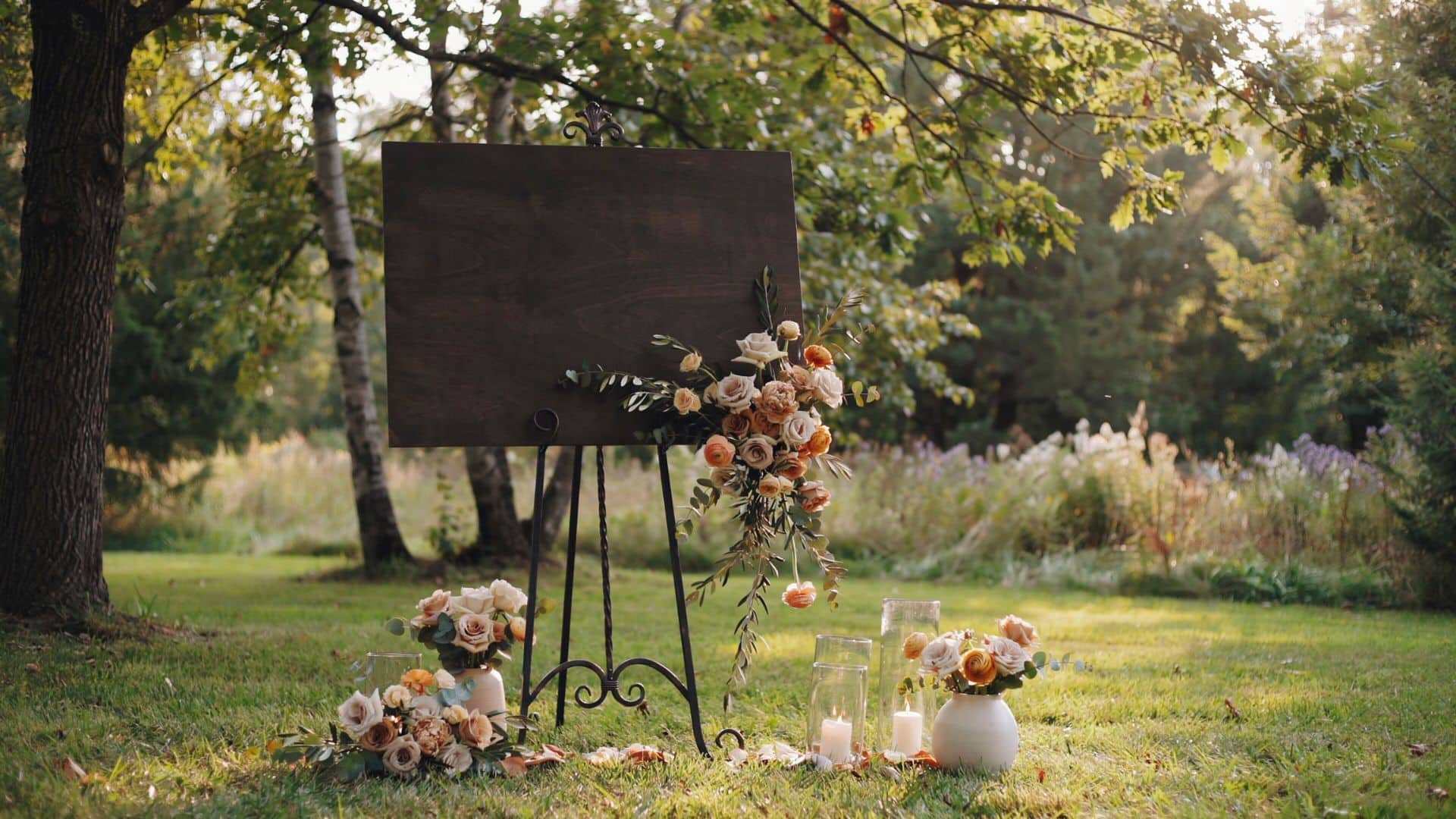
A simple welcome sign is one of the easiest outdoor wedding ideas for a tight budget.
Place it near the entrance and surround it with potted plants, a few lanterns, or flowers left over from other parts of the setup.
This small display gives guests their first look at your wedding colors and overall style before they even reach the ceremony space.
Pro tip: Reuse this same sign near the reception entrance so guests recognize it right away.
2. Create a Natural Wedding Ceremony Backdrop
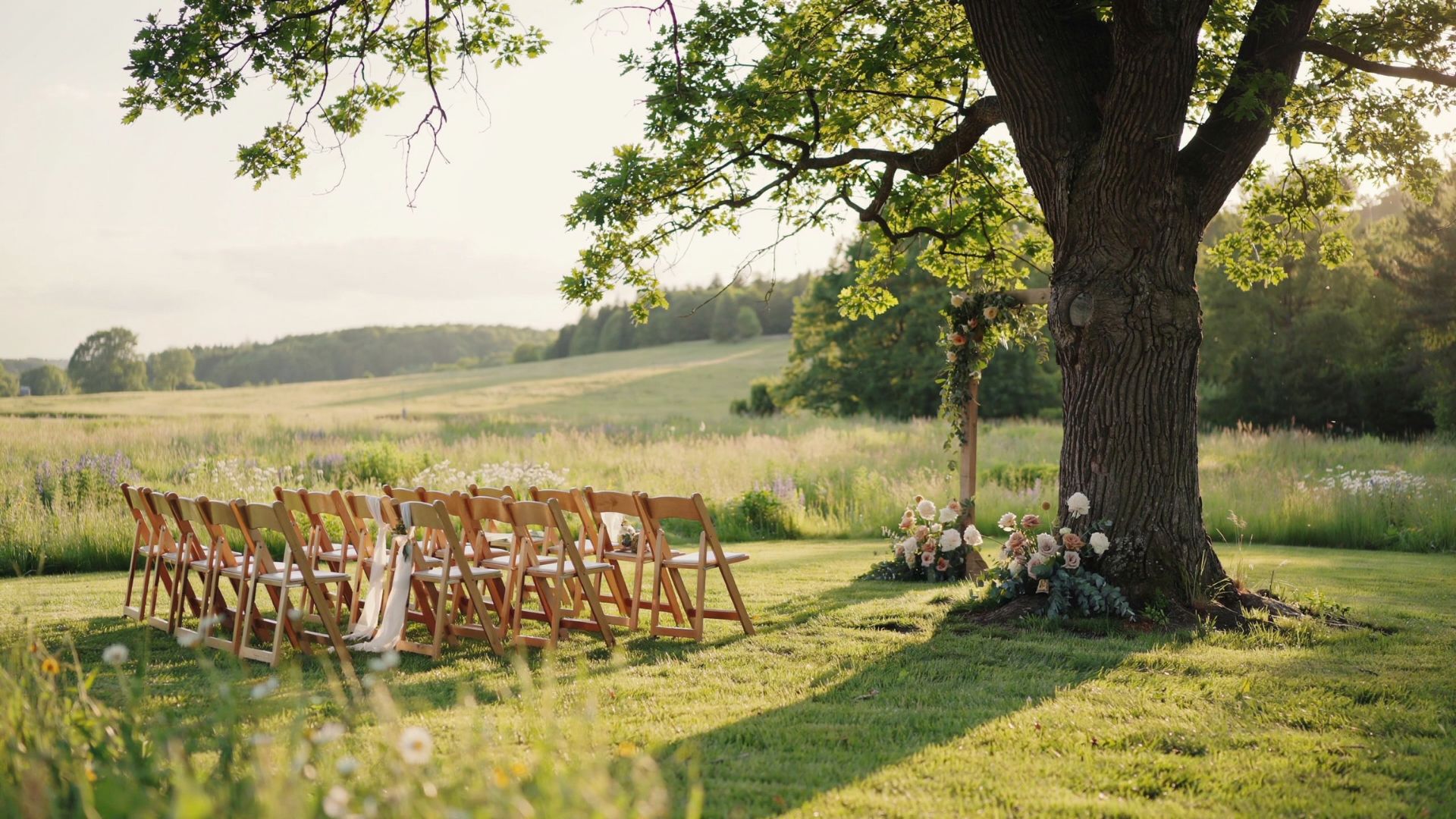
An ancient tree, a mountain landscape, a body of water, a garden wall, or an expansive field can each stand as an exquisite backdrop for your wedding ceremony.
Doing so will reduce the cost of renting equipment because you will not need to rent an elaborate structure to fill in any gaps or expensive floral arrangements.
Walk through the venue beforehand and consider how the light changes in that location during the hour of your ceremony.
Pro tip: Schedule your ceremony an hour before sunset for the softest natural light.
3. Drape Greenery Over a Pergola
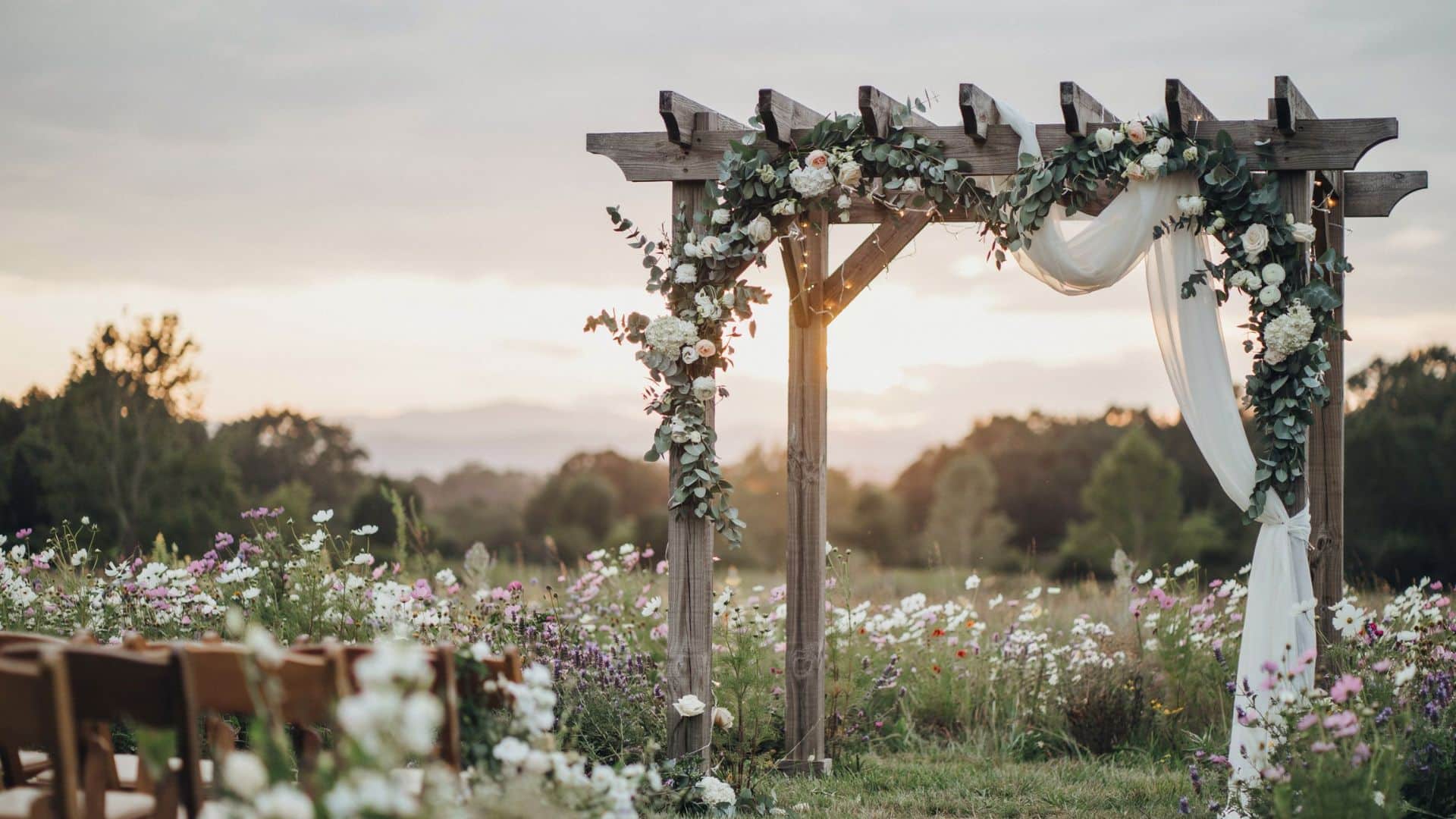
If you have a pergola at your location, it makes much more sense to use it instead of creating an entirely new one.
A few loose strands of foliage, a piece of sheer cloth, or even a small arrangement of flowers on the top can be quite sufficient for your design to look perfect.
You don’t need to cover the whole structure with decoration, but it would look much more informal and be much cheaper.
Pro tip: Add battery-powered string lights to the greenery for evening ceremonies or late receptions.
4. Build a Rustic Wedding Arch With Wooden Details
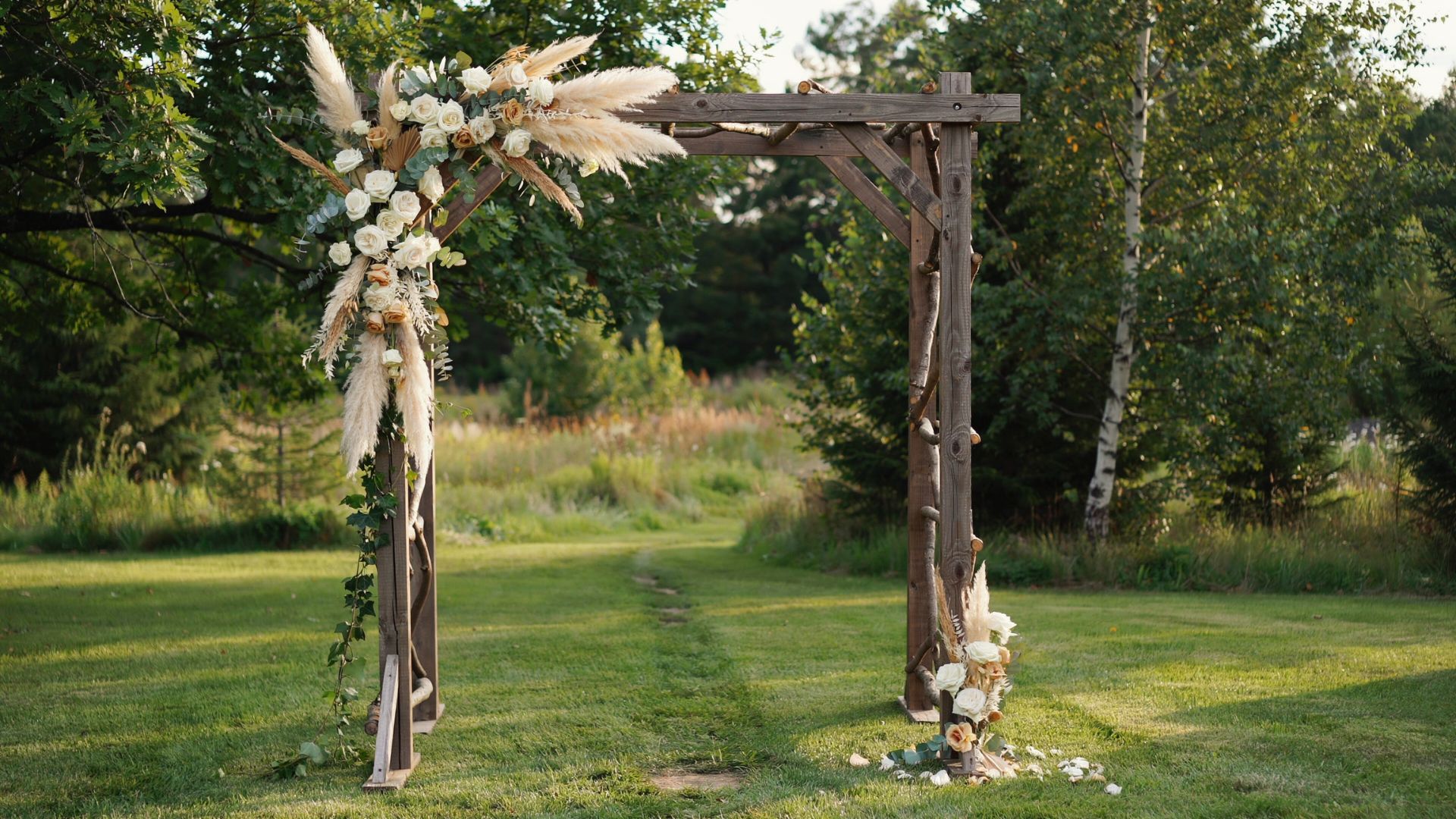
Use ladders only for the purposes they were designed for, and place them on stable, level surfaces unless properly secured.
Have the rental company or installer anchor it securely and confirm that the venue allows the installation.
This design works well for barn, farm, or backyard weddings and can be adjusted to match almost any color scheme.
Pro tip: Wrap the ladder rungs with ribbon or fabric for extra texture without added cost.
5. Decorate Wedding Aisles With Fresh Flowers and Greenery
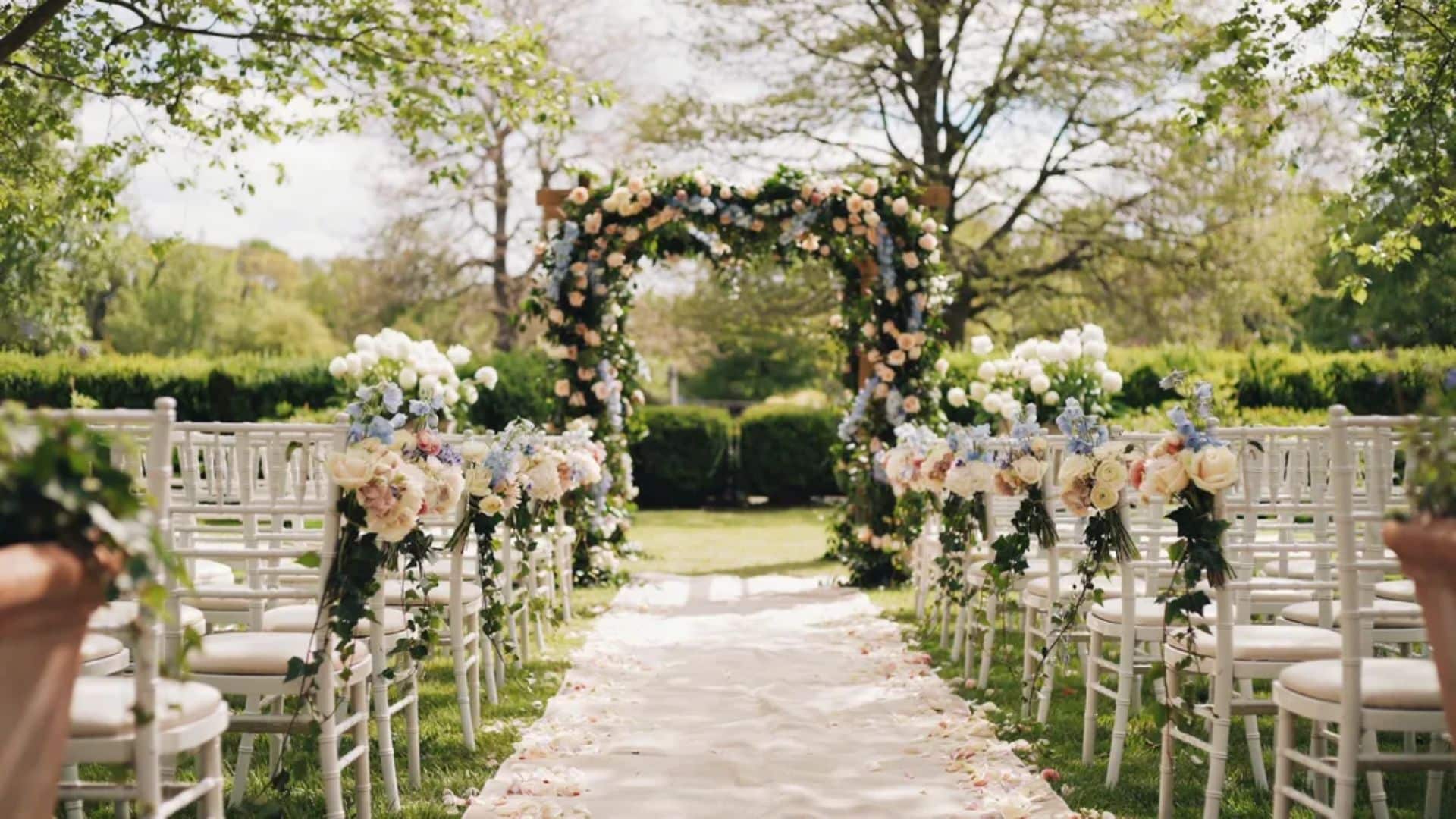
Mini arrangements, potted flowers, or single-stem displays placed down the aisle can create the illusion of finished decorating without spending a lot on flowers.
Make sure they are equally spaced on both sides of the aisle so it doesn’t look empty.
The advantage of the potted flowers is that they are easy to relocate after the ceremony is complete.
Pro tip: Use flowers that are already in season locally to keep costs lower.
6. Add Floral Accents to Ceremony Chairs
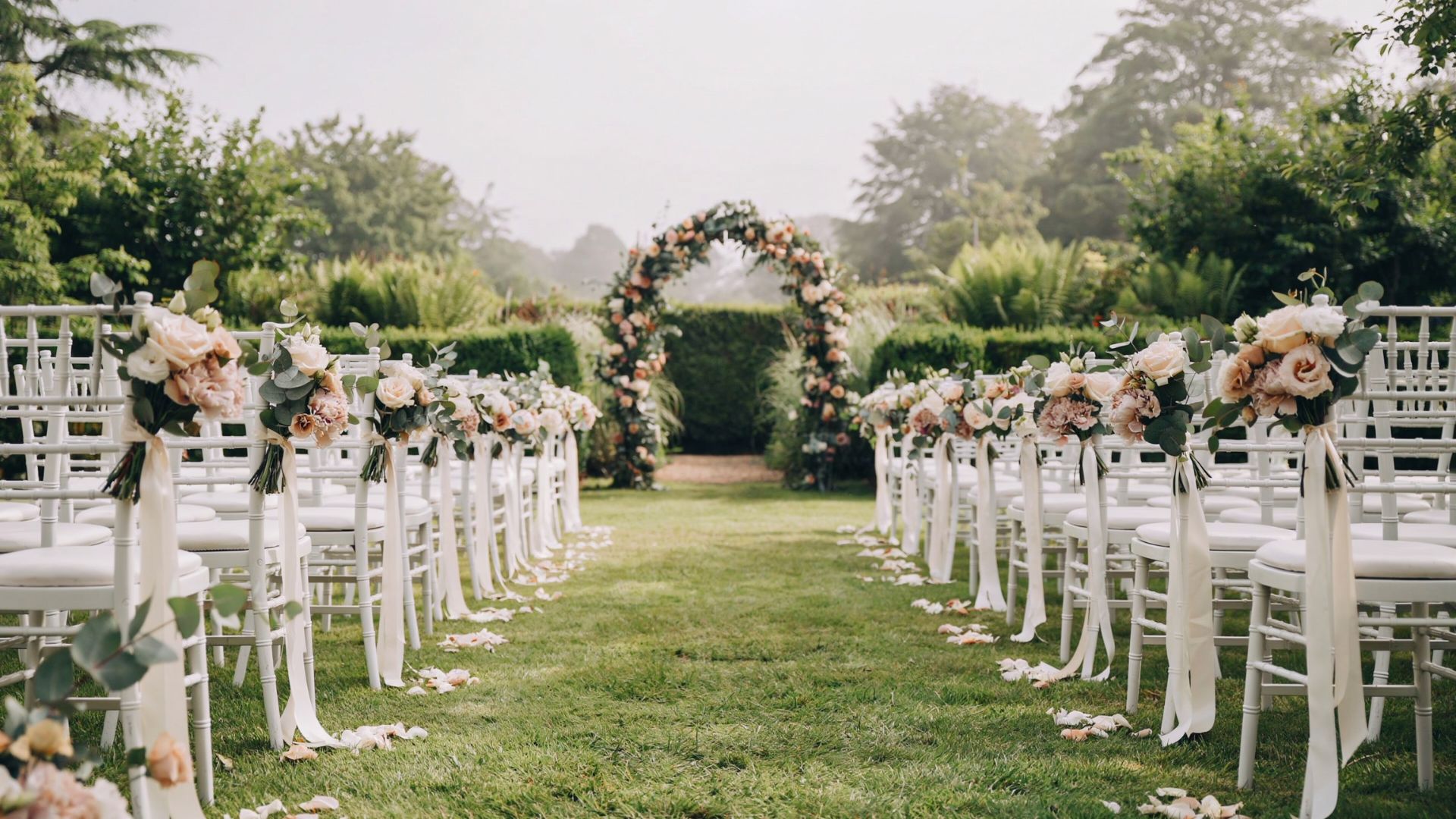
Tiny flower bunches or ribbons that can be attached to the chairs placed along the aisle will not cost you too much but will brighten up your wedding.
Instead of decorating all the chairs, select several rows, usually the rows near the entrance or front of the church.
This way you’ll have a definite line seen by your guests and photographers and won’t spend extra money on it.
Pro tip: Alternate decorated and plain chairs to stretch a small number of arrangements further.
7. Layer Rugs Along the Wedding Aisle
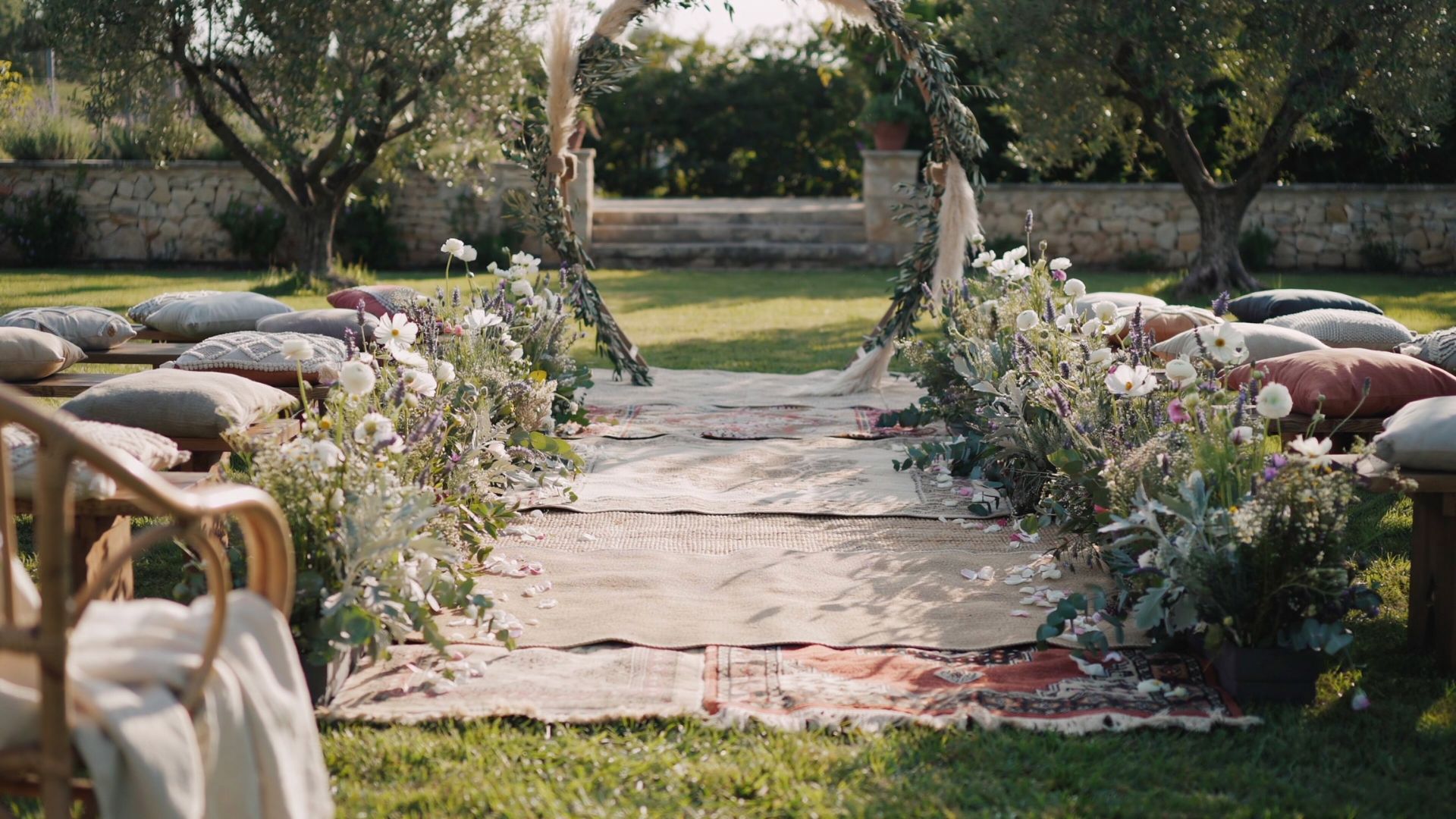
Vintage or neutral rugs placed end to end can turn grass into a stable, defined path for your ceremony.
This is especially helpful for guests in heels or for anyone who has trouble walking on uneven ground.
Mixing patterns or textures adds visual interest without needing a formal aisle runner.
Pro tip: Test the rug layout a day early to check it stays flat in wind or dew.
8. Turn the Order of Service Into Fans
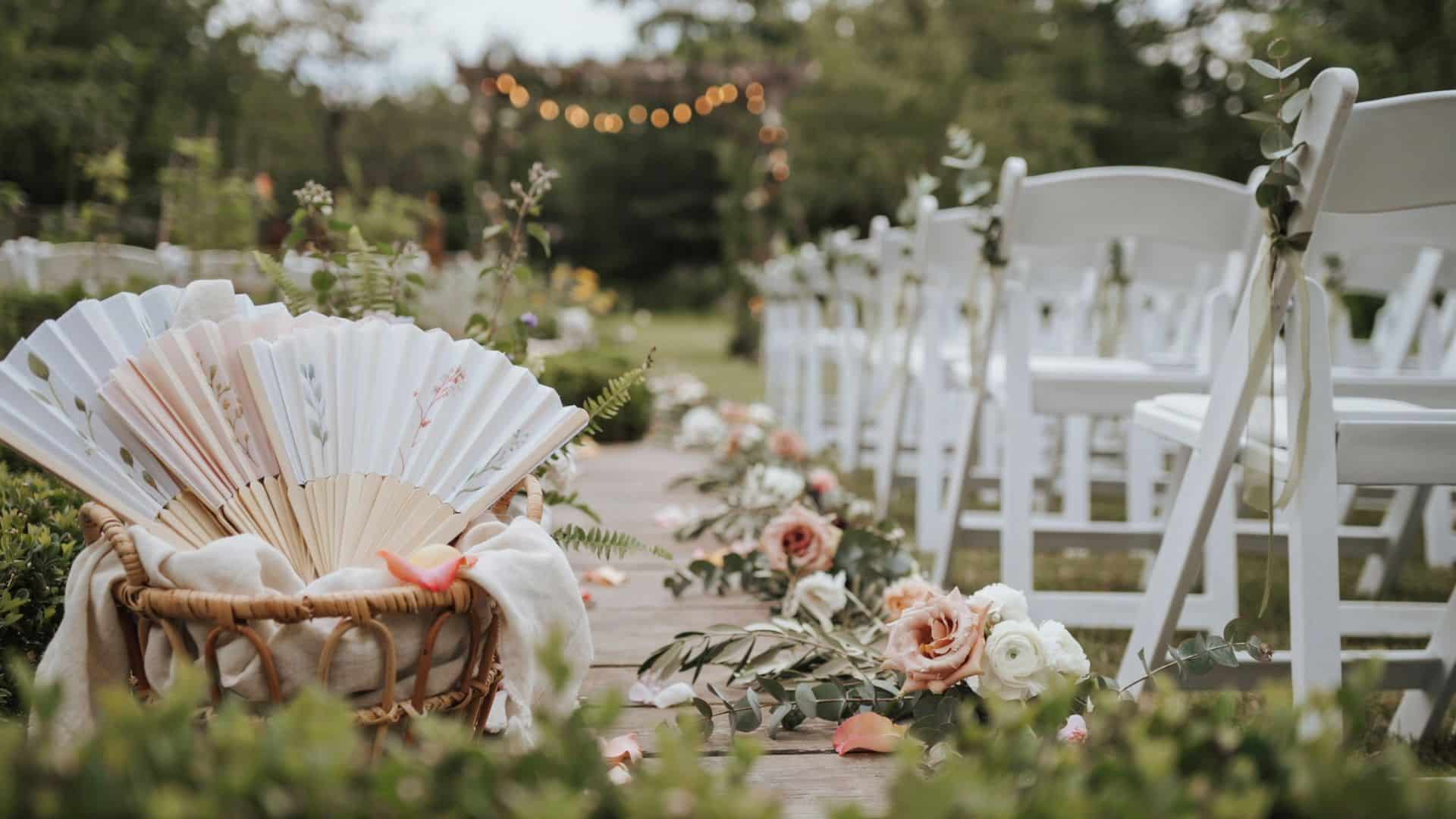
Printing your ceremony details onto small handled cards gives guests a program and a way to stay cool at the same time.
This is especially useful for summer weddingsheld in direct sun. Include the order of events, names of the wedding party, and a short note of thanks on the card.
Attach a simple wooden or paper handle so guests can fan themselves without needing a separate item.
Pro tip: Set up a basket of fans near the seating area so guests can grab one before sitting down.
9. Add Wooden Wedding Signs Around the Venue
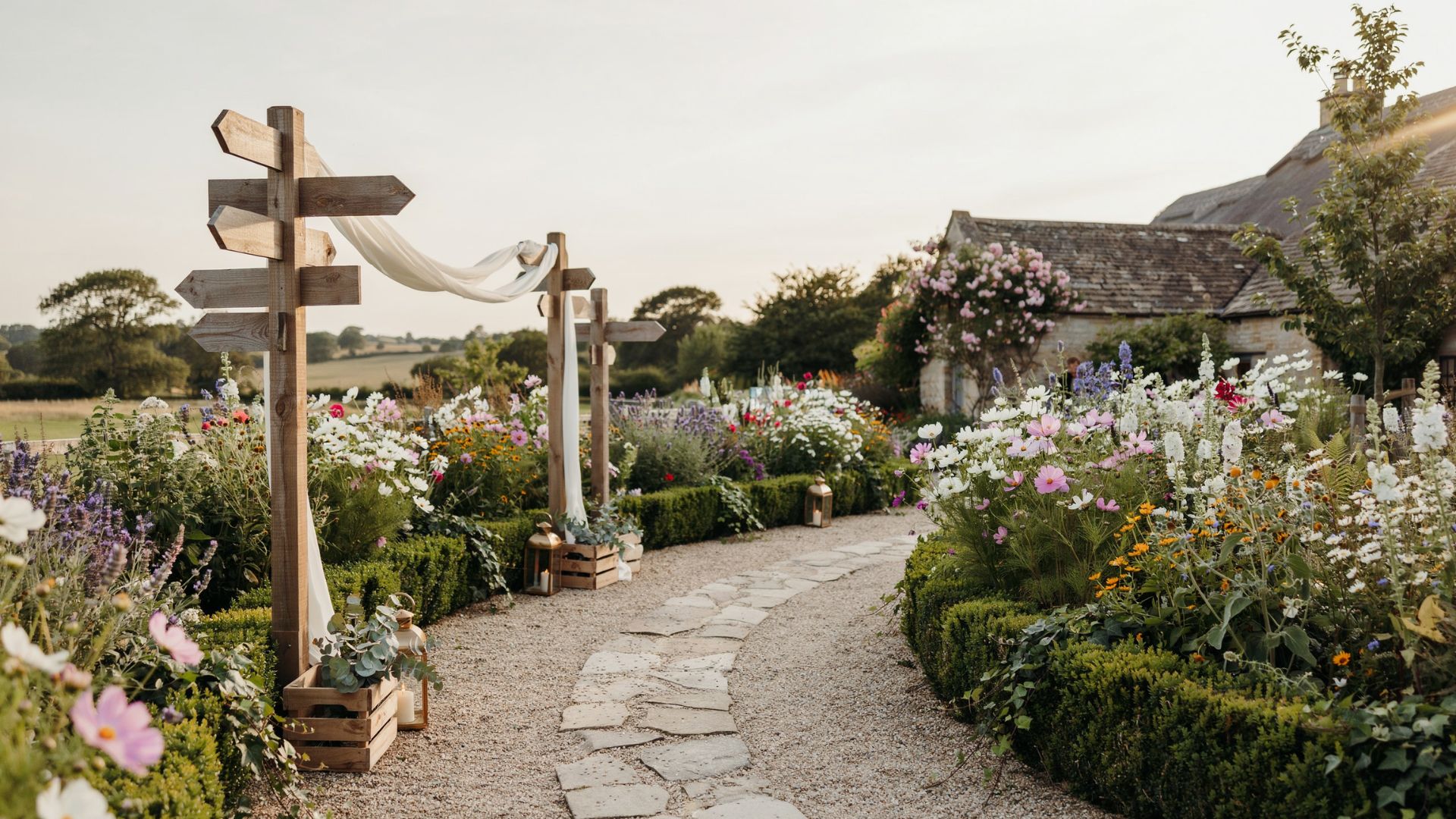
Simple wooden signs help guests find their way around an outdoor venue without needing staff to direct them at every turn.
Use signs to point toward the ceremony, reception, bar, restrooms, seating plan, and parking area.
Keep the lettering large and simple so it can be read from a distance, especially in low evening light.
Pro tip: Place signs at eye level and check visibility from the parking area before guests arrive.
10. Provide Umbrellas for Sun and Rain Protection
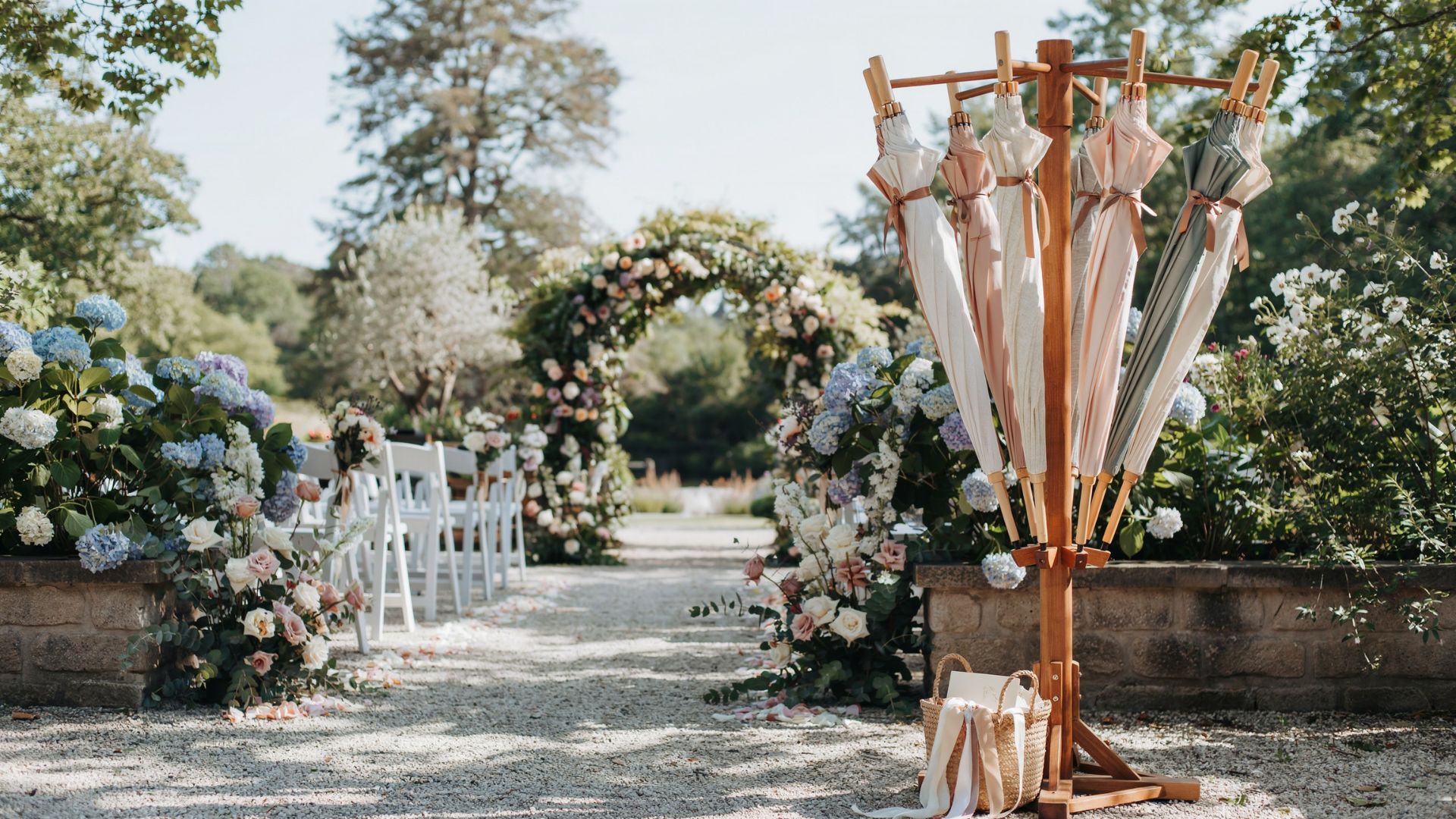
Sun and rain are two of the biggest outdoor wedding concerns, and parasols or umbrellas handle both.
Set out parasols near the ceremony seating so guests have shade during long outdoor vows, especially in summer, making it a great DIY addition to your wedding decor.
Keep a stack of clear umbrellas near the entrance in case of sudden rain, so guests can move between spaces without getting soaked. g out.
Pro tip: Label a few umbrellas or parasols for the wedding party so they’re easy to find in photos.
11. Arrange Long Banquet Tables
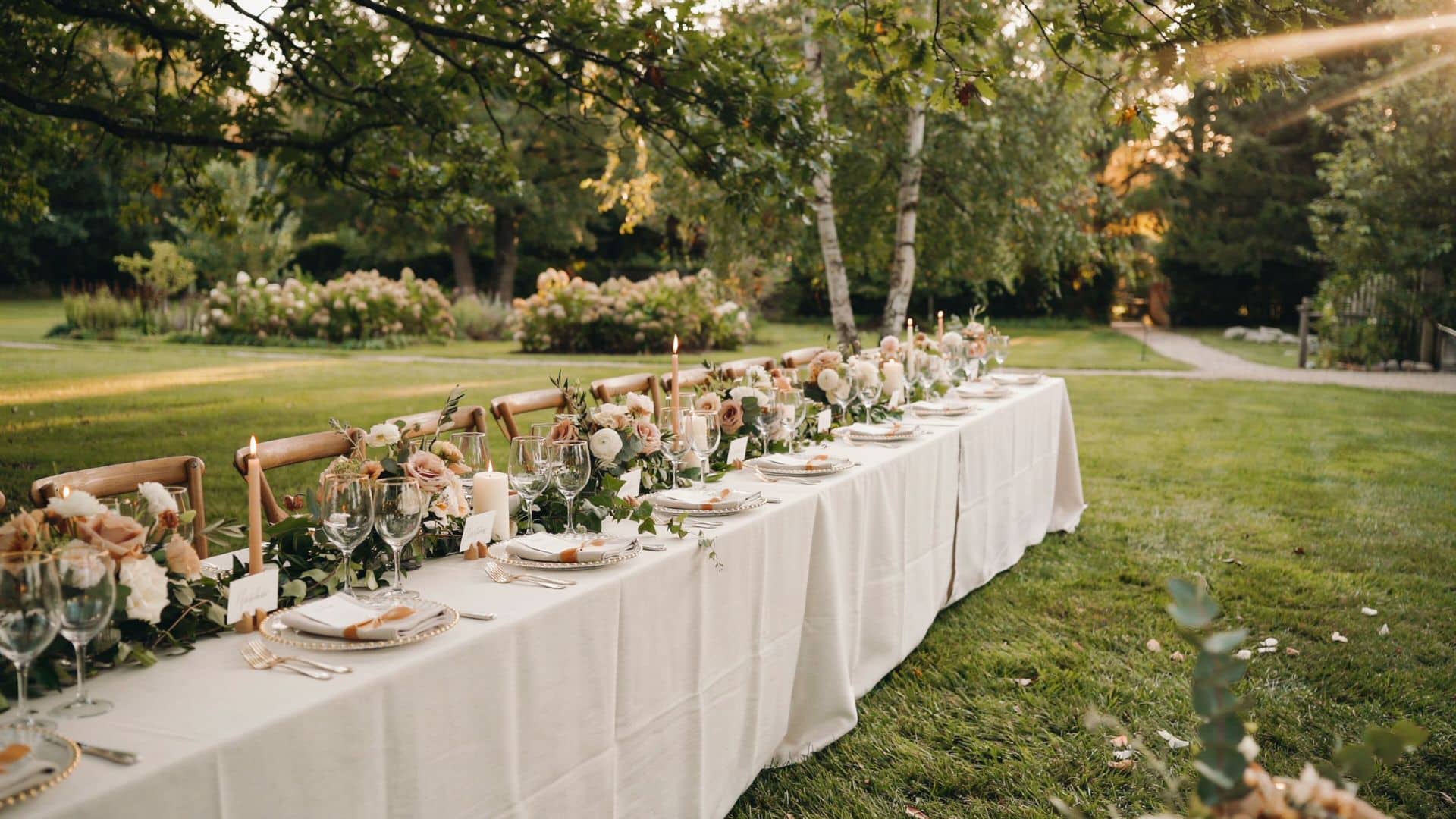
Long dinner tables create an intimate ambiance in a large outdoor wedding setting.
A single long table will bring the guests together and facilitate interaction around the table.
Ensure that the centerpieces remain low so that guests can interact with their neighbors.
Pro tip: Rent tables in sections so you can adjust the length based on final headcount without overordering.
12. Mix and Match Outdoor Furniture
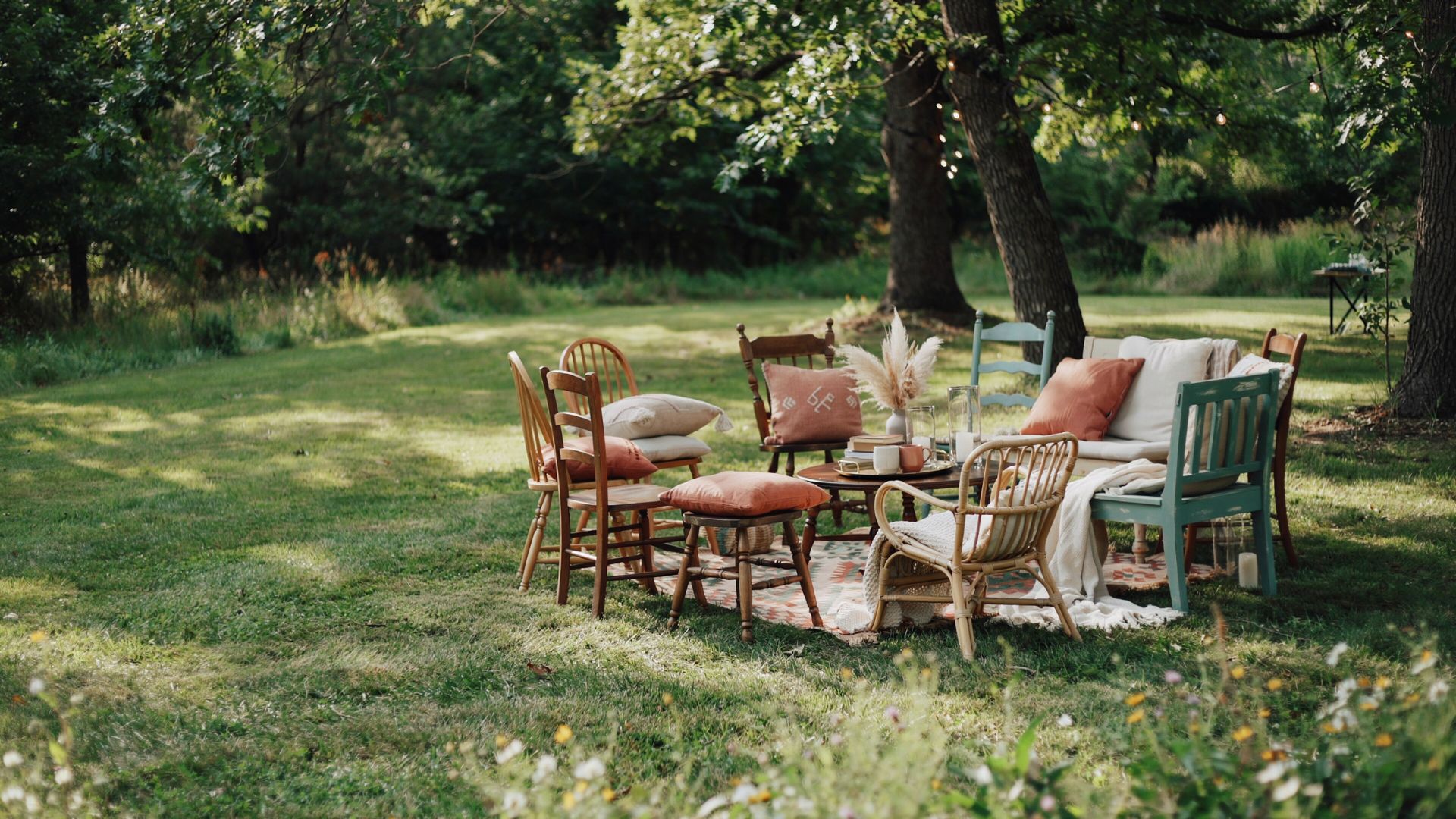
Matching chairs are not necessary in every seating space at the outdoor wedding.
Choose wooden chairs and benches that can complement each other by having only one thing in common.
You have to pick a color scheme or material, such as natural wood, which will unify your furniture collection.
Pro tip: Take a photo of your furniture layout before the big day so helpers can recreate it quickly on setup morning.
13. Create a Relaxed Outdoor Lounge
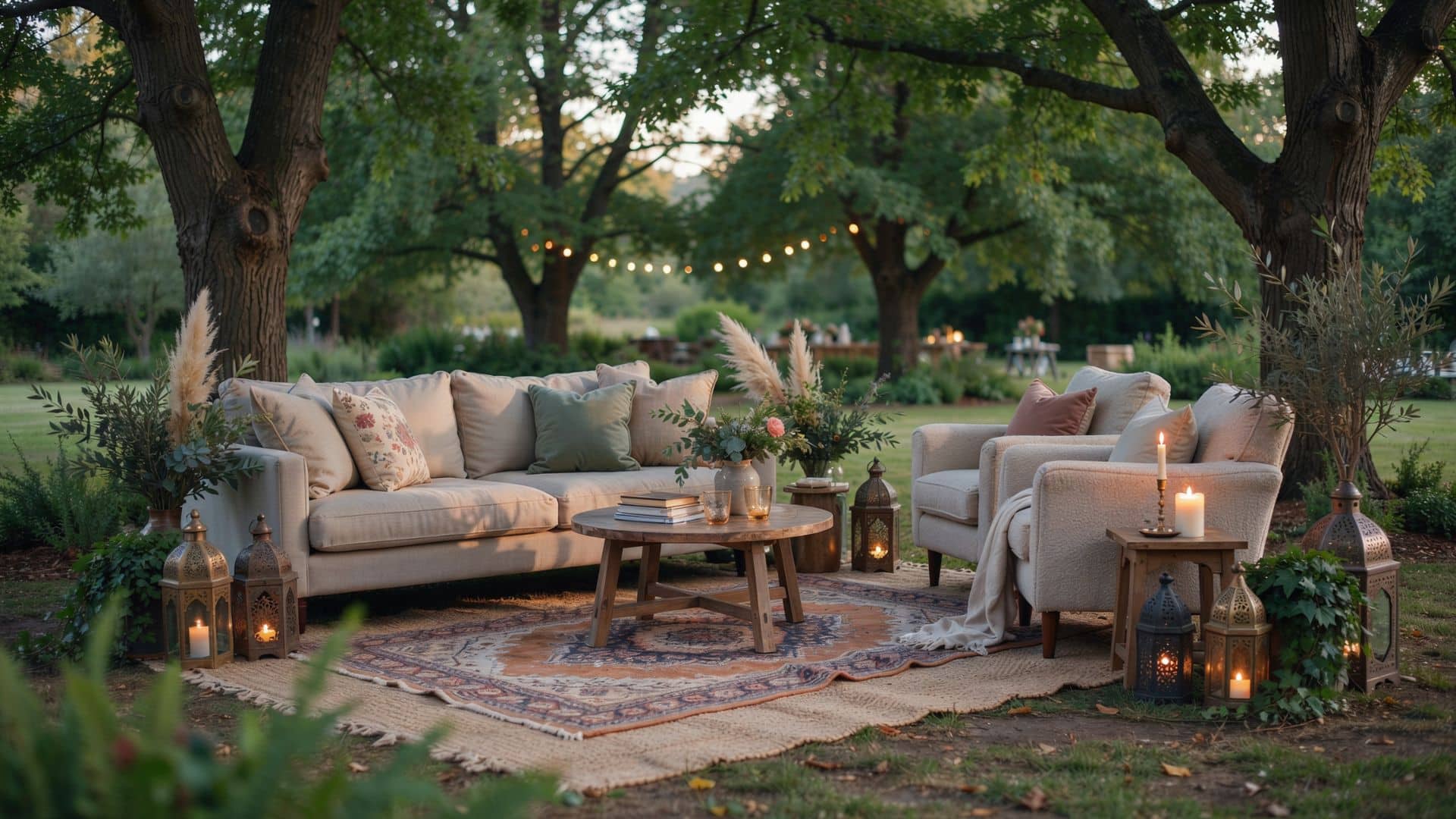
A lounge provides seating space beyond the dining table or dance floor. You should consider incorporating sofas, armchairs, rugs, pillows, and a few low tables in this section.
Locate the lounge far from the music, such as under a tree, in a canopy, or in an open-sided pavilion, where guests can actually hear one another speak.
This space will be ideal for older guests, tired feet, or those not keen on dancing.
Pro tip: Add a few floor lamps or lanterns near the lounge so it stays usable after dark.
14. Adorn the Sweetheart Table With Floral Swag
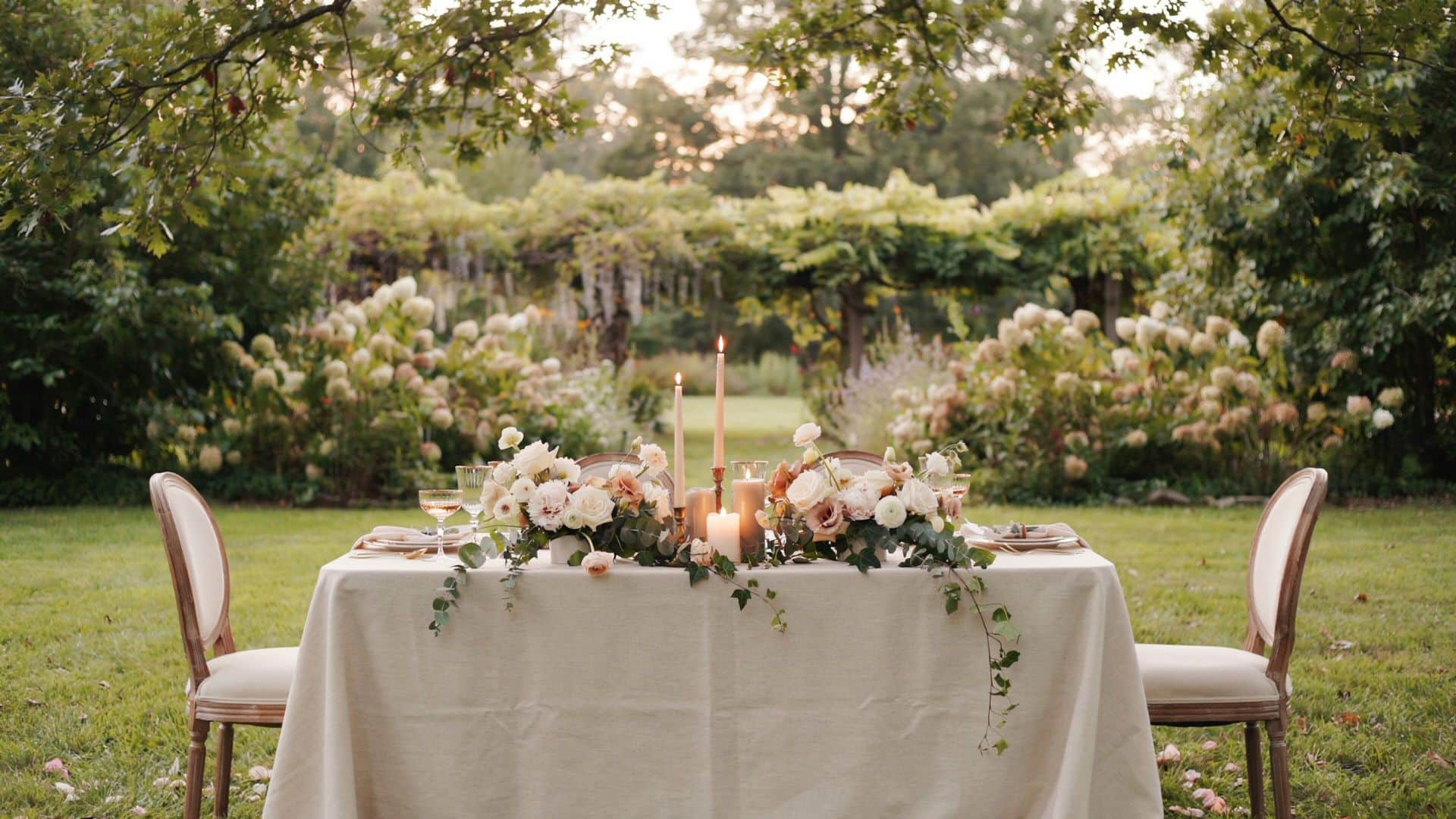
The first way to create a dramatic setting on the front edge of the couple’s table is to drape a garland made of flowers or greenery.
The other accessories that could be added include candles or some fabric backdrop behind the chairs, but not to obscure the view of the area around the table.
This is one of the simplest and cheapest ways to decorate a head table at an outdoor wedding.
Pro tip: Ask your florist for a garland with sturdier greenery like eucalyptus, since it holds up better in heat than delicate blooms.
15. Reuse Bridesmaid Bouquets on Guest Tables
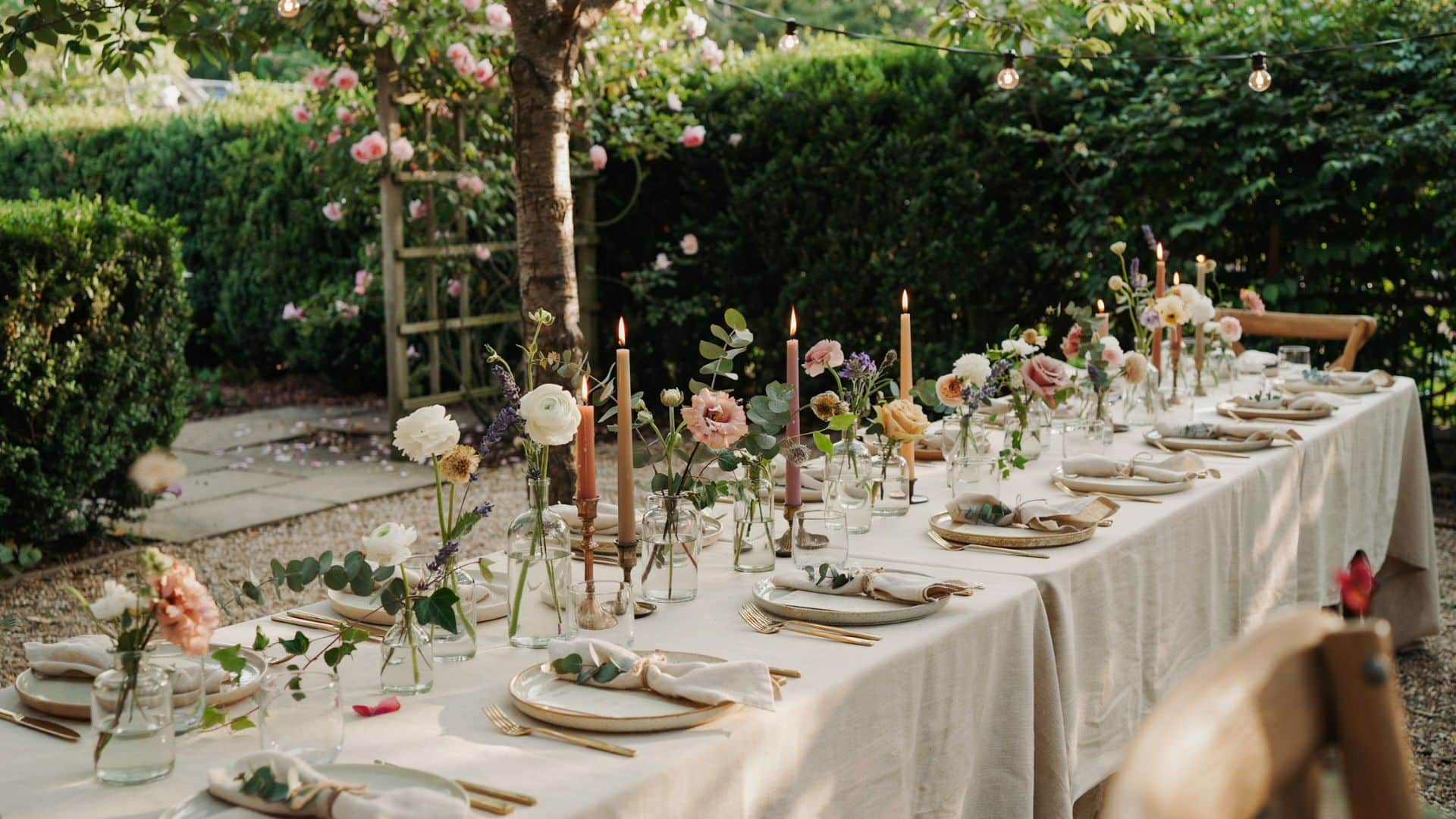
Now that the ceremony is done, do not let these bouquets go to waste. Place them directly into vases arranged ahead of time for the guest tables.
This helps to save you money on the flowers since you do not have to pay separately for centerpieces and bouquets.
Pro tip: Have the vases pre-filled with water and sitting in place before the ceremony ends, so the switch takes minutes, not an hour.
16. Add a Greenery or Fabric Table Runner
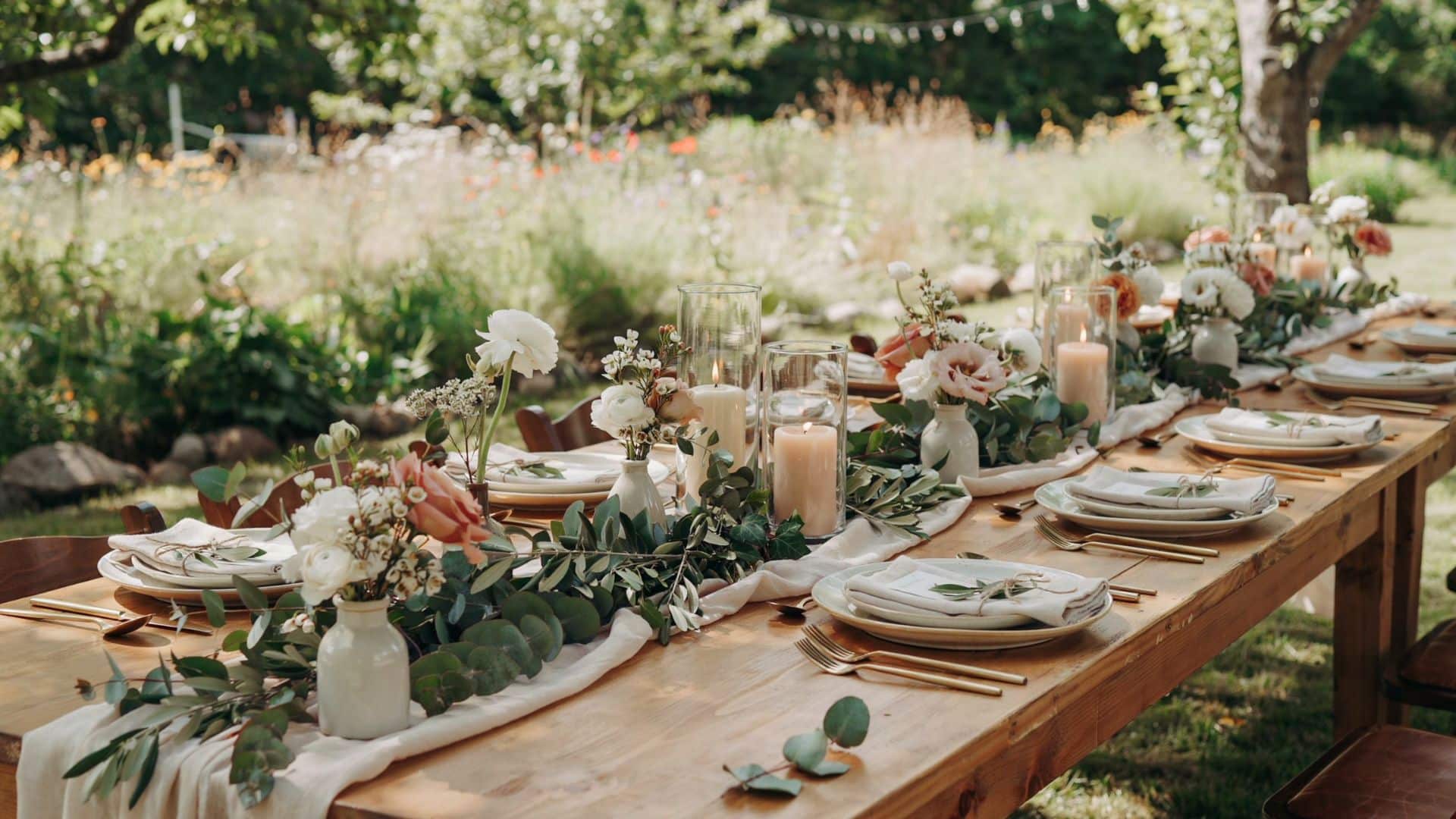
The table runner placed in the center of each table completes the entire decoration instantly.
You should select either loose greens, gauze, linen, or patterned material according to your color scheme.
Keep it very low so it doesn’t obstruct any view or interfere with your dinnerware.
Pro tip: Weigh down the ends of fabric runners with small stones or clips so they don’t blow around during dinner.
17. Handwrite the Wedding Menus
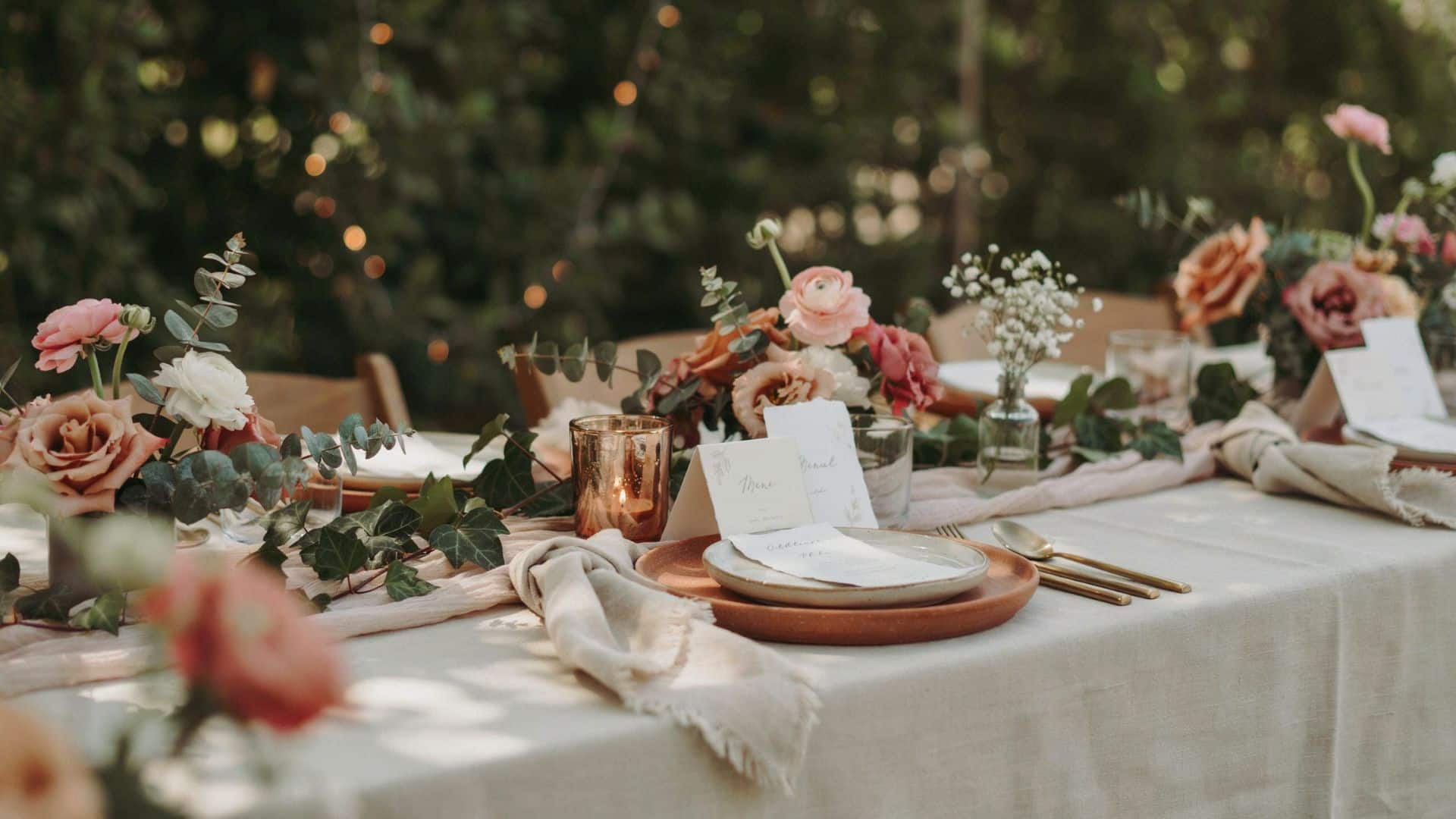
Handwritten menu cards add a personal touch that printed ones can’t match.
You can do one card per guest or one larger menu per table, depending on your budget and time.
This idea works best for smaller guest lists, since handwriting fifty or more cards gets time-consuming fast.
Pro tip: Ask a friend with neat handwriting to help, or hire a calligrapher for a few hours if your list is on the smaller side.
18. Make Leaf Place Names
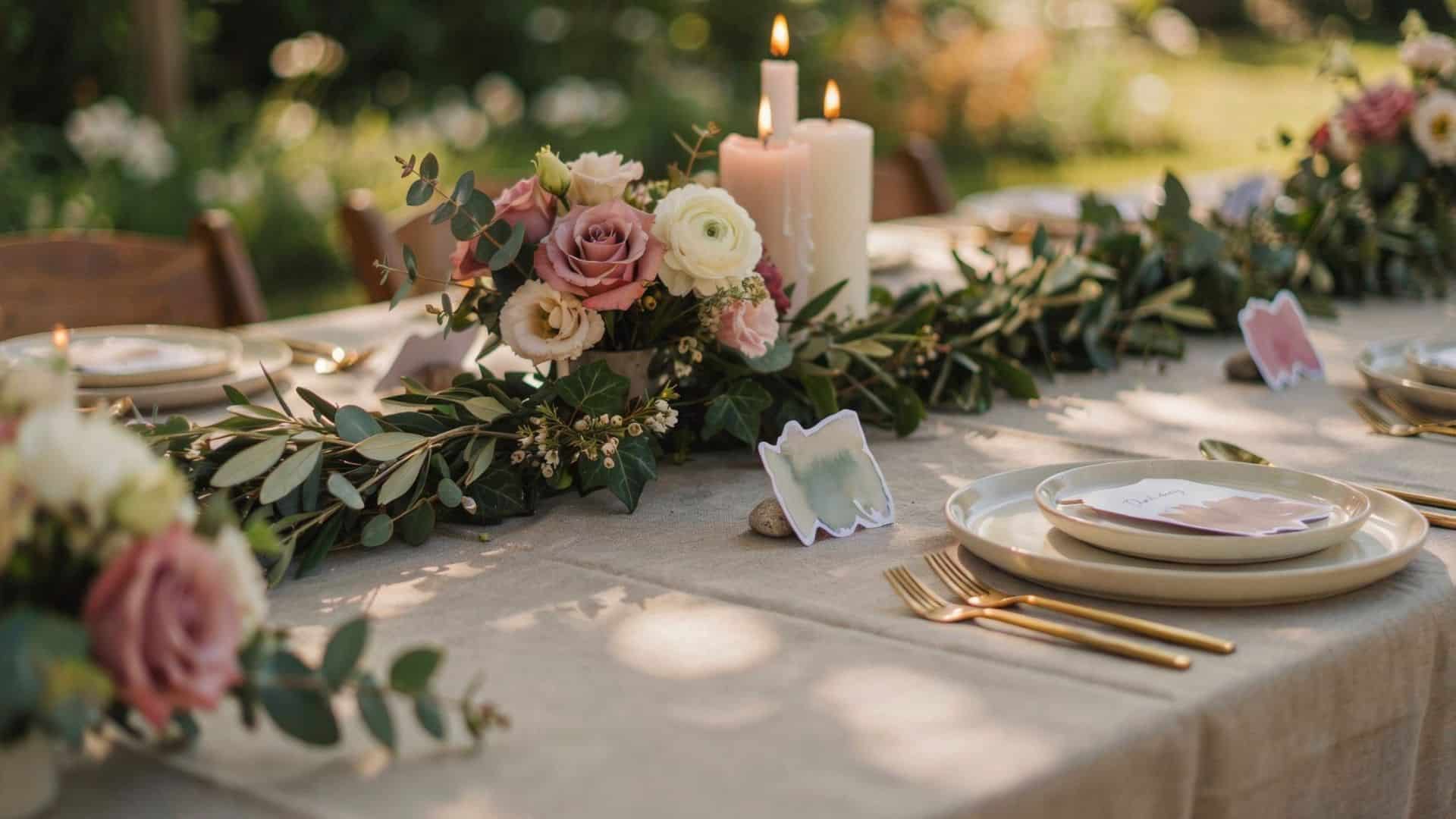
Write each guest’s name on a large leaf using a paint marker. Pick sturdy leaves that are easy to find locally and won’t wilt or curl before the reception starts.
This works especially well for a rustic or garden-style outdoor wedding. It’s low-cost, easy to prep the day before, and adds a natural touch to the table setting.
Pro tip: Test the paint marker on a spare leaf first; some leaf types absorb ink better than others.
19. Build the Color Palette Around Earthy Tones
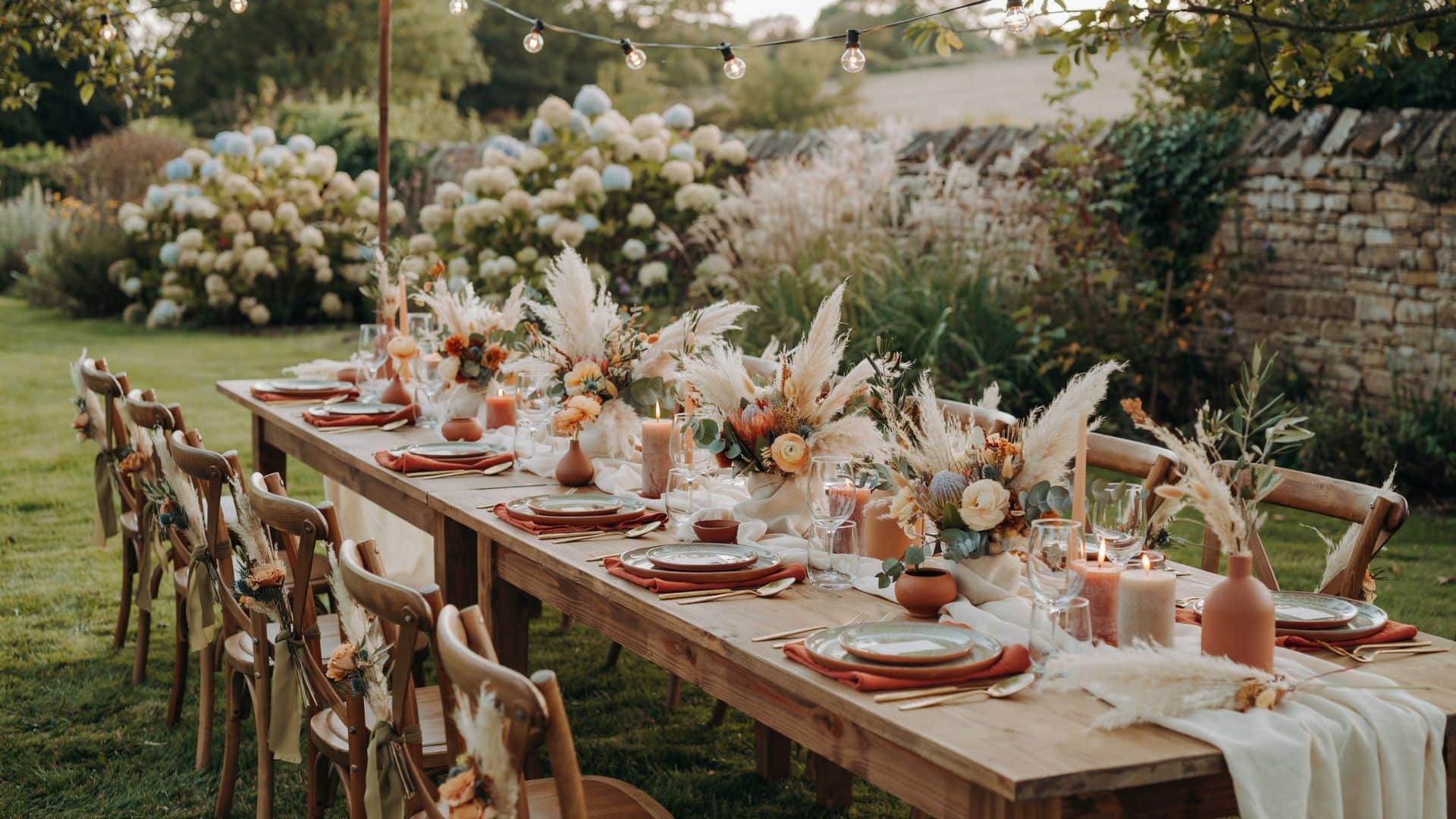
Earthy colors like terracotta, olive, sand, rust, cream, brown, and muted peach blend naturally with an outdoor setting.
These shades pick up the surrounding grass, wood, and plants instead of fighting against them.
This palette also photographs well in natural daylight, which matters a lot for outdoor wedding photos.
Pro tip: Bring fabric swatches outside at the venue before ordering; colors read differently in daylight than they do indoors or on a screen.
20. Display the Cake on Wooden Crates
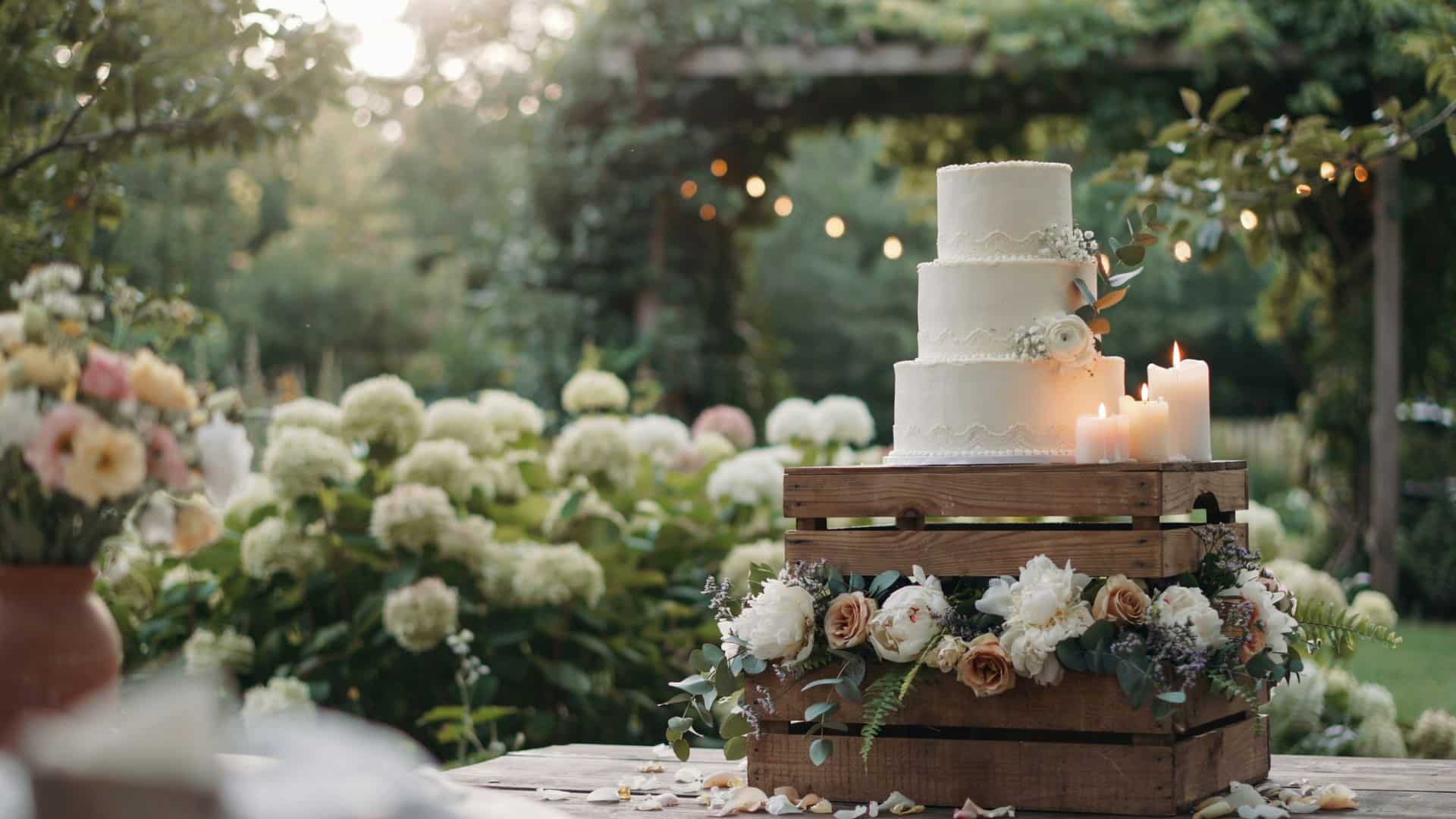
Stacked wooden crates at different heights make a simple but eye-catching dessert display. Use them to hold the cake, smaller desserts, flowers, or serving plates.
Make sure the main cake sits on the most stable, level crate, since outdoor ground isn’t always even.
This setup costs far less than a rented dessert table and still looks put together.
Pro tip: Check the ground level where the crates will sit and add a flat board underneath if the grass isn’t even.
21. Hang Photo Displays From Trees
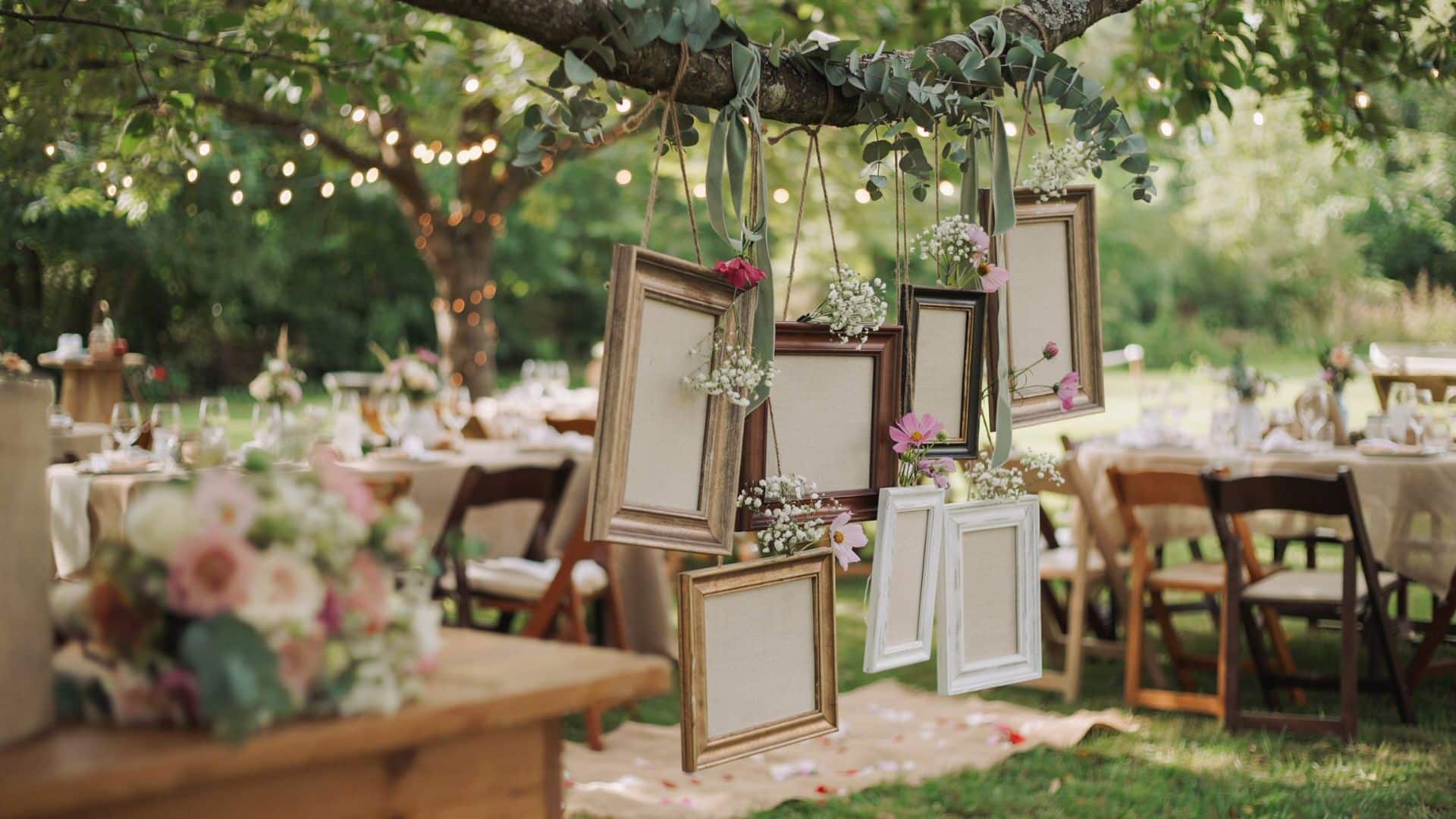
Turn a few trees into a photo display by hanging printed pictures from ribbon, twine, small frames, or wooden panels.
Pick branches that offer some shelter from wind and sun so photos don’t curl or fade.
Be careful with how you attach anything; avoid nails or anything that could damage the tree.
Pro tip: Laminate or seal printed photos beforehand in case of a light drizzle or heavy morning dew.
22. Decorate a Garden Swing for Photos
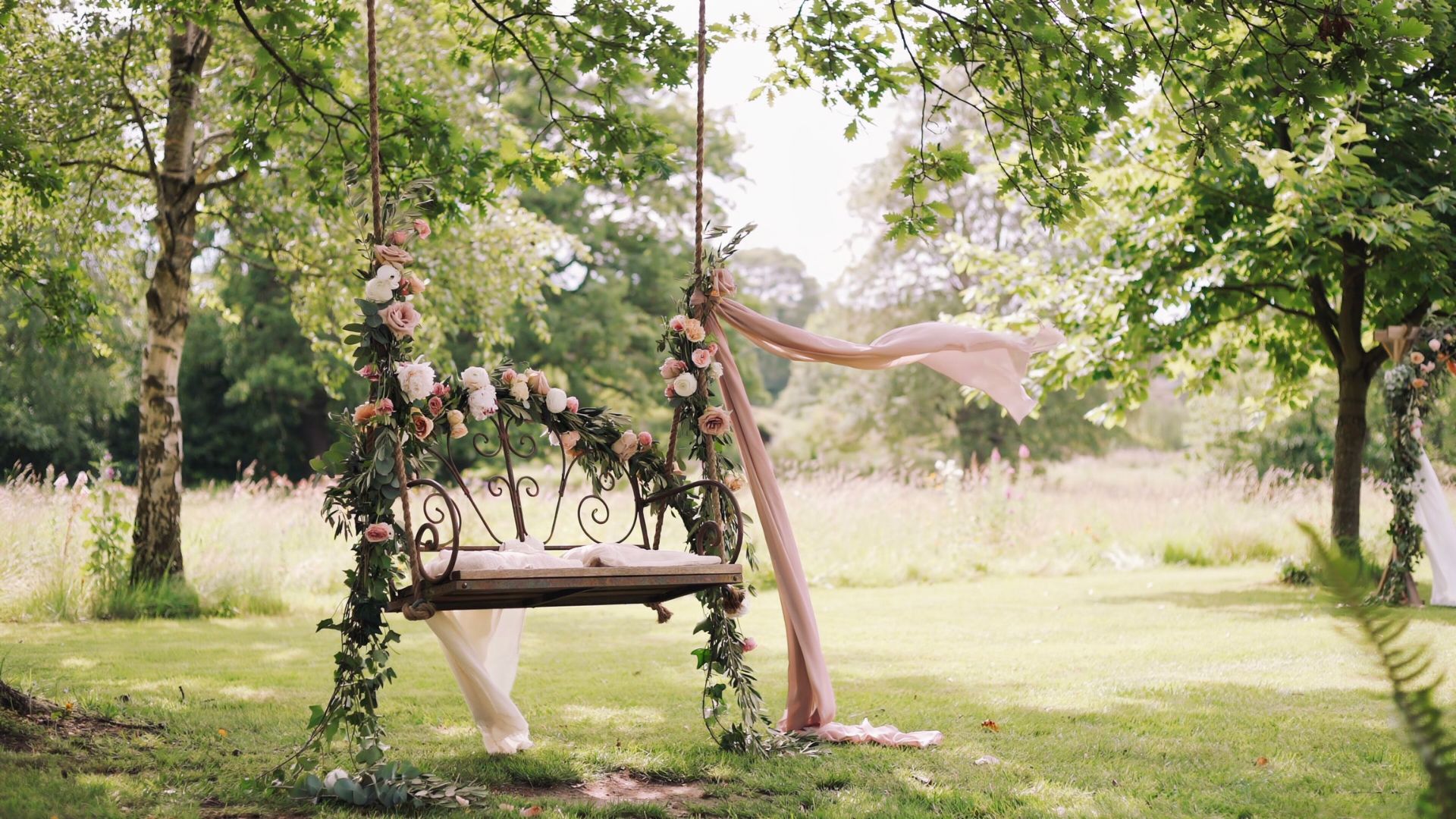
If the venue already has a garden swing, dress it up with flowers, greenery, fabric, or ribbon for photos.
It becomes a natural focal point for couple portraits or guest photos during the outdoor wedding.
Before anyone sits on it for photos, confirm the swing’s actual weight capacity with the venue.
Pro tip: Take your photos on the swing early, before decorations wilt from heat or handling.
23. Hang Bistro Lights Above the Reception
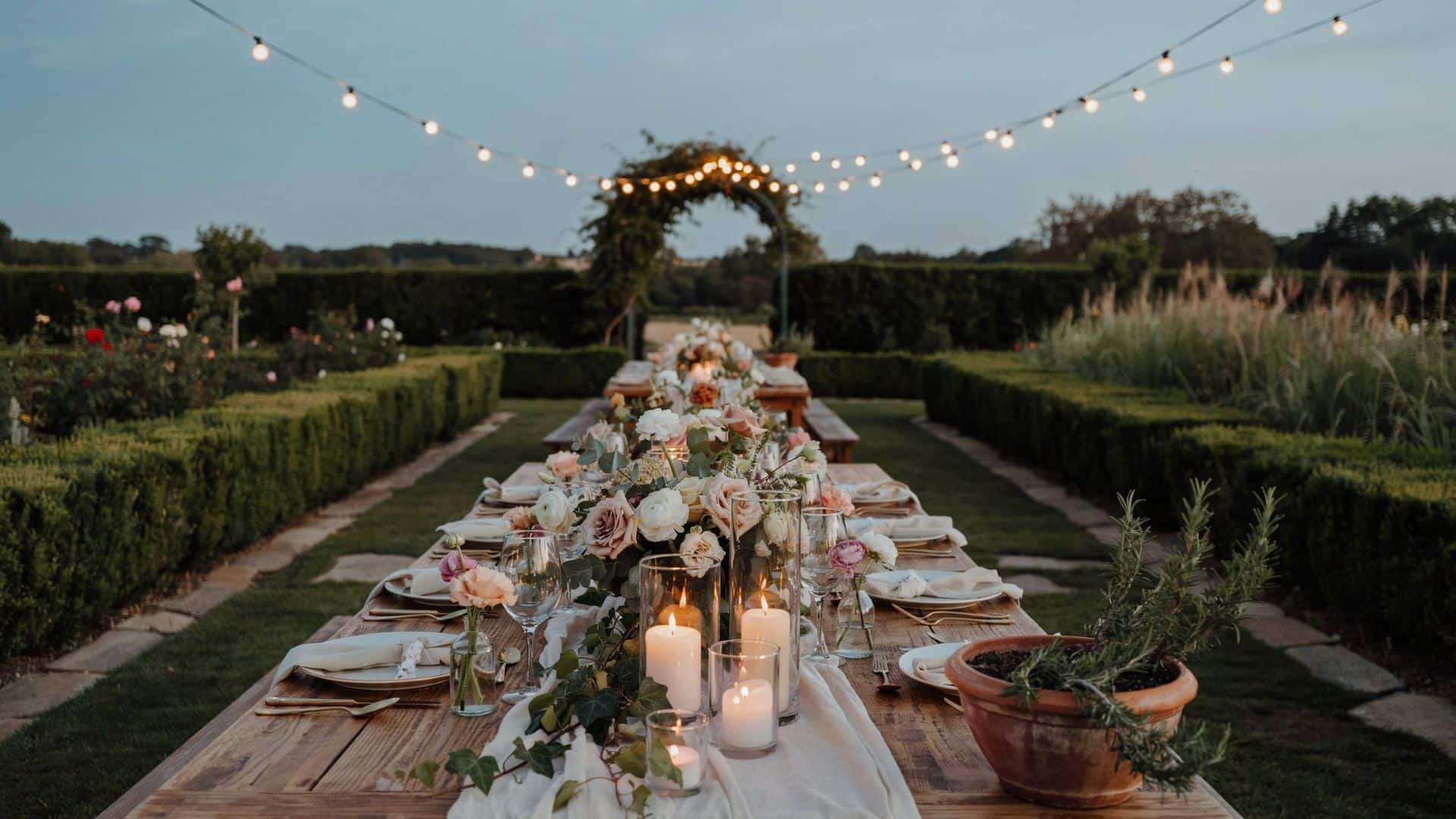
Bistro lights strung above the dining tables, bar, or dance floor add warmth once the sun goes down.
They’re one of the most requested lighting styles for outdoor weddings because they work with almost any decor style.
Just remember decorative lighting isn’t a replacement for practical lighting; guests still need to see pathways and service areas clearly.
Pro tip: Ask your venue or rental company about existing poles or structures you can string lights from; it’s often cheaper than building new ones.
24. String Lanterns Between Trees
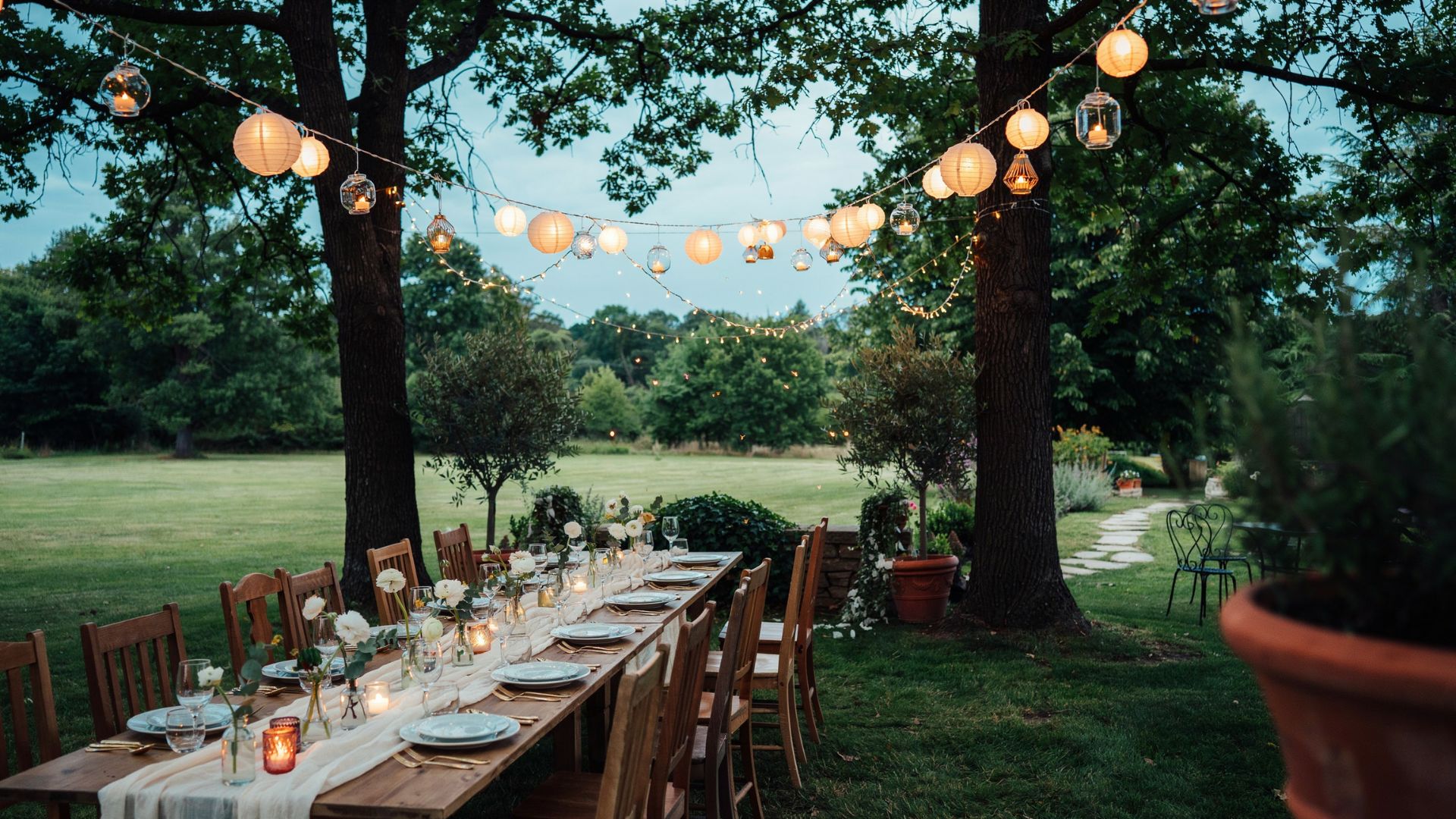
Paper, fabric, or weather-resistant lanterns strung between trees bring color and softness to the space above your guests.
This works especially well at dusk and after dark. In windy locations, secure the lanterns tightly, since paper ones especially can tear or blow loose.
Weather-resistant versions are worth the extra cost if your outdoor wedding venue tends to get breezy.
Pro tip: Check the wind forecast a few days out and switch to sturdier fabric lanterns if strong wind is expected.
25. Cluster Flickering Lanterns Around Key Areas
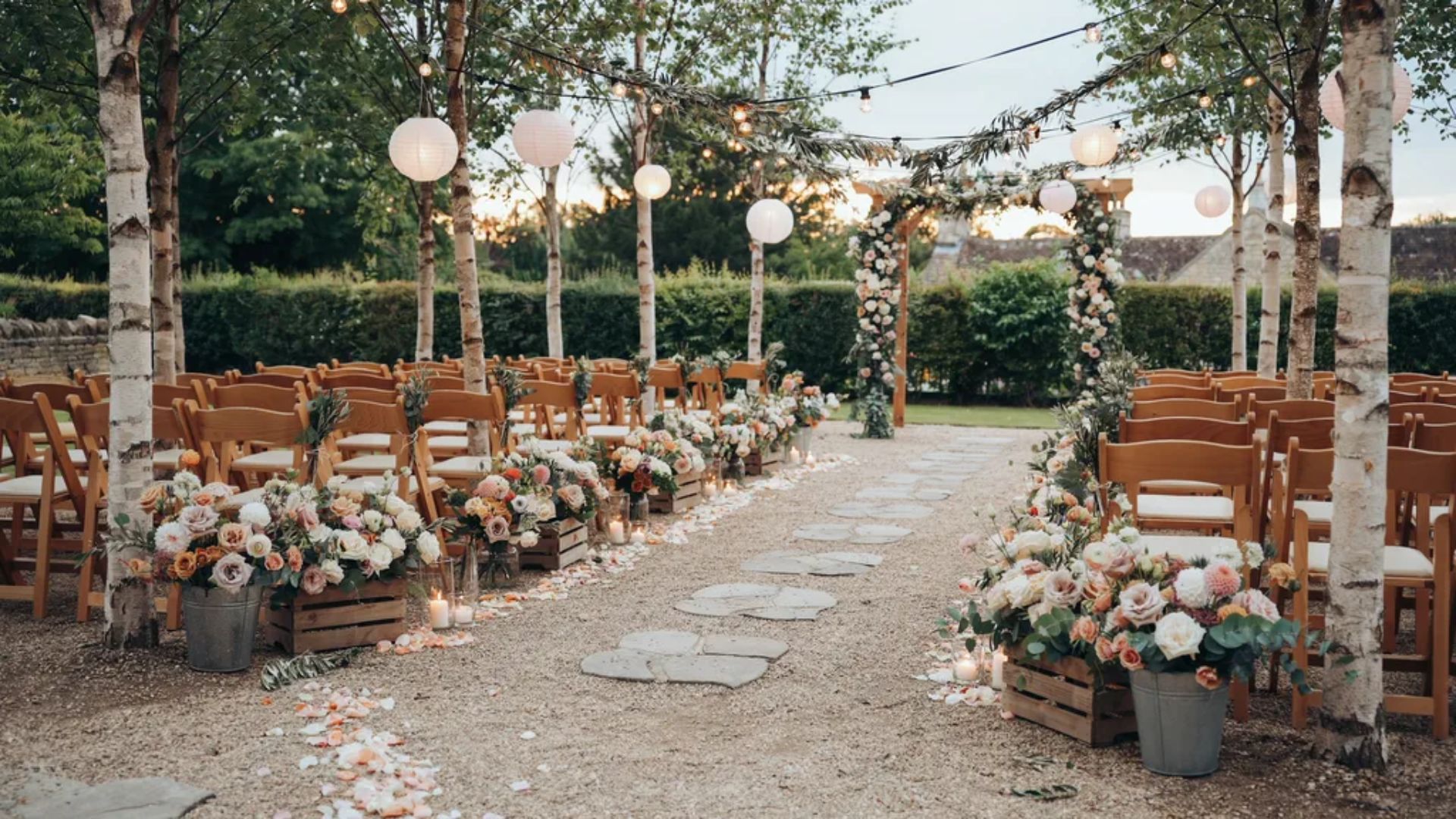
Group enclosed lanterns near the aisle, entrance, bar, seating chart, and lounge area to guide guests and add a warm glow.
Where open flames aren’t allowed, battery-operated candles give a similar look without the fire risk.
Clustering a few lanterns together, not spacing them evenly, tends to look more natural.
Pro tip: Buy a few extra battery candles as backups; batteries can die mid-event without warning.
26. Add Candlelight to the Tables
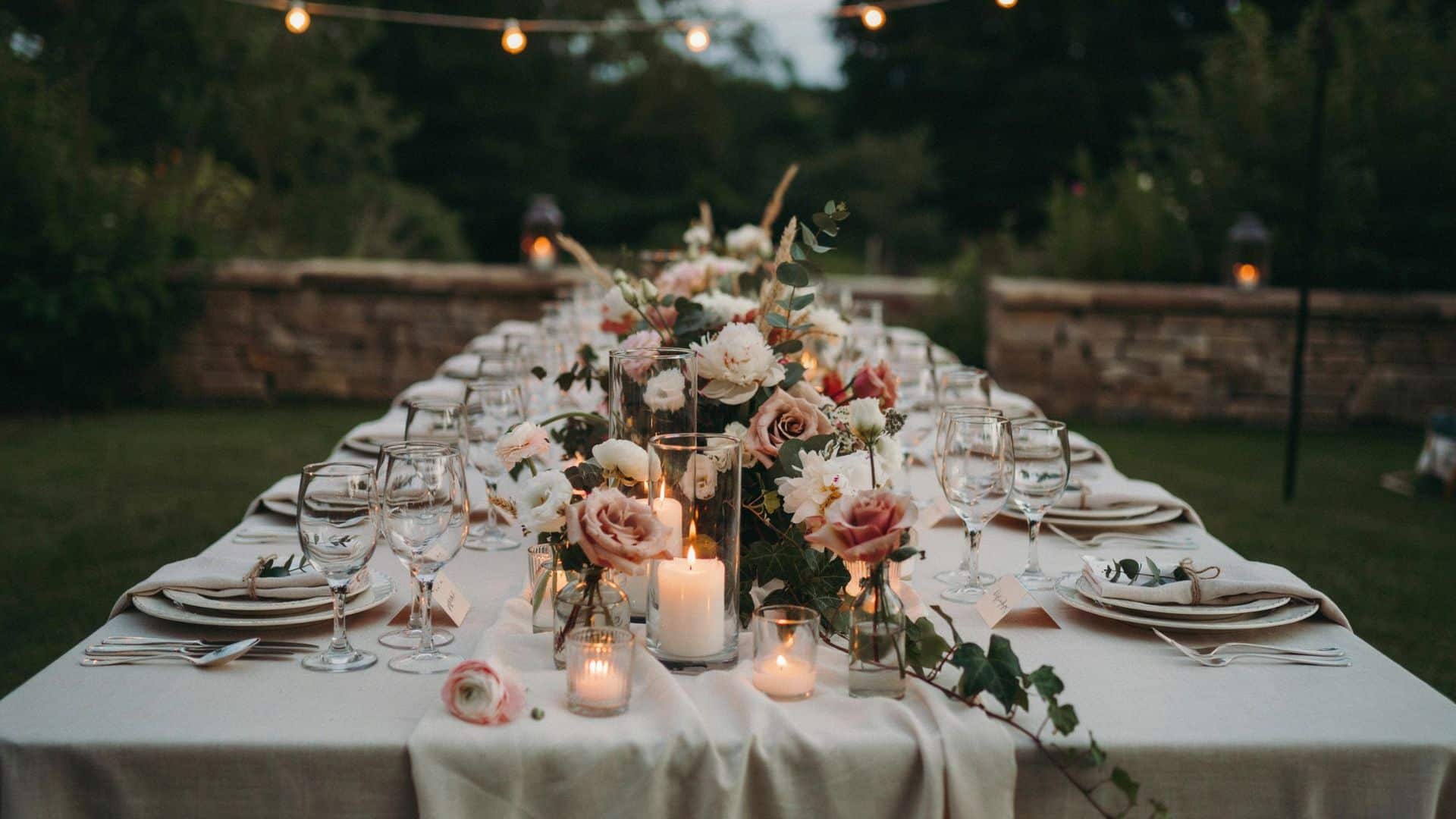
Grouped candles in hurricane glasses or weighted holders bring a soft glow to each table once evening sets in.
Before you commit to real flames, check the venue’s fire rules; many outdoor spaces restrict open flames, especially during dry seasons.
Have a flameless backup ready just in case. Candlelight can create a strong mood for an evening outdoor wedding, but only if the venue allows it.
Pro tip: Order a mix of real and flameless candles so you’re covered either way without last-minute scrambling.
27. Light Walkways With Solar Path Lights
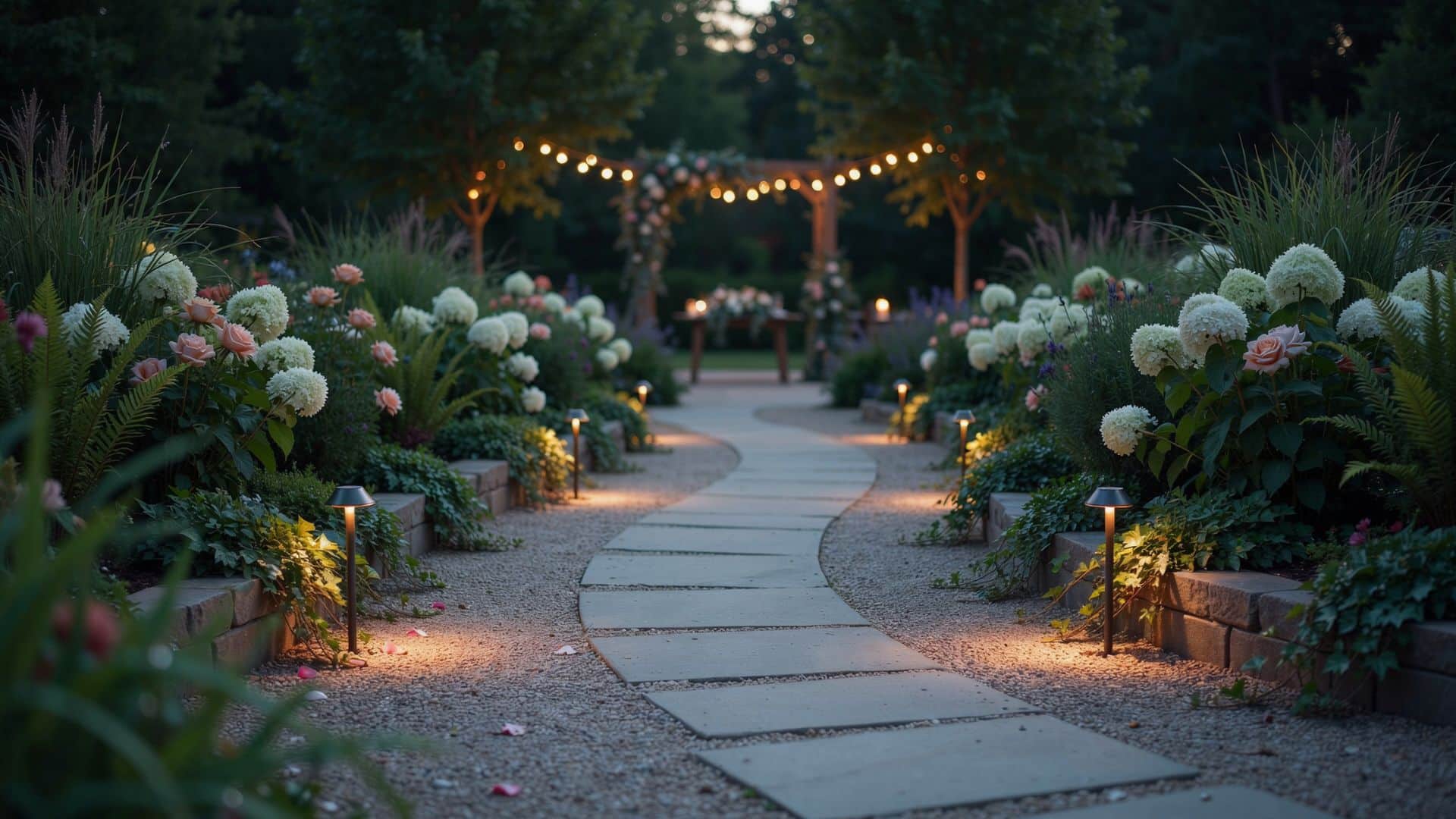
Solar path lights mark the way to restrooms, parking, the bar, and the reception area once the sun goes down.
This is one of the more practical lighting choices for an outdoor wedding, since safety matters as much as looks after dark.
They charge during the day and need no wiring, which makes setup simple.
Pro tip: Place a couple of extra lights near uneven ground or steps; that’s where guests are most likely to trip.
28. Serve a Barbecue Wedding Menu
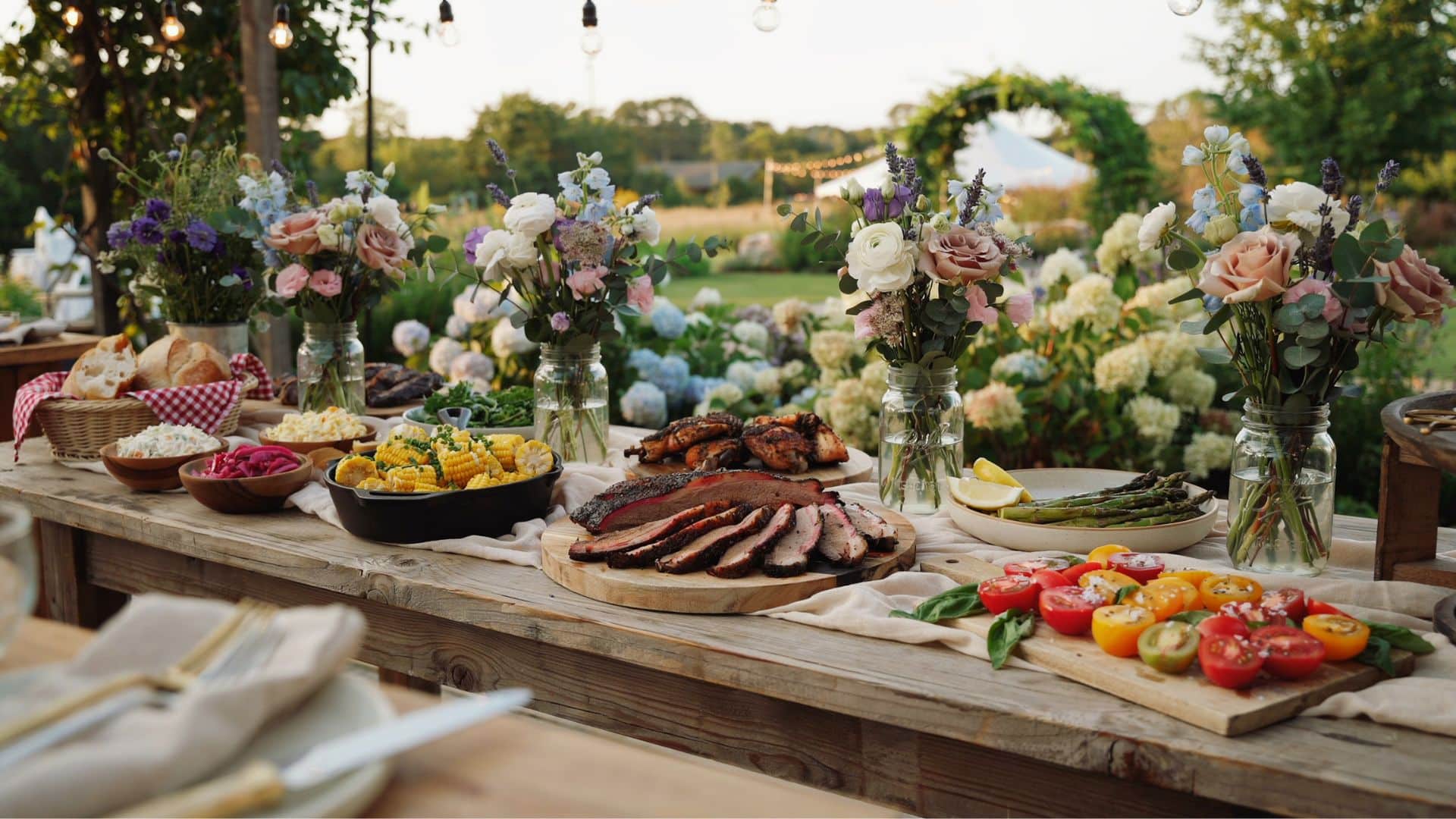
A barbecue-style menu with grilled meats, vegetables, salads, and bread fits the relaxed feel of an outdoor wedding well.
It creates a warm and welcoming dining experience where guests can enjoy familiar flavors in a casual setting.
Pro tip: Ask your caterer about outdoor-safe food holding equipment; food sitting out in heat needs extra care.
29. Set Up an Outdoor Wedding Bar
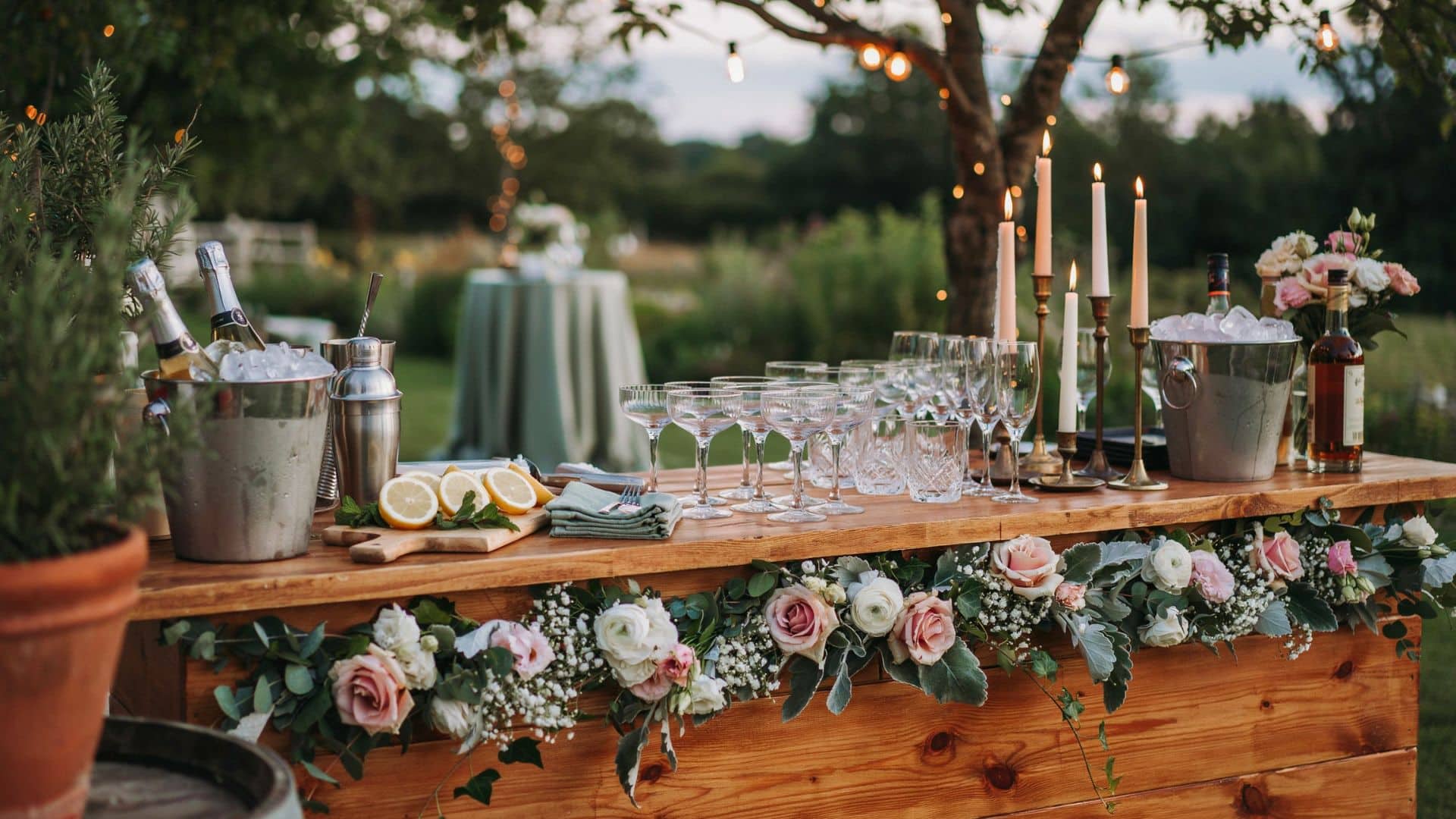
A mobile bar, staffed drinks table, or self-serve station with pre-batched cocktails keeps things simple for an outdoor wedding.
Whatever setup you choose, include water, ice storage, shade for the bar staff, waste bins, and nonalcoholic options for guests who aren’t drinking.
A well-stocked bar with shade and ice storage matters more outdoors than indoors, since heat speeds up melting and spoilage.
Pro tip: Order more ice than you think you’ll need; outdoor bars run through it faster than expected.
30. Place Blankets in Wooden Baskets
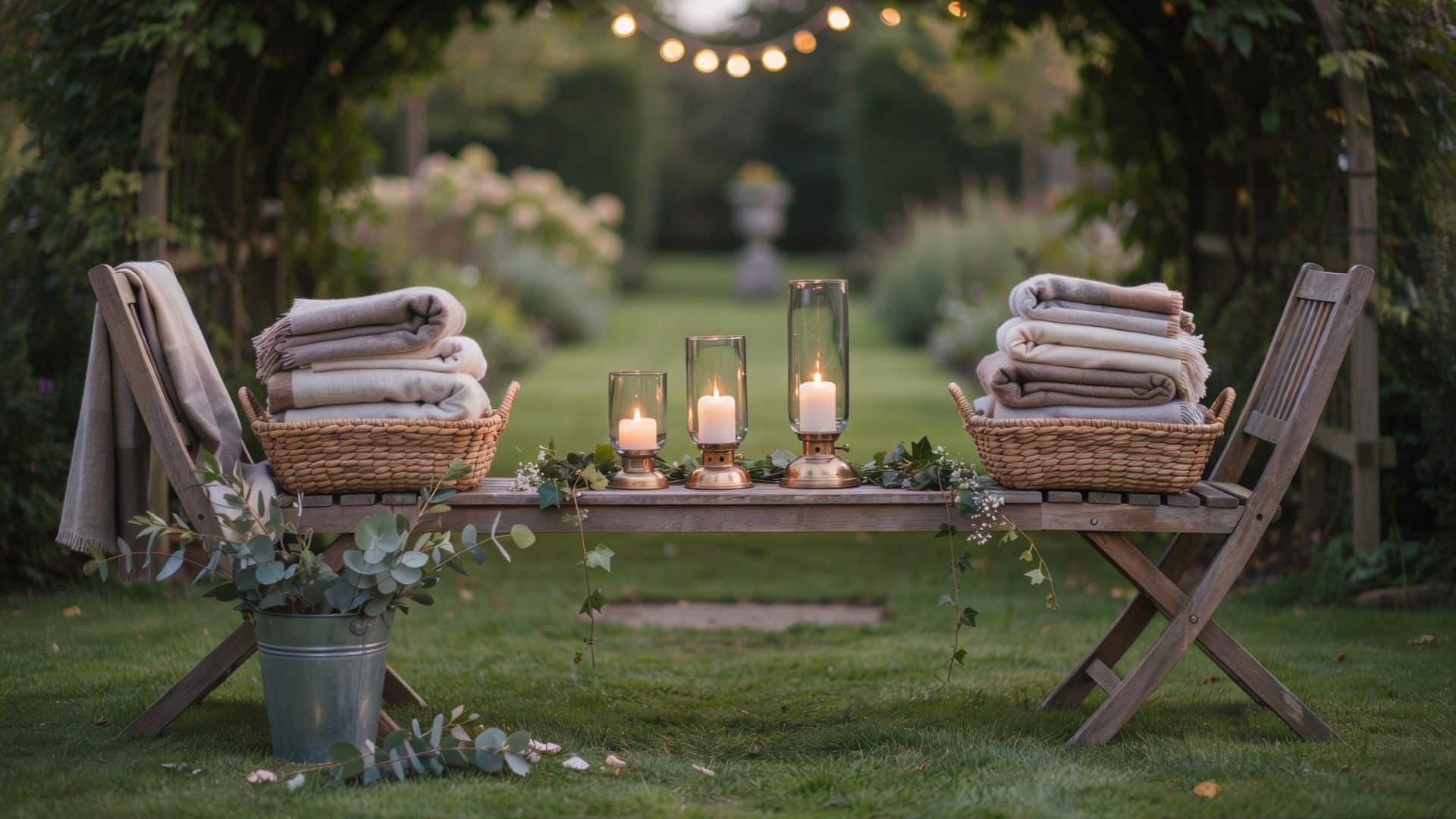
As the evening cools down, offer guests clean throws from wooden baskets placed around the seating area.
Add a small sign inviting them to take one and return it after the event. This small touch keeps guests comfortable without needing to end the night early.
Pro tip: Fold and stack the blankets in the basket beforehand so they look tidy.
31. Create a Guest Refresh Tent
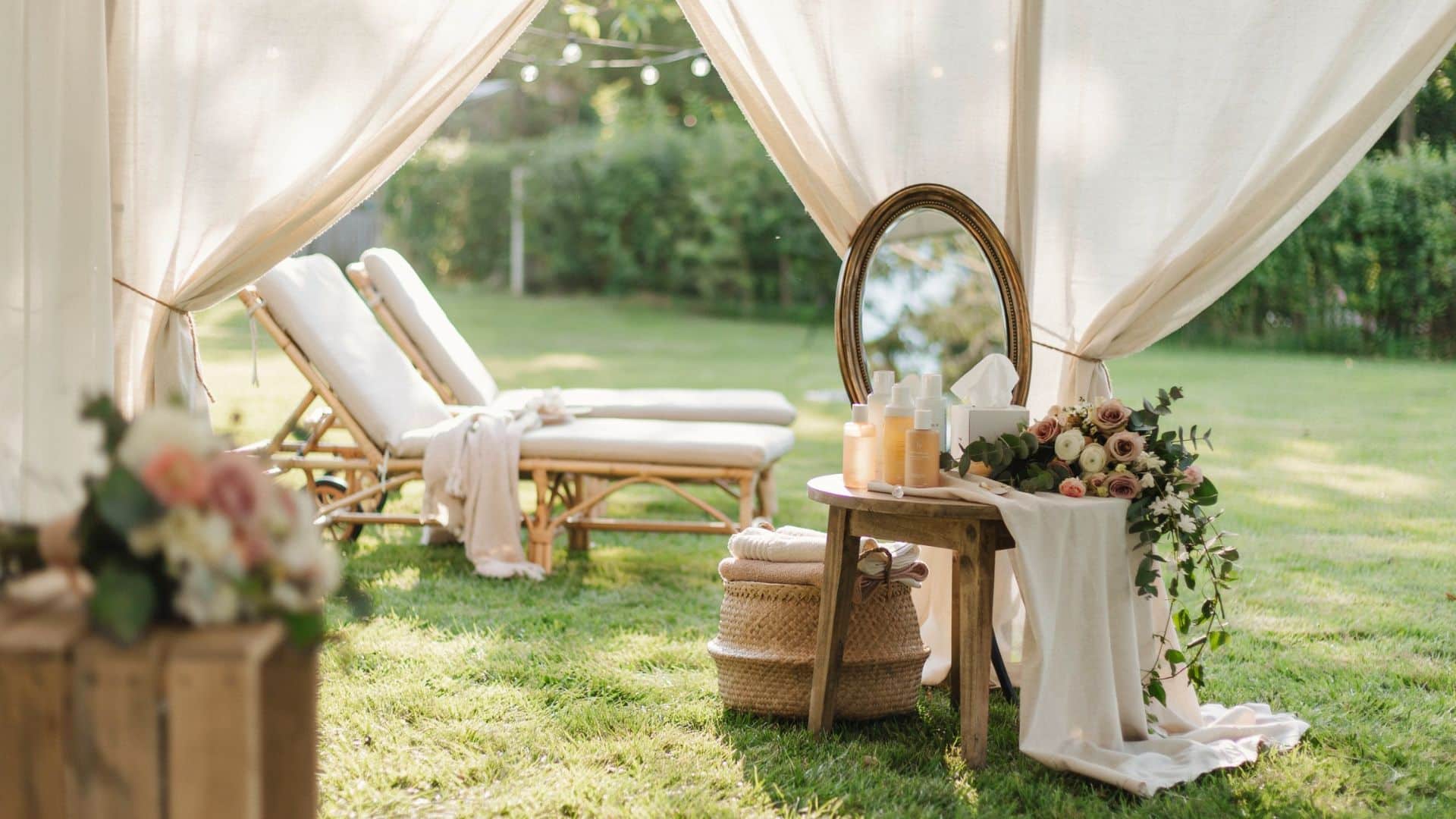
Skip the narrow idea of a basic “dressing tent” and set up something guests will actually use: a refresh tent with mirrors, tissues, sunscreen, insect repellent, stain wipes, and basic toiletries.
This is especially useful for daytime or all-day outdoor weddings where sun and bugs can wear guests down.
Pro tip: Stock a few travel-size items in bulk, like sunscreen and bug spray, since a handful of guests will always need them.
How to Plan an Outdoor Wedding
The outdoor wedding planning process involves a little extra work compared to indoor wedding planning because of the need the consider weather conditions and other factors.
Here is a simple checklist to ensure everything is in place before the event.
| Planning Step | What to Cover |
|---|---|
| Weather Backup | Confirm the backup location for rain, wind, or extreme heat. |
| Permits and Noise Limits | Check music limits, closing times, alcohol rules, and flame policies. |
| Power and Lighting | Map outlets, generators, cords, and power needs for catering and lights. |
| Restrooms | Match restroom count to guest size, include accessible units. |
| Pathways | Add mats, lighting, or flooring over grass, gravel, or mud. |
| Weather Comfort | Plan shade, water, blankets, heaters, and insect repellent. |
Outdoor wedding planning should always account for weather conditions, guest comfort, access to caterers, rentals, parking, restrooms, lighting, and cleanup.
Outdoor Wedding Mistakes to Avoid
Despite good planning, an outdoor wedding may go wrong due to the neglect of some important aspects.
Here is a list of the most frequent errors, which you should be aware of in advance to avoid.
- Depending on decorative lights as the only source of illumination
- Having no covered backup location
- Using lightweight décor that can blow over
- Placing candles near dry grass or loose fabric
- Forgetting restrooms, parking, waste bins, or vendor access
- Scheduling the ceremony during the hottest part of the day
- Using unstable furniture on soft or uneven ground
- Failing to communicate footwear and weather conditions to guests
Being mindful about these typical mistakes helps to make an outdoor wedding comfortable and safe for everyone involved.
Final Thoughts
An outdoor wedding is a good choice for those willing to consider all the aspects that an average place will take care of: weather, ground, electricity, and guest comfort.
First, make sure you know everything about the backup plans and permits offered by the venue, since all other decisions depend on them.
After that, you can start thinking about lighting, seating, catering, and decorations, as everything becomes much easier with the solid basis.
If you haven’t chosen yourvenue and vendorsyet, do it as soon as possible.
Frequently Asked Questions
How Far Ahead Should Couples Book an Outdoor Wedding Venue?
Popular outdoor venues get booked 18 to 24 months in advance, especially for peak-season weekends.
Is a Tent Necessary for an Outdoor Wedding?
A tent isn’t required, but it’s strongly recommended as a backup unless the venue has a covered indoor space.
What Time of Year Works Best for Outdoor Weddings?
The best time depends on the venue’s location. Review local temperature, rainfall, wind, and daylight averages for your preferred month, then choose a date with a suitable covered backup option.
Does Wedding Insurance Cover Outdoor Weather Cancellations?
Some policies cover nonrecoverable expenses when severe weather forces a wedding to be canceled or postponed.
How Early Should Vendors Arrive for Outdoor Setup?
Most vendors request 3 to 4 hours before guest arrival for setup, longer for larger installations.